
Project Snapshot
| Item | Details |
| Project Location | Mengwitani, Badung Regency, Bali, Indonesia |
| Project Date | August 2026 |
| Input Material | Mixed Municipal Solid Waste (MSW), high-moisture organic waste, film plastics |
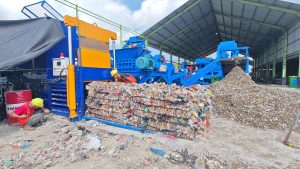
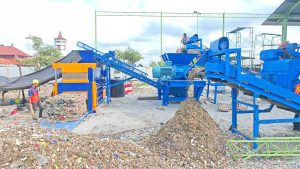
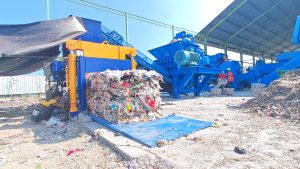
| Core Machinery | Grab Feeder, Chain Conveyor, 4-Stage Shredder, Organic Trommel Screen, Magnetic Separator, Manual Sorting Station, Automatic Horizontal Baler |
| Primary Outputs | Clean Organic Fraction, Refuse-Derived Fuel (RDF) Bales, Recyclable Metals & Plastics |
| Equipment Provider | Guoxin Group |
The Challenge: Limitations of Traditional Waste Incineration in Bali
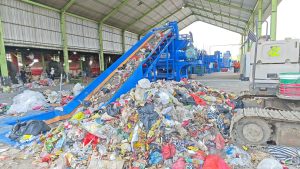
As a world-renowned tourist destination, Bali faces strict eco-preservation mandates. Previously, local operations relied on small-scale, direct incineration furnaces. This traditional approach presented three major drawbacks:
-
High Moisture & Low Thermal Efficiency: Raw municipal waste contains high levels of organic food scraps and moisture, causing incomplete combustion, excessive smoke, and high auxiliary fuel costs.
-
Severe Environmental Hazards: Burning mixed plastics generates toxic emissions, black smoke, and bottom ash, violating local eco-tourism environmental regulations.
-
Resource Waste: High-value recyclables (PET bottles, aluminum cans, ferrous metals) were destroyed rather than recovered.
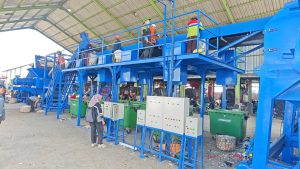
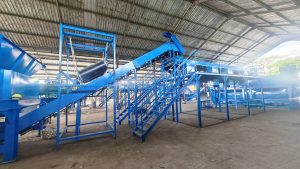
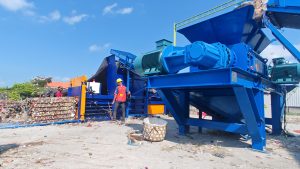
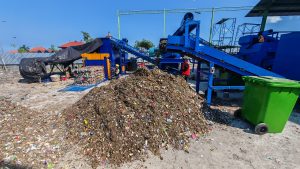
Guoxin Group’s Engineering Solution & Process Workflow
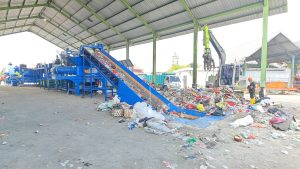
Guoxin Group designed a fully integrated, automated solid waste processing line tailored to South Asian municipal waste characteristics. The workflow replaces open burning with mechanical sorting and resource recovery:
-
1. Heavy Grab Claw & Controlled Feeding
Excavator-mounted hydraulic grab claws load raw MSW onto heavy-duty chain conveyors, delivering a steady material feed and preventing clogging.
-
2. Progressive 4-Stage Shredding System
To handle tangled plastic films and bulk waste bags, the line utilizes a custom 4-stage shredding process. This multi-pass crushing setup breaks open waste bags, tears film plastics, and reduces material size incrementally without jam-ups.
-
3. Organic Waste Fine Separation
The shredded material enters a high-efficiency trommel screen. The high-moisture organic fraction (food waste, soil, and biomass) is screened out separately, serving as raw feed for composting or anaerobic digestion while drastically lowering the moisture content of the remaining combustible fraction.
-
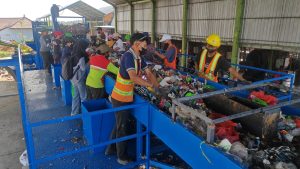
4. Magnetic Extraction & Manual Quality Control
Over-belt magnetic separators automatically extract ferrous items (cans, scrap metal), while an elevated multi-station sorting platform allows operators to manually recover clean plastic bottles and non-ferrous materials.
-
5. High-Density Automatic RDF Baling
The isolated, high-calorific light fraction (plastics, paper, textiles) is fed into a continuous horizontal hydraulic baler, producing compact, high-density RDF bales for cost-effective transport to cement kilns or power plants.
Performance Comparison
| Operational Metric | Traditional Direct Incineration | Guoxin Group Automated Sorting Line |
| Environmental Compliance | Heavy smoke, secondary air pollution | Closed sorting, dust suppression, eco-compliant |
| Resource Recovery | 0% (Total waste destruction) | 85%+ (Organics, metals, plastics, RDF) |
| Economic Output | Pure operating cost & fuel expenditure | Multi-stream revenue from RDF & recyclables |
| Volume Reduction | Inefficient volume reduction | Over 90% landfill volume reduction |
This installation in Badung Regency demonstrates how island economies can transition from polluting incineration to sustainable waste-to-energy recovery.
Guoxin Group continues to provide scalable, turn-key industrial sorting solutions for municipal clients globally.