
Products Description
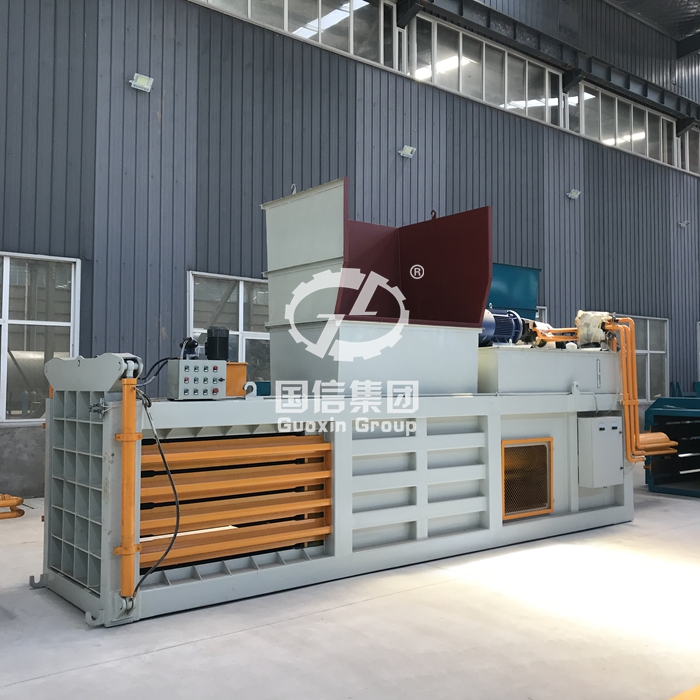
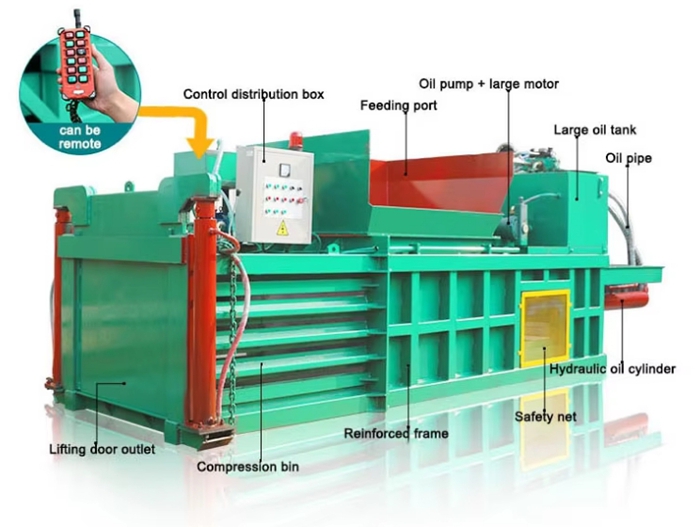
The GX Series Horizontal Hydraulic Baling and Briquetting Systems are industrial-grade solutions engineered for the high-efficiency volume reduction of agricultural, forestry, and light industrial waste. Designed to optimize storage, transportation, and recycling processes, these systems handle a comprehensive range of waste materials, from biomass to organic fibers.
I. Equipment Categorization: Baler vs. Briquetting Press
To ensure optimal processing for different waste types, the GX Series is divided into two distinct technological configurations based on the final packaging requirements:
- Hydraulic Baler (Bagging System): Designed to compress and extrude materials directly into packaging bags.
Applicable Waste: Cotton, agricultural straw, rice husks, wood shavings, and silage.
- Hydraulic Briquetting Press (Bagless Forming): Engineered with higher compression ratios to force materials into dense, self-sustaining solid blocks without the need for external bags.
Applicable Waste: Sawdust, rice husks, corn cobs, and coco peat.
II. GX-220 Series: General Waste Baling Specifications
The GX-220 series provides scalable solutions for standard waste baling, offering high processing speeds and optimal container loading weights.
| Model | Press Force | Baling Cycle Speed | Bale Weight (Rice Husk) | Output Capacity | 13m Truck Loading Cap. | Key Characteristics |
| GX-220A | 60 Tons (600kN) | 30 Seconds / Bale | 25 – 28 kg | 3.6 – 7.5 Tons/hr | ~21 Tons |
Cost-effective; material retains natural fluffiness when opened. |
| GX-220B | 80 Tons (800kN) | Standard | 28 – 30 kg | 3.9 – 8.0 Tons/hr | ~24 – 25 Tons |
Higher density compression; optimized for export shipping. |
| GX-220C | 80 Tons (800kN) | Standard | 30 – 33 kg | 3.9 – 9.0 Tons/hr | 26 – 28 Tons |
Thinner, highly dense blocks eliminating uneven bale shapes. |
| GX-1800 | 80 Tons (800kN) | 10 Seconds / Bale | 30 – 33 kg | 7.0 – 10.0 Tons/hr | 27 – 28 Tons |
High-speed 3-cylinder simultaneous retraction system. |
Note: Standard packaging bag dimensions are 660-670mm (W) x 900mm (L).
III. Specialized Waste Processing Configurations
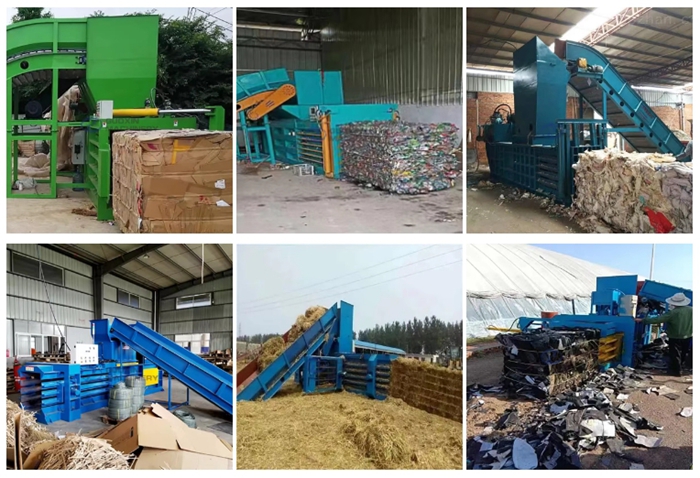
Different waste materials require specific hydraulic pressure distributions and moisture controls to ensure structural integrity and prevent equipment blockages.
1. Coco Peat & Sawdust Briquetting Lines
- Coco Peat Briquetting Press: Configured with a 120-ton clamping cylinder (40T x 3), an 80-ton pushing cylinder, and a 20-ton feeding cylinder. Process note: Coco peat requires pre-soaking for desalination and deacidification.
- Sawdust Briquetting Press: Upgraded with a 55kW motor, a 120-ton clamping cylinder, and a 100-ton pushing cylinder to produce highly dense, non-friable 5kg solid blocks.
2. Corn Cob Baling & Briquetting
- Material Compatibility: Processes both crushed corn cobs (<8mm) and whole corn cobs.
- Hydraulic Setup: Heavy-duty 3-cylinder configuration featuring a 100-ton feeding cylinder, a 120-ton pressing cylinder, and a 160-ton ejecting cylinder.
- Output: 30kg bales for crushed material; 18-20kg bales for whole cobs, perfectly suited for furfural and mushroom farming industries.
3. Straw & Forage (Silage) Baling
- Material Compatibility: Wheat straw, corn stalk, rice straw, peanut vines, soybean straw, alfalfa, oat grass, highland barley grass, and reed grass.
- Preparation: Materials must be chopped to lengths under 10cm (approximately the thickness of standard electrical wire).
- Dry Material Baling: Yields 30-35kg bales suitable for long-term storage.
- Wet/Silage Baling: Yields 70kg bales. Requires tying with golden rope and wrapping in stretch film or plastic bags for anaerobic fermentation to produce high-nutrition animal feed.
4. Rice Husk, Wood Shavings & Wheat Bran Baling
- Bale Weights: Rice husk and sawdust (30kg/bale); Wood shavings (10kg/bale); Wheat bran (10-15mm particle size).
- Hydraulic Setup: Available in 60-ton and 80-ton models, with 2-cylinder or 3-cylinder options (e.g., 60-ton press/eject combined with 40-ton feed).
IV. Critical Operational Parameters: Moisture Control
Strict adherence to moisture parameters is required to prevent material spoilage and machine failure:
- Rice Husks, Sawdust & Shavings: Moisture must be maintained at approximately 15%. High-moisture (wet) processing is strictly prohibited as it leads to material degradation.
- Straw & Forage:
Dry Processing: Moisture must be ≤20%.
Wet/Silage Processing: Moisture must be ≥70%.
Crucial Warning: Processing semi-dry materials is highly discouraged. Semi-dry fibers cause high friction, increase resistance, and will frequently jam the cylinders.
V. Auxiliary Equipment
- Wire Opening Machines: Available in single-cylinder (with adjustable speed) and double-cylinder configurations to effectively resolve material adhesion issues after unpacking.