

Products Description
On-Site Commercial Food Waste Processing & Organic Fractions Separation.
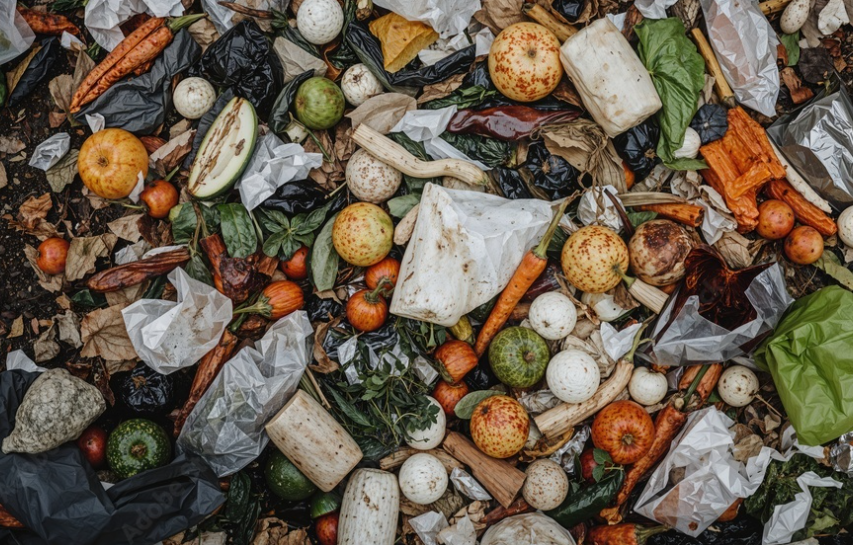
Modern Municipal Solid Waste (MSW) management is no longer just about dumping waste into a landfill. In most tropical and urban regions, raw MSW contains 40% to 60% wet food waste. This high organic moisture not only lowers the calorific value for incineration but also generates massive amounts of high-concentration, toxic leachate.
Guoxin Group’s Integrated Complex solves this by dry-wet separation: extracting high-purity organics for commercial food waste processing, compressing combustible plastics for RDF, and treating the resulting leachate in a closed loop.
1. System Architecture: Centralized, Multi-Stream Urban Resource Recovery
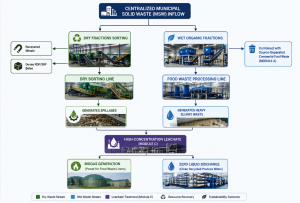
Modern Municipal Solid Waste management demands a transition from isolated disposal facilities to highly integrated co-processing complexes.
Single-stream management faces severe bottlenecks: high organic moisture damages mass-burn incinerators, bulky waste compromises standard sorting lines, and untreated leachate represents a severe environmental liability.
The Guoxin Group Integrated MSW Management Complex consolidates three critical municipal waste streams into a single, synchronized processing ecosystem.
By combining automated mechanical sorting, thermodynamic separation, and advanced biological treatment within a centralized footprint, this solution optimizes municipal expenditure (OpEx), captures high-value industrial byproducts, and ensures absolute compliance with strict environmental ESG metrics.
2. Technical Breakdown of Core Engineering Modules
-
Module A: Commercial Food Waste Processing & Organic Resource Recovery (EPC Line)
For source-separated organic waste from commercial kitchens, hotels, and restaurants, as well as organic wet fractions sorted from mixed MSW, Guoxin delivers a complete Commercial Food Waste Processing System. This system prevents landfill decay and anaerobic odor leakage while converting wet organics into high-value industrial assets:
- Automated Depulping & Non-Organic Ejection:Raw kitchen waste is discharged into an enclosed, negative-pressure sorting deck. Our high-torque depulpers separate organic slurry from plastic packaging, bottles, bones, and cutlery with over 96% separation efficiency.
- Solid Phase (Thermophilic Aerobic Co-Composting): The dewatered clean organic solids are moved to automated bioreactors. Operating at 60°C–70°C with continuous PLC-controlled aeration, the system produces stable, pathogen-free organic fertilizer raw materials within an accelerated processing cycle.
- Liquid Phase (Three-Phase Separation & Biodiesel Feedstock):The liquid organic slurry is heated and processed through a high-velocity three-phase industrial centrifuge. This process extracts industrial crude grease (acid oil) with up to 95% efficiency. This recovered oil is a highly valuable, low-carbon feedstock sold directly to international Hydrotreated Vegetable Oil (HVO) biodiesel refineries.
-
Module B: Bulky and Green Waste Volume Reduction System
Oversized urban waste—including discarded furniture, mattresses, wooden pallets, and green waste—cannot be processed by standard municipal sorting lines due to structural rigidity and variable material compositions.
- High-Torque Primary Shredding: The bulky waste line utilizes an industrial dual-shaft shear shredder. The aggressive knife profiles pull entire sofas and mattresses into the cutting chamber, executing volume reduction up to 80% in a single pass.
- High-Gradient Magnetic Overbelt Separation: Shredded fractions pass underneath a high-intensity neodymium cross-belt magnet. The system automatically extracts embedded steel springs, framing elements, and structural fasteners, yielding a clean ferrous metal scrap stream ready for direct metallurgical recycling.
- Hydraulic Compaction & RDF Feedstock Preparation: The remaining high-calorific fraction (textiles, wood, polymers) is directed to a heavy-duty hydraulic baling press. It compresses the loose material into ultra-dense, wire-bound bales, drastically reducing logistics and storage costs. These consolidated blocks serve as optimal pre-conditioned materials for downstream RDF (Refuse-Derived Fuel) / SRF (Solid Recovered Fuel) manufacturing lines.
-
Module C: Leachate and High-Concentration Wastewater Purification
High-moisture municipal waste streams continuously generate heavily contaminated leachate characterized by extreme Chemical Oxygen Demand (COD), Biochemical Oxygen Demand (BOD), and toxic ammonia nitrogen levels.
- Core IC (Internal Circulation) Anaerobic Reactor: The plant’s wastewater treatment node centers on a high-rate IC Anaerobic Reactor system. The specialized hydraulic configuration handles high volumetric loading rates, circulating wastewater through a dense, self-granulating anaerobic sludge blanket.
- Targeted Pollutant Degradation: Biogas generation during the anaerobic phase drives internal fluid circulation, maximizing contact between the organic compounds and the biological biomass. This step ensures deep, reliable degradation of COD, BOD, and Ammonia Nitrogen.
- Closed-Loop Process Water Recycling: Downstream membrane bioreactors (MBR) and reverse osmosis (RO) polishing units refine the effluent into purified process-grade water. This water is fully recycled back into the complex for equipment washdowns, cooling towers, and boiler makeup, achieving zero liquid discharge (ZLD) boundaries.
3. Engineering Specifications Matrix
The following specification table establishes the baseline engineering configurations for scalable municipal deployments:
| Technical Parameter | Regional Processing Tier | Metro-Scale Infrastructure |
| Combined Input Capacity | 100–200 Metric Tons / Day | 500–1,000+ Metric Tons / Day |
| Food Waste Sorting Efficiency | ≥ 92% Organic Purity Extraction | ≥ 96%Automated Inline Separation |
| Crude Grease Recovery Yield | 85–90% of Total Inbound Lipid Content | ≥95% via Three-Phase Centrifugation |
| Bulky Waste Volume Reduction | ≤ 1:5 Compaction Ratio | ≤ 1:8 Heavy Hydraulic Densification |
| Magnetic Metal Cleanliness | ≥95% Pure Ferrous Fraction | ≥98 %Industrial Grade Scrap Metal |
| IC Reactor COD Loading Rate | 12–18kg COD m^3 . d | 20–25+ kgCODm^3 . d |
| Effluent Water Quality Standard | Local Discharge Compliance Standards | Full ZLD / Closed-Loop Industrial Reuse |
| Central Automation Control | PLC-Based Localized Control Desks | Enterprise SCADA with AI-Driven Mass Balancing |
4. Systems Integration: Why Turnkey EPC Execution Secures Project ROI
An integrated solid waste facility is highly vulnerable to systemic failures if component machines are sourced from fragmented suppliers. Suboptimal sorting upstream leads to plastic contamination in the fermentation tanks, while incomplete grit removal fouls the downstream IC anaerobic reactors, causing premature asset failure and expensive plant shutdowns.
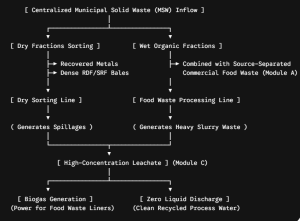
[Upstream Automated Pre-Sorting] ──► Protects Downstream Bioreactors ──► Secures High-Purity Bio-Discharge
As an established turnkey EPC Systems Integrator, Guoxin Group designs, builds, and commissions the entire complex as a single, structurally unified machine. By matching the mechanical outputs of our heavy-duty shredding units to the biological intake tolerances of our anaerobic and aerobic digestion systems, we eliminate processing bottlenecks before they occur.
Our complete, enclosed negative-pressure architecture prevents fugitive emissions, while our centralized SCADA monitoring platform tracks material mass balances in real time. Partnering with Guoxin Group provides municipal stakeholders and international developers with a single point of contractual accountability, minimized execution risks, lower overall capital costs (CapEx), and guaranteed long-term operational profitability.
Request an Engineering Consultation & Site Layout Proposal
Are you developing a municipal waste-to-energy project or upgrading an existing city landfill into a modern resource recovery facility? Let our project engineering division calculate your mass-balance equations and design an optimized layout.
Submit your local inbound waste composition metrics, daily design capacity targets, and regional environmental discharge regulations to our technical team. We will deliver a comprehensive 3D system integration blueprint and a preliminary ROI analysis within 7 business days.
Global EPC Project Contracting Division: Eve@guoxinmachinery.com