
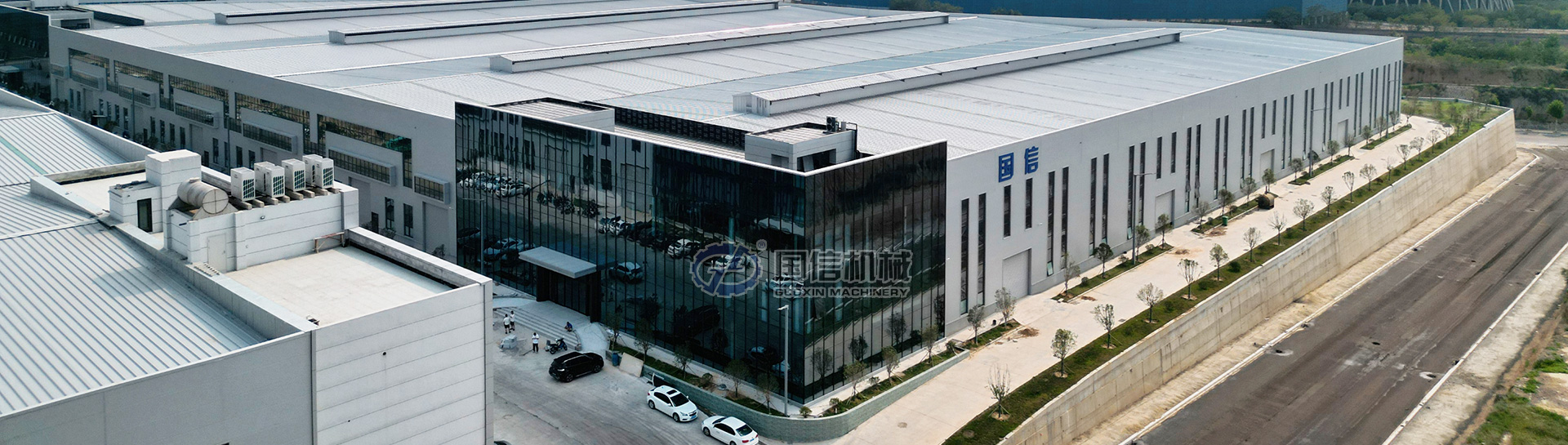
Project Location: Dongli District, Tianjin, China
Commissioning Date: June 21, 2026
System Integrator: Guoxin Group
Input Material: Heavily contaminated, unsegregated Municipal Solid Waste (MSW)
Handling unsegregated municipal solid waste is a severe mechanical challenge. The inbound material stream in this Dongli District project is a highly heterogeneous mixture of domestic garbage, abrasive construction debris (bricks, concrete fragments), lightweight combustibles (plastic films, paper), and organic fines.
Direct landfilling of this material is environmentally unsustainable, while direct incineration is impossible due to the high moisture content and non-combustible aggregate volume. The client required a robust, automated mechanical sorting line capable of stratifying this chaotic mass flow into clean, tradeable commodities: heavy inerts for structural sub-base and light combustibles for Refuse-Derived Fuel (RDF).
Here is the engineering breakdown of the turnkey MSW sorting plant successfully commissioned by our team.
1. System Process Flow & Engineering Architecture
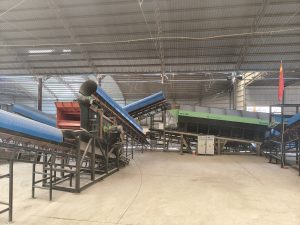
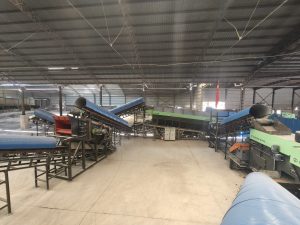
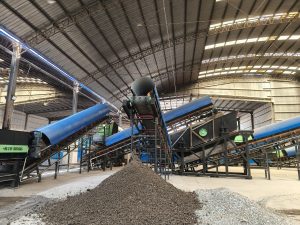
As documented in the site commissioning footage, the facility utilizes a continuous, gravity-fed and conveyor-linked architecture to minimize manual intervention and maximize volumetric throughput.
Phase 1: Heavy-Duty Dosing and Feeding
The process begins in the reception hall, where a front-end wheel loader discharges raw, mixed MSW into a heavy-duty steel receiving hopper.
- Engineering Focus: The hopper is integrated with an armored apron feeder designed to absorb the multi-ton kinetic impact of falling concrete and heavy debris, ensuring a steady, metered material flow onto the primary incline conveyor. This prevents downstream surges and material bottlenecks.
Phase 2: Mechanical Sizing via Rotary Trommel Screen
The mixed material is elevated and fed into a massive industrial Trommel Screen (enclosed in the blue cylindrical housing).
- The Mechanism: As the drum rotates, the internal lifters agitate the waste. Material smaller than the screen aperture (sub-fraction fines, organic soils, sand, and small glass shards) falls through the mesh onto a dedicated collection conveyor.
- The Result: By extracting the high-moisture organic fines and abrasive sand immediately, the system protects downstream cutting tools and sensors from premature wear and drastically increases the calorific value of the remaining stream.
Phase 3: High-Gradient Ferrous Extraction
As the oversized material exits the trommel, it passes beneath a suspended Overbelt Magnetic Separator.
- The Mechanism: A high-intensity magnetic field penetrates the material bed, extracting structural tramp iron, tin cans, and steel wires.
- The Result: A clean ferrous scrap stream is isolated for metallurgical recycling, and downstream shredders are protected from catastrophic metal jams.
Phase 4: Aerodynamic Classification ( Air Separator)
The core of the separation logic occurs at the GX-ASM Air Separator (the green heavy-machinery node). The demetaled, oversized stream is subjected to adjustable, high-velocity air streams.
- The Mechanism: The aerodynamic forces exploit the density differences in the material. Lightweight, 2D fractions (plastic bags, packaging films, cardboard, textiles) are blown over a separation drum into a settling chamber. Heavy, 3D fractions (bricks, stones, heavy rubber, and dense PVC) drop naturally due to gravity.
- The Result: Two highly purified streams are created. The heavy inerts are stockpiled for C&D aggregate recycling, while the light fraction is transformed into a premium, high-calorific fluff ready for secondary shredding into RDF/SRF.
2. Technical Performance Matrix
This facility operates under strict output parameters to ensure the commercial viability of the sorted fractions.
| Operational Node | Equipment Deployed | Target Separation Material | Efficiency / Purity Target |
| Material Infeed | Armored Apron Dosing Feeder | Raw unsegregated MSW | Continuous steady-state loading |
| Fines Extraction | Heavy-Duty Rotary Trommel | Organic soil, sand, ash (< 40mm) | ≥90% extraction of abrasives |
| Metal Recovery | Neodymium Overbelt Magnet | Ferrous tramp iron, steel cans | ≥95% metallic purity |
| Density Sorting | GX-ASM Air Classifier | 2D Combustibles vs. 3D Inerts | >85-90% aerodynamic separation |
3. The Value of Turnkey System Integration
The success of the Tianjin Dongli project highlights a critical reality in waste management engineering: sorting is a system, not a single machine.
If the trommel screen allows too many heavy aggregates to pass into the light fraction, the air separator will choke. If the infeed conveyor velocity is mismatched with the air classifier’s intake, the aerodynamic separation efficiency plummets.
By executing this project under a unified EPC (Engineering, Procurement, and Construction) framework, Guoxin Group ensured perfectly synchronized kinematics across every conveyor, screen, and separator. The result is a highly durable, low-maintenance facility that operates continuously, transforming a municipal liability into structured, profitable commodities.
Optimize Your Municipal Waste Infrastructure
Are you planning an MSW sorting facility or upgrading an existing transfer station to extract RDF and recyclable aggregates?
Submit your site’s physical footprint, daily throughput requirements, and raw material composition to our process engineering division. We will provide a data-backed 3D layout and technical mass-balance proposal.
Contact Global EPC Systems Division: Eve@guoxinmachinery.com