
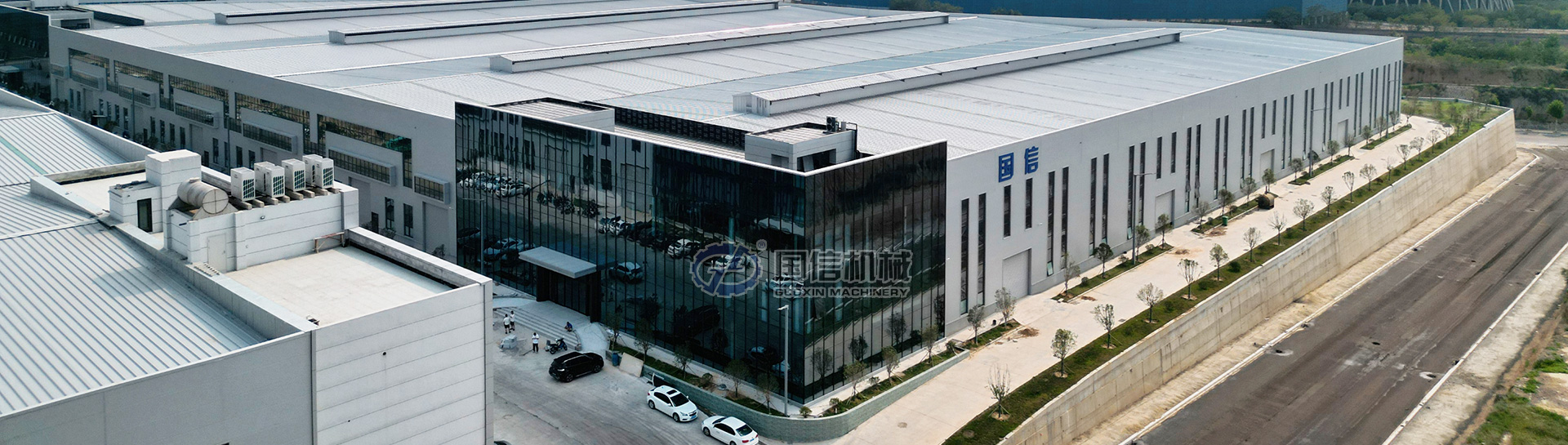
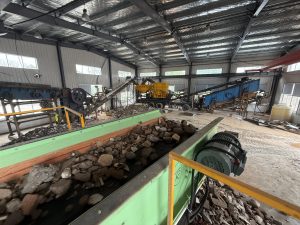
The economic viability of a Construction & Demolition (C&D) waste recycling project is determined by the purity of the final output. With landfill fees rising and the demand for recycled aggregates (RA) surging, the requirement for a C&D waste sorting plant has shifted from simple volume reduction to high-precision material isolation.
Guoxin’s automated C&D waste separation systems are engineered to handle the abrasive and heterogeneous nature of construction debris. By integrating high-torque mechanical liberation with multi-stage density separation, we ensure a 95% recovery rate for recycled concrete, bricks, and ferrous metals, while creating a high-calorific light fraction for RDF production.
Mechanical Process Logic: Total Material Liberation
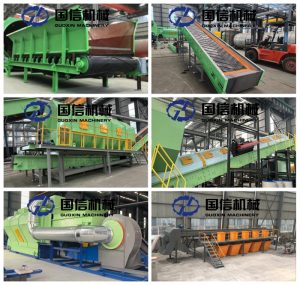
C&D waste contains heavy inerts, metallic rebar, and lightweight combustibles (wood, plastic, foam). Our process engineering focuses on protecting the machinery from abrasion while maximizing purity:
- Primary Heavy-Duty Screening: Utilizing VFD-controlled trommel screens or vibrating finger screens to remove soil and fine particles (<10mm) immediately, reducing the wear on downstream crushers and separators.
- High-Gradient Magnetic Separation: Positioned after primary screening to recover rebar and ferrous metals. Our systems utilize 2000+ Gauss overbelt magnets to protect downstream air separators from m damage.
- Air Density Isolation: The critical stage where heavy aggregates are separated from light impurities. Our recirculating air separators utilize a high-velocity “air knife” to lift paper, plastic, and wood, leaving behind clean, market-ready recycled aggregates.
Technical Specifications: 50 – 200 TPH Systems
Our C&D sorting lines are modular and scalable, designed for the extreme duty cycles of industrial recycling facilities.
| Technical Parameters | CDW-50 (Standard) | CDW-100 (Industrial) | CDW-200 (Large-Scale) |
| Processing Capacity | 50 – 70 Tons/Hour | 100 – 120 Tons/Hour | 180 – 220 Tons/Hour |
| Main Separation Tech | Air + Magnetic | Air + Magnetic + Optical | Full EPC Automation |
| Max Feeding Size | 500 mm | 800 mm | 1,000+ mm |
| Target Output | RA, Rebar, RDF | RA, Rebar, RDF, Wood | RA, Rebar, RDF, Mixed Plastics |
Wear Resistance in Abrasive Environments
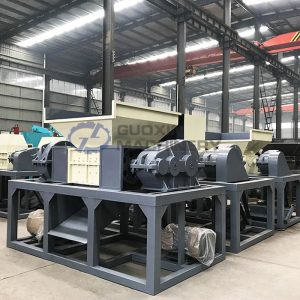
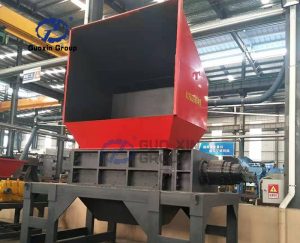
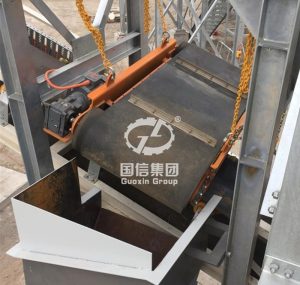
C&D waste is inherently abrasive. To minimize downtime and operational expenses (OPEX), we implement:
- Hardened Alloy Steel Liners: All impact zones in hoppers and chutes are lined with replaceable wear-resistant plates (NM450 or higher).
- Reinforced Conveyor Belting: Multi-ply, cut-resistant rubber belts are used to handle jagged concrete and rebar without puncture.
- PLC-Monitored Load Control: Automated feeding logic prevents “surging,” ensuring the air separators and screens operate at peak efficiency without mechanical choking.
Transforming Debris into Revenue Streams
A professionally engineered C&D sorting plant creates three distinct value-added products:
- Recycled Aggregates: High-purity concrete and brick fractions for use in road base or pre-cast concrete products.
- Scrap Metal: Clean rebar and ferrous metals for direct smelting furnace feedstock.
- Alternative Fuel (RDF): The light fraction (wood/plastic) processed into high-calorific fuel for cement kilns or WtE plants.
Request a Customized C&D Plant Layout & Price Quotation
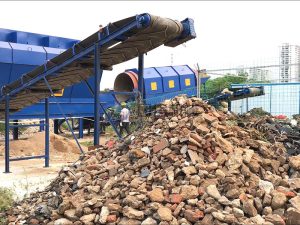
Project costs for C&D waste sorting depend heavily on waste composition and desired output purity. Provide your project parameters for a free 3D layout and ROI estimation.
Contact our EPC Team: Eve@guoxinmachinery.com
FAQ
Q1: How does the system handle sticky soil and fine dust in wet weather?
A: We integrate specialized star screens or high-inclination trommels with internal cleaning brushes. This ensures that fine soil is removed at the front end, preventing it from coating the recycled aggregates and lowering their market value.
Q2: What is the purity level of the recycled aggregate?
A: Through the integration of our high-velocity air density separators, we can achieve an aggregate purity of >95%, effectively removing over 90% of light contaminants such as wood, plastics, and insulation foam.
Q3: Is the system compatible with mobile crushing units?
A: Yes. Our stationary C&D sorting plants are designed to receive material directly from mobile primary crushers. We provide customized transition hoppers to ensure seamless material flow between mobile and stationary modules.
Q4: How much labor is required to operate a 100 TPH line?
A: A fully automated Guoxin line typically requires only 3-5 operators per shift (1 for the loader, 1 for the control room, and 2-3 for final quality control at the manual picking station), significantly reducing labor costs compared to traditional manual sorting.