

Products Description
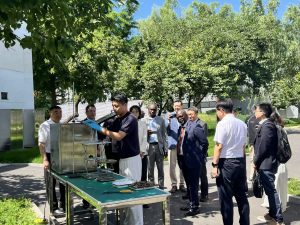
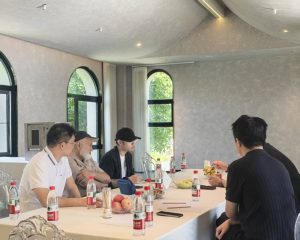
Sheikh Khalifa bin Jassim Al Thani, member of the Qatari royal family and Chairman of the Qatar Chamber of Commerce and Industry, inspects the technology
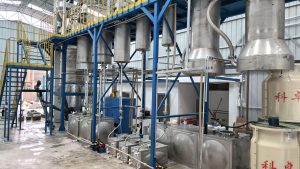
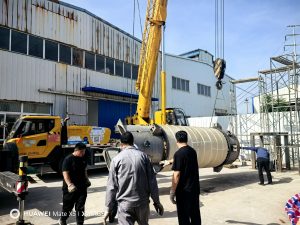
Co-resonantor
The Paradigm Shift in Waste-to-Energy: Overcoming Landfill & Incineration Flaws
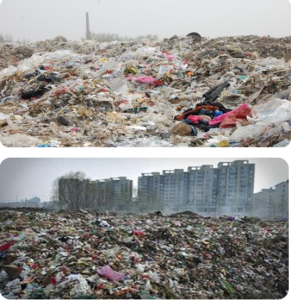
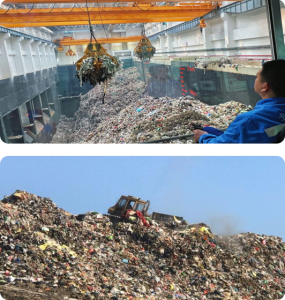
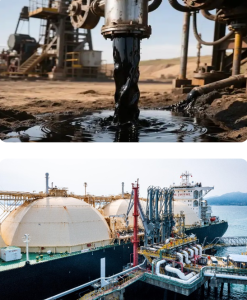
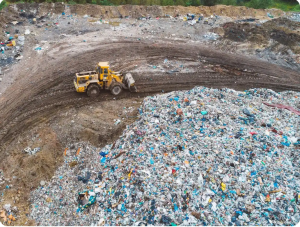
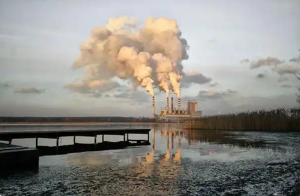
Global municipal and industrial operations face a critical dilemma in organic solid waste management:
-
Landfill Depletion: Over two-thirds of cities worldwide face severe landfill space exhaustion, with millions of tons of waste causing perpetual groundwater contamination through leachate leakages.
-
Incineration Pollution: High-temperature burning converts solid waste into airborne hazards, generating massive volumes of toxic fly ash, PM2.5, heavy metals, and carcinogenic dioxins while requiring high operating energy.
-
Resource Misallocation: Industrialized nations heavily rely on imported fossil fuels while burning or burying hydrocarbon-rich organic waste—essentially wasting an abundant “urban oilfield”.
Guoxin Group’s integrated Waste-to-Energy (WtE) System bridges the gap between mechanical waste sorting and advanced thermal conversion.
By pairing front-end pre-sorting machinery with back-end Wave Co-Frequency Resonance Cracking Technology, we transform waste from a costly municipal liability into a high-yield profit center.
Complete Integrated Process Flow: From Mixed MSW to Refined Bio-Energy
Our turnkey Waste-to-Energy infrastructure integrates automated mechanical sorting, RDF preparation, closed-loop leachate treatment, and low-temperature resonance cracking.
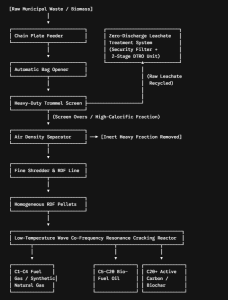
- Mechanical Pre-Sorting: Raw MSW passes through feeding conveyors, automatic bag openers, trommel screens, and air separators to isolate recyclables, heavy inerts, and organic fractions.
- RDF Processing & Briquetting: High-calorific plastics, paper, and textiles are shredded and compacted into uniform Refuse-Derived Fuel (RDF) pellets.
- Closed-Loop Leachate Management: Collected liquids pass through security filters and a Two-Stage Disc Tube Reverse Osmosis (DTRO) system, recycling clean water back into production without external discharge.
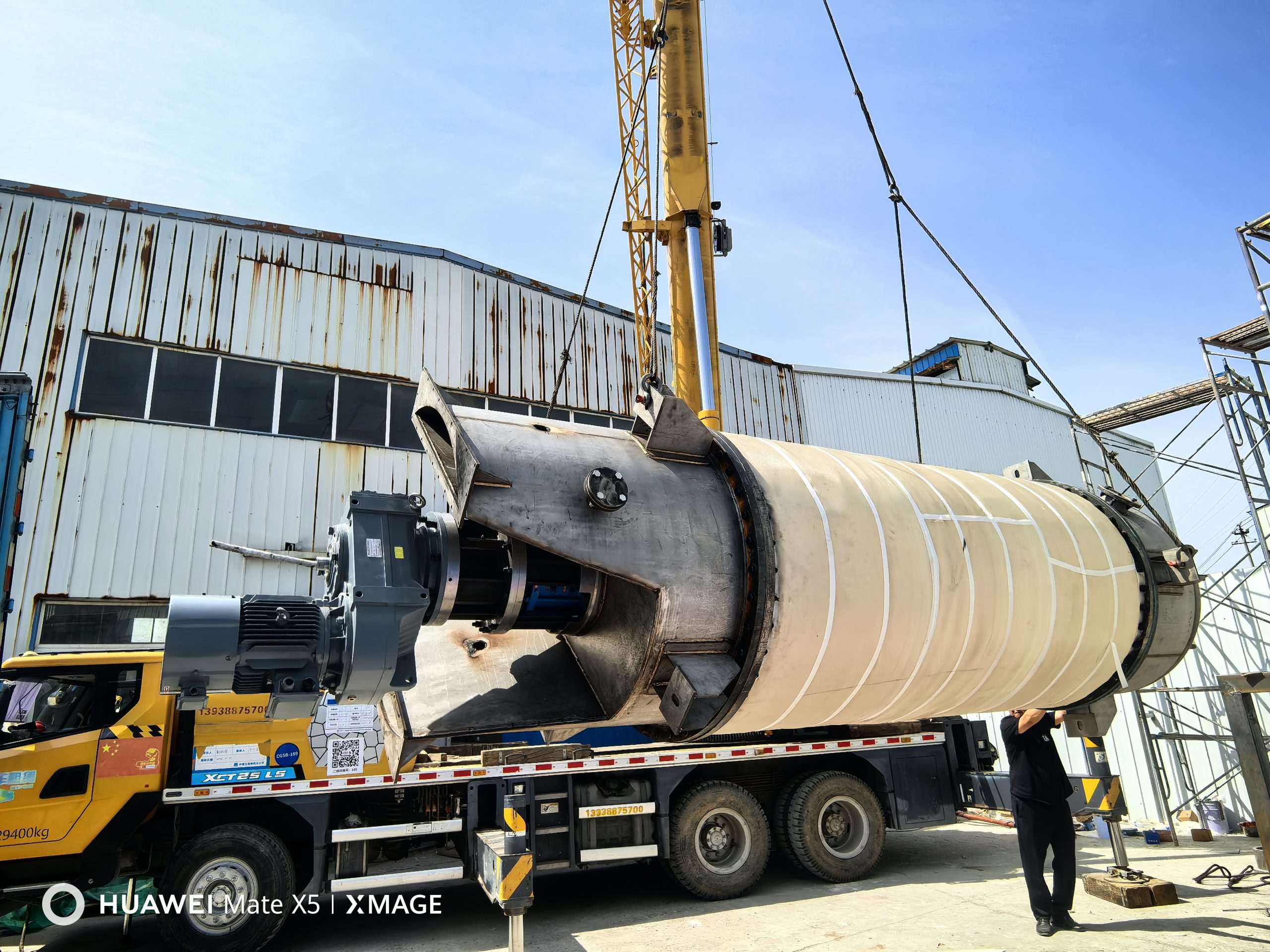
- Resonance Cracking Reactor: Prepared RDF or organic biomass enters a fully enclosed reactor, cracking macromolecular C-C bonds into high-value gas, oil, and carbon products.
Core Breakthrough: Wave Co-Frequency Resonance Technology
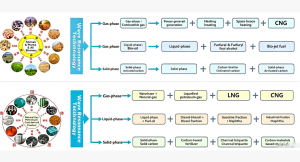
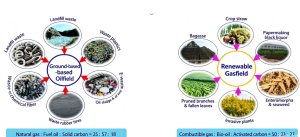
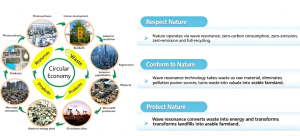
Unlike conventional pyrolyzers or open incinerators, our technology relies on precise physical wave frequencies to induce molecular resonance. This process breaks carbon-carbon (C-C) bonds in organic material in milliseconds without needing extreme combustion temperatures.
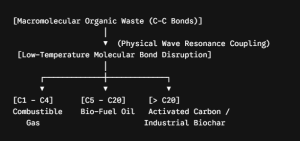
- Low Thermal Demand (<410°C): Operates at an internal reaction temperature under 410°C, requiring only 1/3 of the energy consumption of traditional waste incineration.
-
Zero Dioxin & Zero Fly Ash Generation: Operating in an oxygen-free, low-temperature enclosed reactor eliminates open-flame combustion, preventing the synthesis of hazardous dioxins, sulfur oxides, and toxic fly ash.
-
Complete Phase Separation: Molecules instantaneously crack into three distinct, high-purity yield fractions:
-
Gas Phase (C1–C4): Synthetic fuel gas for plant power generation, industrial boilers, or CNG/LNG upgrading.
-
Liquid Phase (C5–C20): High-energy bio-oil refined into industrial heating fuel, diesel components, or bio-aviation fuel.
-
Solid Phase (>C20): High-surface-area activated solid carbon used for agricultural carbon fertilizer, BBQ charcoal, or industrial adsorbents.
-
Four Main Waste Processing Tracks
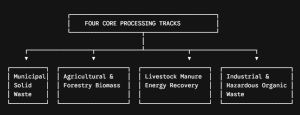
1. Municipal Solid Waste (MSW) & RDF Recovery
Tackles city garbage, sorting residue, and packaged plastic films. The system extracts inorganic metals and converts the light organic fraction into fuel gas, fuel oil, and industrial carbon.
2. Agricultural & Forestry Biomass Value Addition
Processes crop straw, orchard prunings, sugarcane bagasse, and sea algae. Produces high-grade combustible gas for rural heating alongside agricultural biochar to restore depleted soil structures and capture carbon credits.
3. Livestock Manure Energy & Fertilizer Conversion
Processes large-scale poultry, pig, and cattle manure directly without long aerobic composting cycles. Rapidly yields fuel gas for farm electricity and active carbon organic fertilizers, neutralizing surface water contamination.
4. Industrial & Electronic Organic Waste
Recovers complex industrial organic streams including scrap plastics, rubber tires, circuit board resin coatings, oil sludge, and chemical waste. Strips out metals while converting organic carriers back into synthetic oil and chemical feedstocks.
Project Economics & ROI Analysis (Single-Ton Yields)
Guoxin Group’s integrated WtE infrastructure shifts waste management from a municipality-subsidized cost burden into a self-sustaining revenue stream.
(Note: Data derived from standardized industrial operational models; values converted at ~1 USD = 7.2 RMB).
1. Municipal Solid Waste (MSW / RDF Screened Fraction)
- Processing Cost: ~$83.00 / Ton (598 RMB)
- Product Output Value: ~$164.00 / Ton (1,181 RMB)
| Output Category | Yield Share (%) DOCX | Commercial Application DOCX |
| Combustible Gas |
30% |
On-site Power Generation & District Heating |
| Bio-Fuel Oil |
17% |
Industrial Heating Fuel & Synthetic Diesel |
| Wood Vinegar Liquid |
18% |
Eco-Agriculture Deodorants & Soil Conditioning |
| Solid Active Carbon |
35% |
Industrial Adsorbents & Carbon Fertilizer |
| Net Tax & Profit |
~$81.00 / Ton (583 RMB/Ton Net Gain)
|
2. Biomass & Agricultural Crop Straw
- Processing Cost: ~$95.00 / Ton (686 RMB)
- Product Output Value: ~$205.00 / Ton (1,478 RMB)
| Output Category | Yield Share (%) DOCX | Commercial Application DOCX |
| Combustible Gas |
50% |
Rural Microgrid Electricity & Heating |
| Bio-Fuel Oil |
10% |
Liquid Bio-Fuel & Refined Bio-Aviation Base |
| Wood Vinegar |
12% |
Natural Agricultural Antiseptic |
| Biochar / Solid Carbon |
28% |
Soil Carbon Sequestration & Fertilizer Bases |
| Net Tax & Profit |
~$110.00 / Ton (792 RMB/Ton Net Gain)
|
3. Livestock & Poultry Manure Waste
-
Processing Cost: ~$67.50 / Ton (486 RMB)
-
Product Output Value: ~$151.00 / Ton (1,088 RMB)
| Output Category | Yield Share (%) DOCX | Commercial Application DOCX |
| Combustible Gas |
45% |
Farm Self-Powered Heating & Generation |
| Bio-Fuel Oil |
8% |
Industrial Fuel Blendstock |
| Wood Vinegar |
21% |
Odor Control Spray |
| Active Carbon |
26% |
Organic Bio-Fertilizers |
| Net Tax & Profit |
~$83.50 / Ton (602 RMB/Ton Net Gain)
|
Plant Deployment Models
Guoxin Group provides flexible engineering architectures to accommodate regional waste collection setups:
-
Skid-Mounted Containerized Units: Modular, low-footprint designs tailored for localized community waste stations, island facilities, and medium-scale livestock farms.
-
Centralized Industrial WtE Parks: High-capacity turnkey plants integrating multi-line MSW pre-sorting, automated RDF briquetting, and multi-reactor resonance cracking clusters for municipal districts.
FAQ
Q: How does resonance cracking prevent dioxin emissions compared to incineration?
A: Dioxins form in open combustion environments between 250°C and 500°C when oxygen, chlorine, and organic aromatics react. Guoxin’s resonance reactor operates in a fully sealed, oxygen-free system below 410°C using wave-frequency energy instead of open flame combustion, preventing dioxin synthesis at the molecular level.
Q: What is the benefit of integrating front-end sorting with back-end cracking?
A: Direct cracking of raw, unsorted MSW yields high ash and moisture content, reducing fuel quality. Guoxin’s mechanical sorting removes inerts (glass, stone, metals) and regulates moisture via DTRO leachate systems, delivering high-purity RDF pellets to the reactor for maximum bio-oil and gas output.
Q: How is leachate managed within the plant?
A: Wastewater collected from feed hoppers and trommel screens flows into a closed-loop collection basin. It passes through security filtration and a 2-stage DTRO system, recovering clean water for reuse while concentrating residues for safe thermal treatment.
Q: Can this equipment handle high-moisture agricultural straw or raw animal manure?
A: Yes. The process incorporates thermal pre-drying units powered by recycled flue gas and syngas generated by the reactor itself, maintaining energy efficiency across wet agricultural feedstocks.