
In the field of urban solid waste processing, managing pure construction and demolition (C&D) waste is relatively straightforward. However, recycling facilities increasingly face a more complex material stream: heterogeneous mixed C&D debris heavily admixed with municipal solid waste (MSW) and industrial scrap.
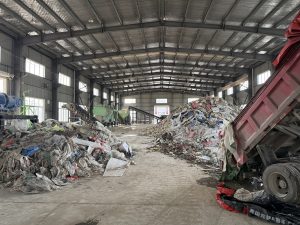
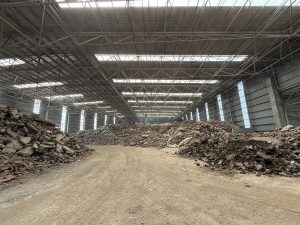
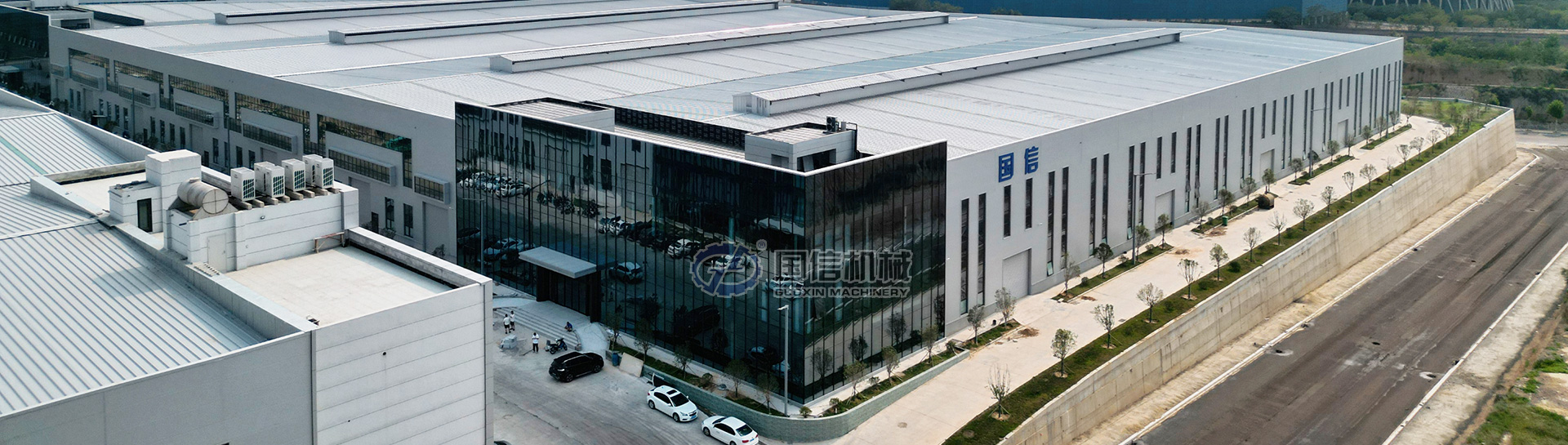
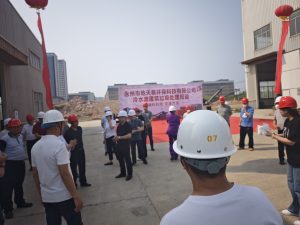
A newly commissioned sorting and resource-recovery complex in Yongzhou, Hunan Province, provides a blueprint for managing these highly complex matrices.
Engineered and supplied by system integrator Henan Guoxin Machinery Manufacturing Co., Ltd., the facility processes a highly variable feedstock composed of:
- Inorganic Non-Metallics: Structural concrete, clay bricks, river stones, ceramics, and glass shards.
- Metallic Fractions: Structural rebar, iron wire, aluminum alloy window frame profiles, and tramp metals.
- Organic Combustibles: Demolition wood, mixed polymers, cardboard, packaging films, textiles, and asphalt fragments.
- Admixed Contaminants: Intermingled domestic household waste, gypsum wallboards, and rock wool insulation.
To transform this highly abrasive, cluttered stream into commercial-grade secondary raw materials, the plant deploys a continuous four-stage process logic:
Front-end volumetric control, mid-stream calibration, back-end high-purity separation, and ultimate closed-loop valorization.
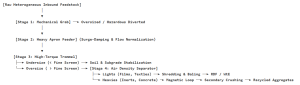
The Four-Stage Mechanical Processing Framework
Stage 1: Macro Pre-Sorting & Scalping
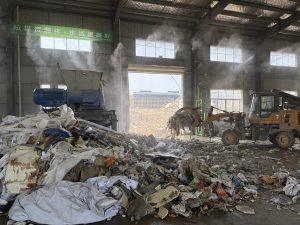
Before entering the automated system, the raw, bulk waste undergoes macro pre-sorting via heavy excavator grapples and wheel loaders. This step isolates oversized elements—such as massive concrete columns, long structural steel beams, and large hazardous objects—preventing downstream blockages and protecting the automated equipment from mechanical failure.
Stage 2: Volumetric Flow Regulation via Apron Feeding
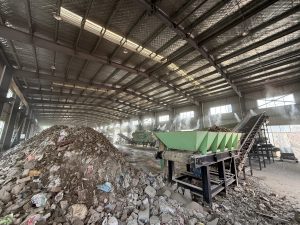
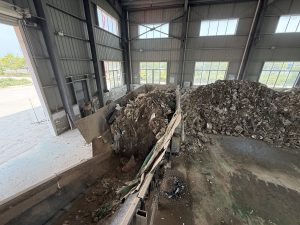
Following pre-sorting, material is loaded into a heavy-duty apron feeder. Because mixed C&D has an incredibly erratic bulk density and irregular particle shapes, a standard belt conveyor would suffer from frequent slipping, tracking errors, or sudden material surges.
The Guoxin apron feeder acts as a heavy-duty mechanical surge-damping mechanism. By utilizing variable-speed steel slats, it transforms erratic, piled dumps into a thin, uniform, and continuous volumetric material flow vector. This constant feed rate eliminates shock loading on downstream separation units, maximizing their operational efficiency.
Stage 3: Mechanical Sizing via Industrial Trommel Screening
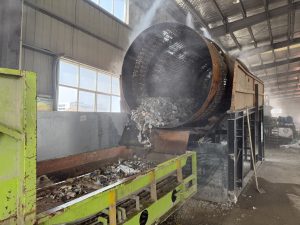
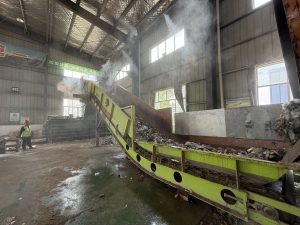
The regulated material stream then moves into a high-torque trommel screen for mechanical size classification. The trommel splits the stream into two distinct fractions based on physical dimensions:
- The Undersize Fraction (Fines): Small, earth-rich soil particles, fine brick dust, and pulverized organics pass through the screen meshes. These are evacuated early to prevent them from sticking to and blinding downstream optical or air sorting machines.
- The Oversize Fraction: Large, high-value components (concrete blocks, bricks, plastics, metals, and wood) exit the end of the trommel cylinder and proceed directly to the primary sorting matrix.
Stage 4: Aerodynamic Density Separation & Metal Extraction
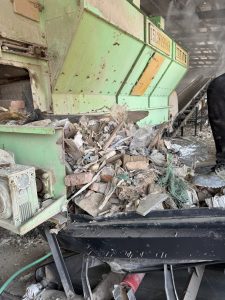
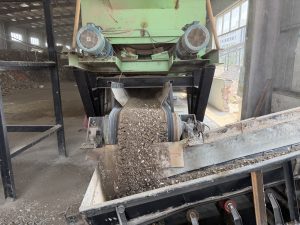
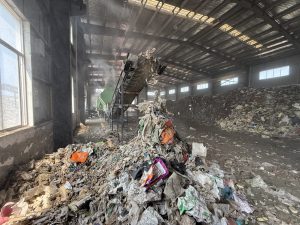
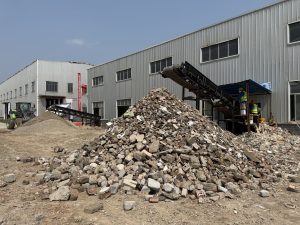
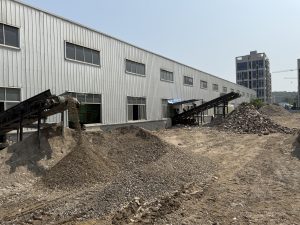
The oversize stream enters a comprehensive air density separator (air classifier). Using a synchronized system of positive-pressure air knives and negative-pressure dust extraction loops, the machine separates materials based on their terminal velocity:
- The Light Fraction: High-surface-area materials like plastic shopping bags, woven polypropylene sacks, paper scraps, and textiles are entrained by the airflow, lifted over a splitter plate, and routed to an expansion chamber.
- The Heavy Fraction: Dense concrete blocks, stone aggregates, and bricks drop straight through the air stream onto a heavy discharge conveyor.
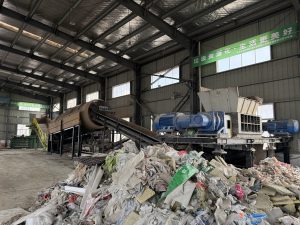
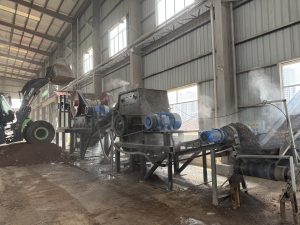
Before the heavy fraction undergoes final size reduction, a high-gradient overbelt magnetic separator extracts liberated iron wire, rebar fragments, and ferrous metals, protecting the downstream crushers from uncrushable metal damage. The clean inert fraction is then fed into an impact or jaw crusher to produce calibrated secondary aggregates.
Multi-Stream Downstream Valorization: Turning Waste into Profit
The ultimate success of the Yongzhou facility lies in its ability to achieve total resource recovery, turning every separated fraction into a marketable commodity backed by industry-standard application data:
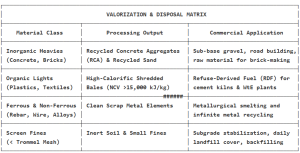
1. Inorganic Inert Fraction: High-Quality Recycled Aggregates
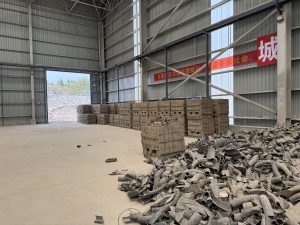
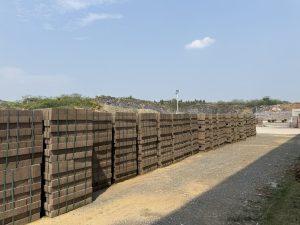
The crushed and screened heavy fractions are transformed into premium Recycled Concrete Aggregates (RCA) and recycled sand, categorized into distinct commercial grades (e.g., 0–5 mm, 5–10 mm, and 10–30 mm).
- Infrastructure & Civil Engineering: Coarse aggregates are sold directly as unbound base and sub-base material for highway construction and foundational roadbeds.
- Recycled Structural Products: The 0–10 mm fractions are routed to automated concrete block-making lines. By replacing up to 30% to 50% of virgin river sand and gravel with RCA, local manufacturers produce eco-friendly pavement pavers, interlocking bricks, and retaining wall blocks that meet stringent regional structural compressive strength standards.
2. Organic Light Fraction: Premium Refuse-Derived Fuel (RDF)
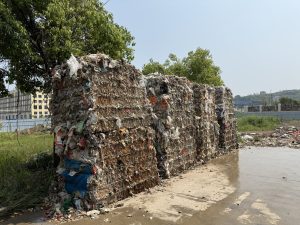
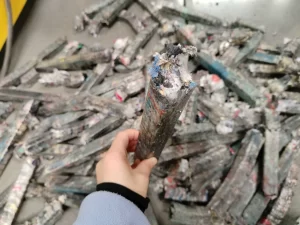
The light fraction collected by the air density separator (plastics, paper, packaging films, and wood scraps) undergoes high-density compression and shredding.
- Alternative Fuel Markets: This processed light fraction features a Net Calorific Value (NCV) exceeding 14,000–16,000 kJ/kg (approx. 3,300–3,800 kcal/kg) with low residual moisture. It is baled and shipped directly to regional cement kilns and coal-fired power stations as high-grade Refuse-Derived Fuel (RDF). This alternative fuel allows heavy industries to substitute up to 30% of their fossil coal consumption, lowering carbon emissions and significantly reducing energy expenses.
- Waste-to-Energy (WtE) Integration: Non-RDF-grade combustibles are wrapped and routed to local municipal incineration plants, converting localized waste into grid-tied electrical energy.
3. Metallic and Fine Fractions
Ferrous metals (rebar, structural wire) and non-ferrous aluminum profiles are sent directly to metallurgical smelting plants for 100% closed-loop recycling. Meanwhile, the organic-rich soil fines isolated by the trommel are utilized for daily landfill cover material, site backfilling, or landscape grade-stabilization, completely eliminating the need for landfill disposal.
Summary
The performance of the Yongzhou complex demonstrates that managing mixed C&D waste does not require sacrificing equipment life or sorting purity. By utilizing a rugged front-end apron feeder, a precise intermediate trommel screen, and a high-efficiency air density separator, operators can reliably divert up to 90% of mixed waste streams into profitable, high-value secondary raw materials.