
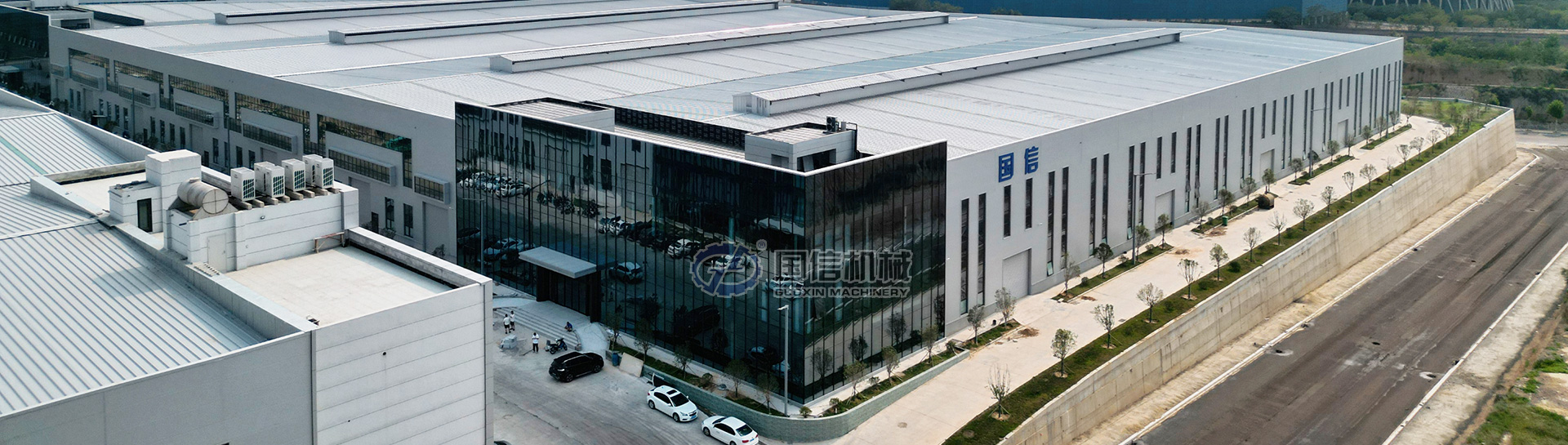
Executing a large-scale Municipal Solid Waste (MSW) infrastructure project requires managing an incredibly complex web of mechanical equipment, automated sorting technologies, and structural civil works. When configuring a new facility, project developers often face a critical strategic choice: should they purchase individual machinery components from separate vendors, or partner with a unified turnkey recycling system integrator?
While piece-by-piece component sourcing may initially appear cost-effective on paper, it introduces massive interface risks, structural alignment errors, and split liabilities. A dedicated Engineering, Procurement, and Construction (EPC) approach ensures that the entire MSW sorting plant operates as a single, synchronized machine, drastically compressing execution timelines and maximizing return on investment (ROI).
1. The Core Responsibilities of a Turnkey Recycling System Integrator
A qualified system integrator does not merely manufacture machinery; they bridge the gap between abstract waste-characterization data and structural, mechanical reality. The integration lifecycle spans three critical engineering phases:
Phase 1: Custom Material Flow and Mass-Balance Engineering
Before a single piece of steel is cut, the integrator analyzes the specific local waste composition (moisture percentages, organic fractions, inert aggregates). This data defines the mass-balance calculations, ensuring that the throughput capacity of the primary turnkey shredder plant perfectly balances with the downstream sorting efficiencies of trommel screens and optical sorters.
Phase 2: Single-Source Equipment Matching
A system integrator selects, customizes, and pairs heavy-duty equipment to eliminate operational mismatches. For instance, they ensure that the magnetic pulley width on a secondary sorting line perfectly corresponds to the continuous discharge velocity of the upstream shredder, eliminating bottleneck zones.
Phase 3: Centralized Industrial Automation (SCADA/PLC)
Instead of dealing with five different control panels from five separate manufacturers, a turnkey partner integrates the entire facility under a unified PLC control architecture. This allows for centralized emergency stops, interlocking safety protocols, and automated variable frequency drive (VFD) adjustments from a single control room.
2. Engineering Blueprint for a 300 TPD Turnkey Recycling Plant
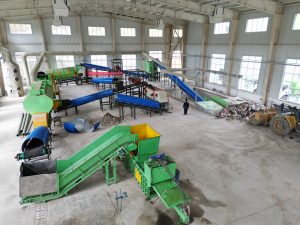
To visualize how a cohesive integration strategy functions, review the standardized structural blueprint for a medium-capacity 300 TPD (Tons Per Day) mixed MSW recovery facility:
| Processing Sub-System | Core Machinery Component | Technical Target Parameter | Primary Automation Standard | Integrated Interface Target |
| Stage 1: Primary Intake | Hydraulic Slat Conveyor | Continuous feed at 0.1–0.3 m/s | Low-speed, high-torque PLC drive | Directly linked to Primary Bag Opener |
| Stage 2: Coarse Sizing | Heavy-Duty Trommel Screen | 80mm / 200mm split fractions | Dynamic variable speed control | Chuted output to air classifiers |
| Stage 3: Size Reduction | Dual-Shaft Turnkey Shredder Plant | Final fraction size <50mm | Auto-reverse anti-jam mechanism | Fed via synchronized impact beds |
| Stage 4: Automated Sorting | Optical & Magnetic Sorters | 95%+ purity recovery rates | High-speed air ejector valves | Aligned with heavy discharge balers |
3. Eliminating Interface and Installation Risks
The single greatest failure point during the commissioning of an automated recycling facility occurs at the physical and digital interfaces between different machines.
Why Siloed Procurement Fails:
- Chute Misalignments: A conveyor manufactured by Vendor A frequently fails to drop material at the correct angle or trajectory into a sorting deck manufactured by Vendor B, causing material accumulation and severe spillage.
- Electrical Control Gaps: Getting a foreign shredder’s control system to communicate seamlessly with another manufacturer’s emergency-stop loop often requires extensive, expensive programming modifications on-site.
- Split Warranty Liabilities: If an inline conveyor system backs up and damages a downstream bag breaker, vendors typically blame each other, leaving the plant owner to cover the repair costs and endure costly downtime.
A unified system integrator accepts sole single-point responsibility. Every transition chute, support structural framework, and communication protocol is pre-verified in a digital environment before shipping, guaranteeing seamless on-site assembly.
4. Accelerate Engineering Timelines with 3D Field Modeling
Maximizing plant ROI requires minimizing the time between capital expenditure and commercial operations. Developing a reliable plant layout demands absolute precision from day one to eliminate field-welding delays and foundation errors during installation.
By mapping out the absolute physical footprints, static load weight distributions, and maintenance clearance pathways during the design phase, your engineering desk can visualize material flow and eliminate mechanical interferences long before the concrete is poured.
Access Industrial Layout Design Assets:
If your project team is currently drafting structural outlines or evaluating equipment spacings for a new municipal facility, utilize our verified technical baselines. Download standardized engineering templates, structural load parameters, and step-by-step process schematics by visiting our master integrated waste processing plant 3d model layout design coordination portal.