

Products Description
Industry Analysis
In tropical regions like Vietnam and throughout Southeast Asia, Municipal Solid Waste (MSW) typically exhibits high moisture content and a high proportion of organic matter. This leads to the generation of leachate with extremely high concentrations of Chemical Oxygen Demand (COD), Ammonia Nitrogen (NH3-N), and suspended solids. Waste transfer stations face the dual challenge of limited footprint and fluctuating influent quality, making traditional biological treatment unstable. A “Total Membrane” approach—utilizing inorganic ceramic membranes as a robust pre-treatment—has emerged as the most reliable solution to ensure consistent compliance with municipal sewage network discharge standards.
1. Design Basis & Water Quality Parameters
1.1 Project Overview
This technical solution outlines the design, process flow, and equipment specifications for a leachate treatment station. The system utilizes a Total Membrane Filtration process to ensure treated effluent meets local discharge requirements for sewage networks.
-
Capacity: 30m³/D (Operating 12 hours/day).
-
Core Technology: Ceramic Membrane + Nanofiltration (NF) + Reverse Osmosis (RO).
-
Objective: Direct discharge into the municipal sewage network.
1.2 Water Quality Analysis
The primary focus of this engineering design is the significant reduction of organic load, specifically targeting a drop in COD from raw levels to compliant discharge levels.
Table 2-1: Estimated Influent Quality (Based on Empirical Data)
| Parameter | Unit | Value |
| pH | – | 8 – 9 |
| COD | mg/L | ≤ 2,000 |
| Ammonia Nitrogen (NH3-N ) | mg/L | ≤ 280 |
| Conductivity | μS/cm | ≤ 3,000 |
Table 2-2: Effluent Discharge Standards
| Parameter | Unit | Standard |
| pH | – | 7 – 9 |
| COD | mg/L | ≤ 500 |
| Ammonia Nitrogen (NH3-N) | mg/L | ≤ 25 |
2. Process Flow & Logic
The treatment logic is designed to maximize contaminant rejection while maintaining system flux through a multi-stage physical barrier.
Process Sequence:
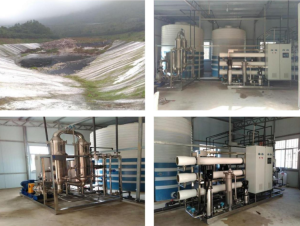
Leachate Collection → Equalization Tank (Client-provided) → Lift Pump → Ceramic Membrane System → NF Membrane System → RO Membrane System → Compliant Discharge.
-
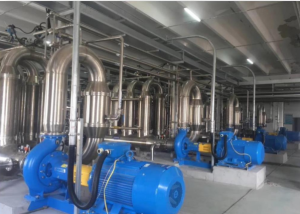
Concentrate Management: Ceramic and NF retentate is initially returned to the equalization tank. Future operational phases may integrate MVR evaporation for crystallization and salt removal.
-
RO Recirculation: RO concentrate can be routed back to the NF inlet for continuous circulation.
3. System Component Specifications
3.1 High-efficiency Ceramic Membrane Module (Pre-treatment)
Ceramic
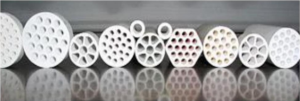
Asymmetric inorganic membranes with high mechanical strength and chemical stability are used to remove suspended solids and stabilize the organic load.
-
Material: 99% α-Al2O3 (Support), Zirconia (Membrane).
-
Pore Size: 50nm.
-
Advantages: pH resistance (0-14), high-temperature tolerance, and high separation efficiency due to narrow pore distribution. This stage ensures the longevity of the downstream organic membranes.
3.2 Multi-stage NF/RO System
Nanofiltration (NF)
-
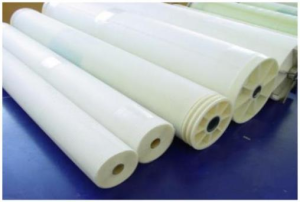
NF Unit: Operates at 0.5–3.5 MPa; removes organics, pigments, and antibiotics (Molecular weight cutoff: 100–1000 Dalton).
-
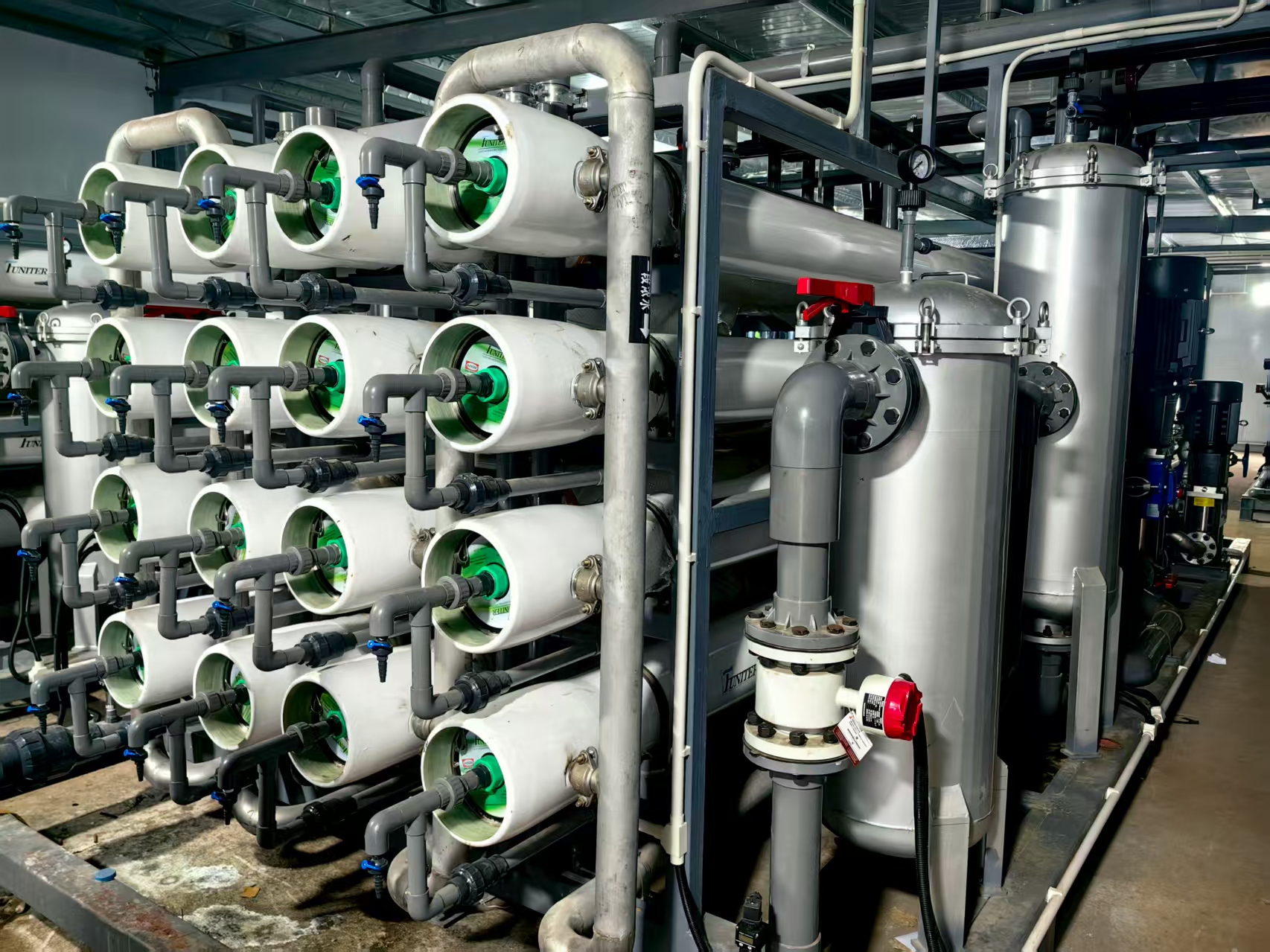
RO Unit: High-rejection spiral-wound composite membranes. Ensures total dissolved salts (TDS) < 1000 mg/L and COD < 50 mg/L.
4. Equipment Configuration & Investment
4.1 General Equipment Inventory
| Segment | Key Specifications | Quantity |
| Ceramic System | High-efficiency Ceramic Membrane Modules, SS304 pressure housings | 1 Set |
| NF System | Industrial NF membranes, SS304 membrane housings | 1 Set |
| RO System | High-rejection RO membranes, SS304 membrane housings | 1 Set |
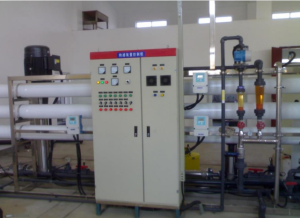
| Electrical | Integrated control cabinet, high-standard electrical components | 1 Set |
4.2 Project Budgetary Estimate
The investment for a standard 30m³/D leachate treatment system generally ranges from $185,000 to $210,000 USD.
Note: Every leachate project is unique. The final configuration and pricing are customized based on specific raw water reports, required local discharge standards, site logistics, and desired automation levels.
5. Technical Services & Quality Assurance
5.1 Service Content
We provide comprehensive technical support, including P&ID drawings, electrical logic diagrams, civil construction condition drawings, and detailed operation manuals within 15 days of contract finalization.
5.2 Quality Control
Strict quality control and project management tracking throughout the production cycle.
5.3 Warranty & After-Sales
-
Warranty: 12 months from the date of acceptance.
-
Support: 24-hour response time for technical inquiries.
-
Consumables: Long-term supply of seals, spare parts, and cleaning chemicals at preferential rates.
6. FAQ
Q: How is the system controlled for international projects?
A: The system features integrated automated control for liquid levels and pump switching. It includes emergency stop protocols and mechanical safety buffers. While we supply the core equipment, we provide all technical documentation for the local installation team.
Q: What happens if the leachate quality fluctuates significantly?
A: The equalization tank is critical for water quality buffering. Our Ceramic + NF + RO multi-stage approach is specifically designed to handle variations in organic load that would otherwise foul a single-stage organic membrane system.
Q: Is the concentrate treatment included in the basic price?
A: The basic process recirculates concentrate. For zero-liquid discharge (ZLD) requirements, we can provide a supplementary MVR evaporation module as the project evolves.
Interested in a Custom Technical Proposal?
[Contact Our Engineering Team] | [Download Project Case Studies] | [Eve@guoxinmachinery.com]