
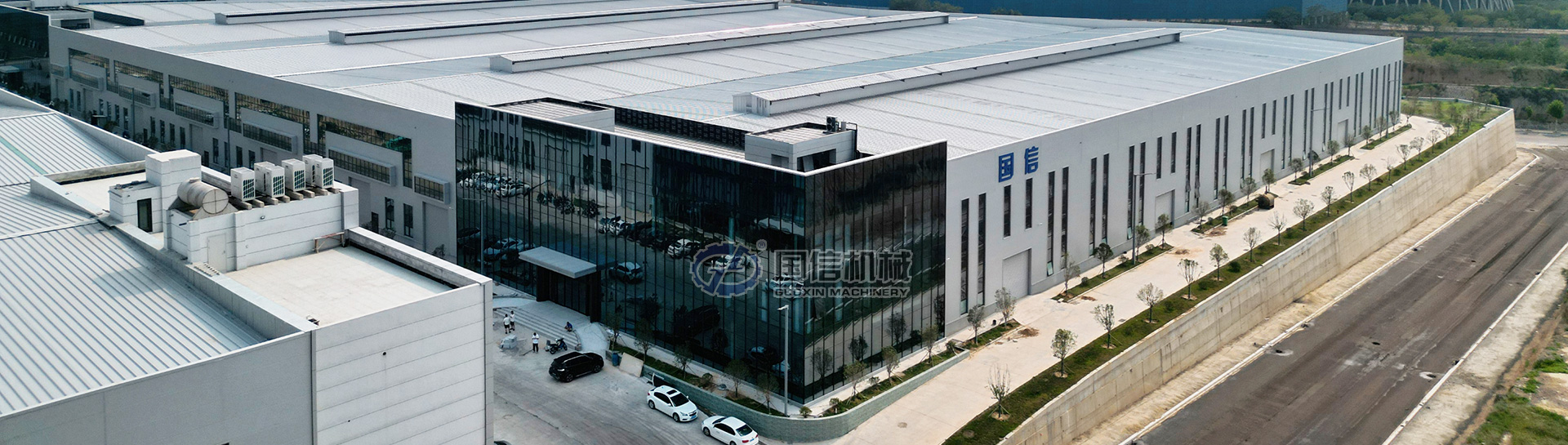
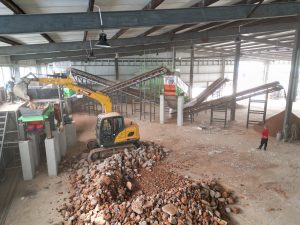
Processing Construction and Demolition (C&D) waste presents a fundamentally different set of engineering challenges compared to municipal solid waste (MSW). While MSW consists primarily of flexible plastics, organics, and paper, C&D waste streams are heavily loaded with high-abrasion, high-density materials such as concrete chunks, brick fragments, rebar, asphalt, and excavated soil, mixed alongside light contaminants like wood and insulation panels.
To successfully reclaim high-purity recycled concrete aggregates (RCA) and structural steel without destroying downstream machinery, choosing a generic waste separation machine is not enough. Plant operators must deploy specialized, heavy-duty c&d waste recycling equipment capable of handling extreme impact forces and severe abrasive wear.
1. Mechanical Challenges: Why Standard Sorters Fail on C&D Waste
In a rugged C&D environment, equipment longevity is dictated by how well the system mitigates impact and friction. Standard sorting lines experience rapid catastrophic failure due to three main factors:
-
High Mohs Hardness Aggregates: Concrete aggregates and basalt stones typically exhibit a Mohs hardness ranging from 5 to 7. Feeding these directly into standard steel hoppers leads to rapid wall thinning and structural cracking.
-
Intended Destruction from Tramp Iron: Heavy rebar, structural I-beams, and thick steel plates can easily wedge into conveyor transfer points, tearing multi-ply fabric belts within seconds.
-
Dust and Fine Particulate Ingress: C&D processing generates immense volumes of crystalline silica dust, which penetrates non-sealed bearing blocks, causing premature seizing of rollers and screens.
To counter these factors, advanced plant layouts utilize heavy impact beds, vulcanized rubber components, and thick NM400 or NM500 wear-resistant steel liners at every material transition chute.
2. Multi-Stage Separation Flowchart for C&D Lines
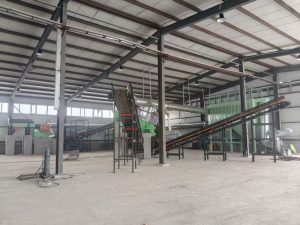
An optimized C&D recycling line utilizes a multi-stage mechanical sorting sequence to progressively isolate materials by size, magnetic properties, and density.
[Raw C&D Feed] ➔ [1. Heavy Grizzly Feeder] ➔ [2. Primary Jaw/Impact Crusher]
                                                       ↓
[Clean Aggregates] 🔀 [4. Wind Sifter / Air Separator] ➔ [3. Overband Cross-Belt Magnet]
                                                       ↓
                                            [Recovered Scrap Metals]
Step 1: Scalping & Primary Size Separation
The raw feed enters a heavy-duty vibrating grizzly feeder. Fines, soil, and sand (<40mm) are bypassed immediately to avoid choking the primary crusher. Large concrete blocks are directed to a specialized hydraulic jaw or impact crusher to reduce particle sizes to a uniform sub-100mm profile.
Step 2: Strategic Iron and Steel Recovery
Immediately following the primary reduction stage, an industrial Overband Cross-Belt Magnetic Separator suspended over the conveyor line extracts rebar, wire mesh, and structural steel fragments. This step is vital to protect the belts of the subsequent sorting stages.
Step 3: Air Density Separation (The Wind Sifter)
Once metals and heavy aggregates are stabilized, the material stream enters a high-velocity air density separator. Controlled air knives inject a high-pressure stream upward through the falling material curtain. Heavy aggregates fall straight through to the discharge conveyor, while light fractions (wood shavings, foam, paper, and film plastics) are blown upward into a cyclone collector.
3. C&D Equipment Engineering & Structural Parameter Matrix
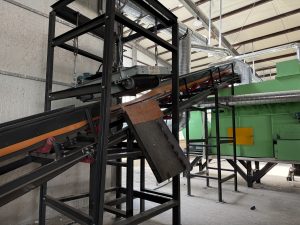
When engineering or upgrading a high-tonnage C&D recycling facility, system components must align with targeted material hardiness and volume thresholds:
| Process Stage | Core Machinery Config | Target Material Cut-Size | Max Material Hardness (Mohs) | Wear Protection Standard |
| Primary Feeding | Vibrating Grizzly Feeder | Bypasses <40mm fines | Up to 7.5 Mohs | 20mm NM500 Bolted Liners |
| Size Reduction | Heavy-Duty Impact Crusher | Reduces input to <100mm | Up to 6.5 Mohs | High-Chromium Blow Bars |
| Ferrous Recovery | Cross-Belt Rare Earth Magnet | Extracts 10mm to 500mm iron | N/A (Metallic) | Stainless Steel Wear Plates |
| Density Sorting | Industrial Air Wind Sifter | Separates plastics/wood from stone | Up to 7.0 Mohs | Anti-Abrasion Ceramic Coating |
4. Scaling Your Facility with Integrated Systems
Achieving a high purity rate for recycled concrete aggregates requires seamless structural integration between your primary sizing decks and secondary density sorters. Every chute angle, conveyor belt speed, and air velocity setting must be dynamically balanced to handle fluctuating feed rates without bottlenecking the plant.
If you are expanding into urban aggregate reclamation or municipal solid waste infrastructure, utilizing comprehensive 3D layout data is the safest way to prevent structural interferences and optimize material routing before foundations are poured.
Engineering Design Support: For heavy-duty project engineering, look into our automated configurations and project blueprints. Discover how our system designs deploy highly integrated c&d waste recycling equipment by visiting our master custom 3D-driven plant layout portal.