
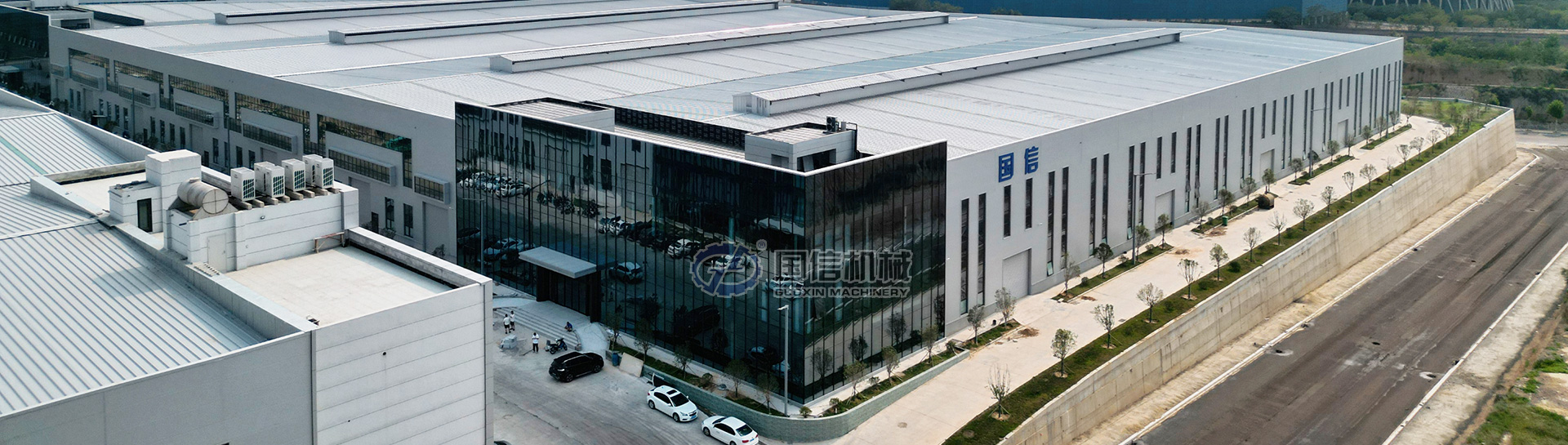
Location: Guoxin Group Manufacturing Workshop
Date: June 24, 2026
Feedstock: Post-consumer textiles, old clothing, and fabric scraps
Target Application: Refuse-Derived Fuel (RDF) Production
Processing textile waste is notoriously difficult. Old clothes, synthetic fabrics, and woven bags have an extremely low bulk density and a high tendency to tangle around mechanical rotors. However, they also possess a remarkably high calorific value, making them an ideal candidate for Refuse-Derived Fuel (RDF) if they can be properly densified.
To demonstrate our continuous extrusion capabilities, our engineering team conducted a live workshop trial on June 24, 2026. The objective was to process low-density shredded textiles into high-density RDF briquettes using our heavy-duty ring die extrusion machine.
Here is the technical breakdown of the trial run.
1. Feedstock Preparation & Dosing
Before entering the briquetting phase, the raw textile waste must be properly sized. As shown in the trial footage, the incoming material (piles of mixed fabric scraps and clothing) was first processed through a primary shredder. The result is a homogenous stream of lightweight, 2D fabric flakes.
This pre-shredded material is continuously metered onto an inclined conveyor belt. Maintaining a steady, uniform feed rate is critical to prevent the extrusion die from choking and to ensure the final briquettes have consistent structural integrity.
2. High-Pressure Ring Die Extrusion
The core of the trial takes place inside the green heavy-duty RDF Briquette Machine. This system utilizes a high-compression ring die matrix.
- The Mechanism: The shredded fabric is fed into the central chamber. Heavy internal press rollers force the lightweight material through the precisely engineered cylindrical holes of the steel ring die.
- The Physics: The extreme mechanical pressure generates significant frictional heat. This heat slightly softens the synthetic fibers (like polyester and nylon) present in the fabric, allowing them to act as a natural binder.
- The Result: No external chemical adhesives are required. The machine seamlessly extrudes solid, tightly bound cylindrical briquettes.
3. Trial Results & Material Transformation
The macroscopic close-ups of the extrusion matrix confirm a successful trial. The transformation of the material solves two massive problems for waste-to-energy operators:
- Logistical Efficiency: The chaotic, voluminous pile of fabric scraps is converted into uniform, dense logs. This drastically reduces the physical footprint required for storage and slashes transportation costs per ton.
- Combustion Stability: Loose fabrics burn too rapidly and unpredictably in industrial kilns. These highly compressed RDF briquettes provide a stable, long-lasting burn with a consistent energy output, making them a premium commodity for cement plants and power stations.
Test Your Own Feedstock with Us
Visual proof is the foundation of engineering trust. If your facility handles complex industrial waste, municipal solid waste, or specific agricultural biomass, do not rely on theoretical calculations.
Ship a sample of your raw material to the Guoxin Group testing facility. We will run a live trial through our shredding and RDF briquetting lines and provide you with the densified output, real-time video footage, and a comprehensive mass-balance report.
Book a material testing session or request equipment specs: Eve@guoxinmachinery.com