

Products Description
The Heart of RDF Production
The RDF Machine (Refuse Derived Fuel Briquettor) is the final, critical stage in transforming low-density combustible waste into a high-calorific coal substitute. While shredders and separators prepare the material, the RDF machine determines the final density, storage stability, and combustion efficiency of your product.
Guoxin Machinery’s third-generation RDF presses are engineered for the harsh realities of mixed solid waste. Our systems handle the residual moisture and diverse particle sizes that standard biomass pelletizers fail to process, producing fuel with a calorific value of up to 5,000 kcal/kg.
Machine Architecture & Durability
Unlike standard presses, our RDF machine is built for 24/7 heavy-duty industrial cycles:
-
Reinforced Forming Chamber: Using heat-treated alloy steel to withstand the abrasive nature of industrial waste.
-
Automatic Lubrication System: Ensures continuous operation of the main bearings under high pressure.
-
Dual-Direction Compression: Increases the bulk density of the briquettes to over 1.1 t/m³, reducing logistics costs.
-
Integrated Heating Control: Stabilizes the lignin bonding in biomass waste, ensuring the briquettes do not crumble during transport.
From Shredding to Fuel: System Integration
The RDF machine does not work in a vacuum. To achieve high-quality fuel, it must be part of an integrated RDF Production Line:
-
-
Coarse & Fine Shredding: Reducing waste to < 50mm particles. (See our [RDF Shredder Solutions])
-
Advanced Sorting: Removing non-combustibles (metals, glass, stones). (See our [Mixed Waste Management])
-
Moisture Control: Drying material to 10% – 15% for optimal bonding.
-
RDF Briquetting: The final compression into 30mm diameter particles or 50x50mm cubes.
-
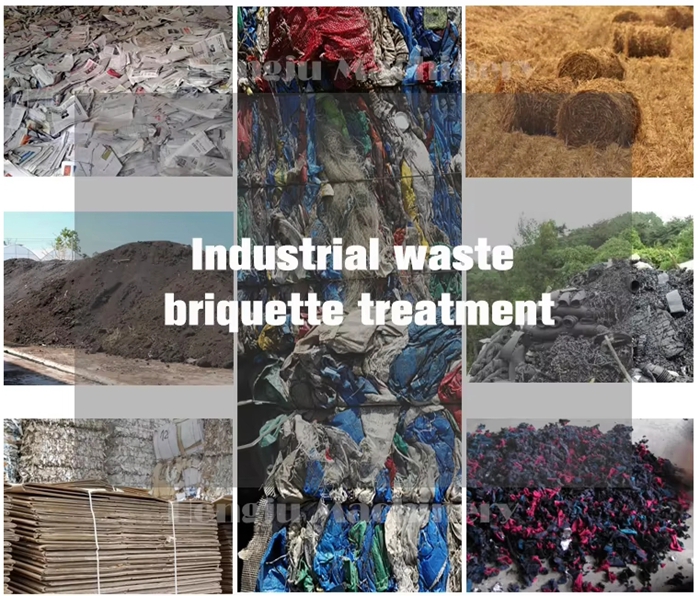
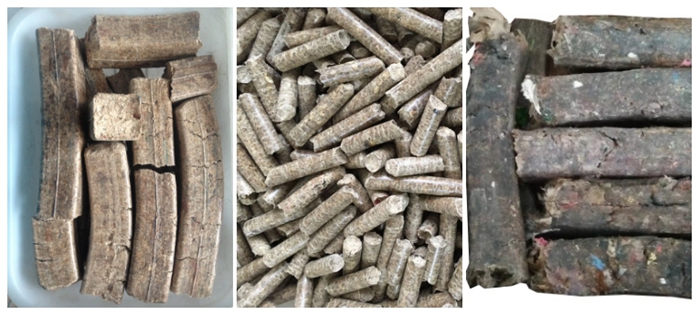
The finished briquette shape can be either round or square. The calorific value of the formed fuel rod is as high as 5000kcal/kg, and it has the characteristics of high density, stable calorific value, easy transportation, easy storage, low pollution, and low emission of toxic substances.
The produced RDF particles have a diameter of 30mm, a length of 50mm, and a moisture content of about 13%, and are widely used in waste power plants, cement plants, and boiler plants to prepare fuel
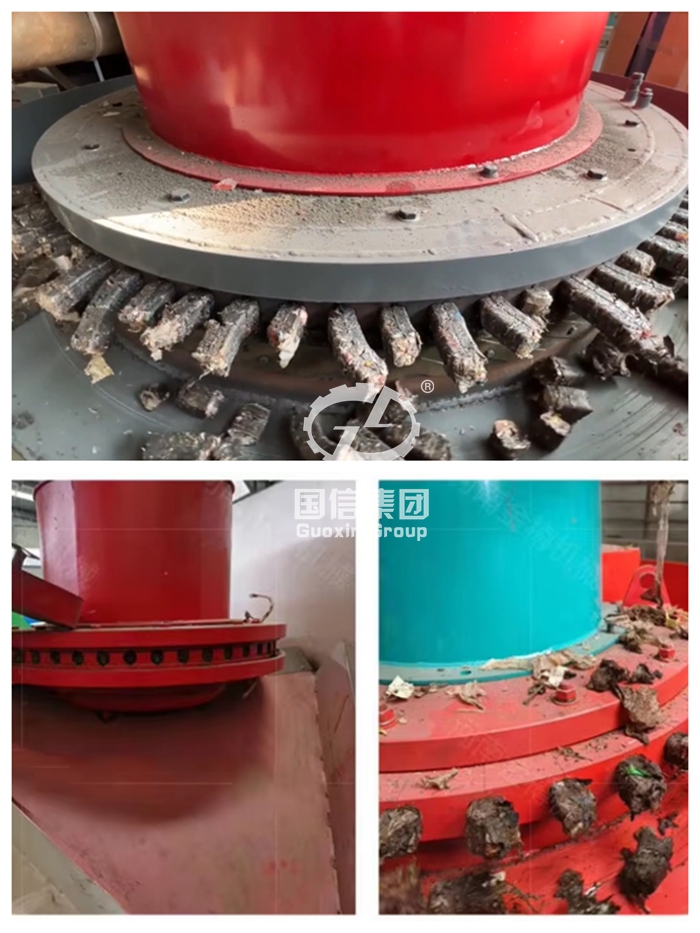
rdf briquettes
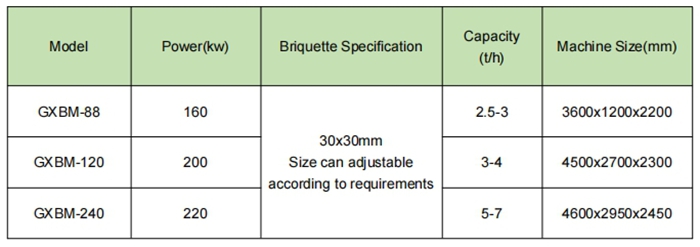
Technical Specifications (GX-Series)
Application Standards for RDF Pellets
The output from our RDF machines meets the strict fuel requirements of modern industrial facilities:
-
Cement Kilns: High-density fuel ensures stable flame temperatures and low ash content.
-
Power Plants: Uniform sizing for automated feeding systems.
-
Industrial Boilers: Low-emission combustion compared to raw MSW.
FAQ for RDF Plant Operators
Q: What is the difference between an RDF machine and a wood pellet machine? A: RDF machines feature reinforced cooling and lubrication systems. Unlike wood, mixed waste contains traces of plastics and metals that generate higher friction heat; our machines are built with wear-resistant alloys specifically for this abrasive feedstock.
Q: Does the material need to be dried before briquetting? A: Yes. For optimal structural integrity, the moisture content should be between 12% and 15%. If the waste is too wet, the briquettes will steam and break; if too dry, they won’t bond.
Q: Can the machine handle PVC or high-chlorine plastics? A: While the machine can physically press them, we recommend our pre-sorting solutions to remove high-chlorine plastics to prevent boiler corrosion and meet environmental emission standards.