
What is the typical operational efficiency and layout configuration for an urban residential MSW sorting plant in Southeast Asia?
An industrial-scale residential municipal solid waste (MSW) sorting facility optimized for Southeast Asian waste profiles typically achieves a combustible and recyclable recovery rate of 88% to 94%. By configuring high-efficiency mechanical screening and continuous aerodynamic separation matrices, the line processes highly mixed domestic aggregates into distinct, high-purity material streams, diverting up to 75% of total volume away from local landfills.
1. Project Profile & Regional Waste Challenges
A municipal waste management operator in Malaysia required a complete, turnkey mechanical separation solution to handle unsorted urban residential solid waste. Domestic waste streams in the tropical Southeast Asian market present distinct material realities that demand advanced engineering design over standard off-the-shelf machinery:
- High Organic Fraction & Moisture Loads: Residential waste in Malaysia features a high concentration of organic food waste, which drastically increases the collective moisture content and creates a sticky material matrix.
- Dense Flexible Polymer Aggregates: The feedstock contains massive volumes of post-consumer single-use plastics, shopping bags, and flexible packaging films mixed with rigid HDPE/PET containers.
- Logistical and Landfill Pressures: Rapid urban expansion requires municipal systems to maximize volume reduction and isolate high-value recyclables and alternative fuel feedstocks before final disposal.
To address these parameters, Henan Guoxin Machinery engineered a customized, high-throughput MSW sorting layout focused on high-accuracy dimensional and density-based mechanical segregation.
2. Technical Solution & Equipment Layout Integration
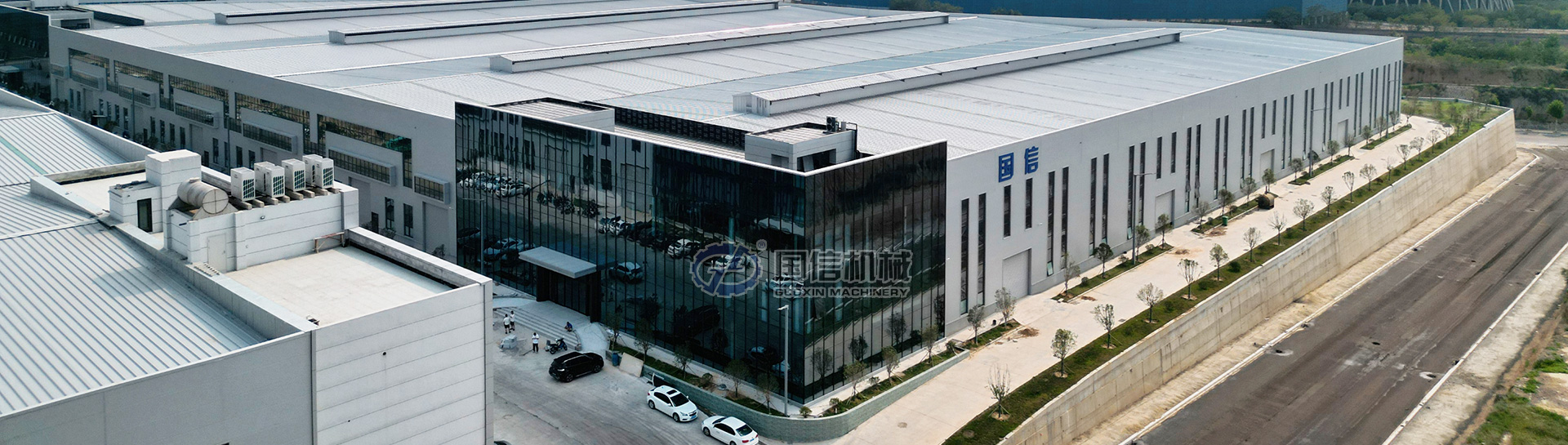
The plant layout is housed inside a modern industrial facility designed for optimal continuous-flow material processing.
[Inbound Mixed Residential MSW]
               │
               ▼
   [Heavy-Duty Feeding Circuit]  ──► (VFD Incline Conveyors)
               │
               ▼
  [Dimensional Sorting Matrix]   ──► (Trommel/Screening Systems)
               │
               ▼
 [GX-ASM-1000 Aerodynamic Sorter] ──► [Separated Light 2D Fractions] (Plastics/Films)
               │
               ▼
 [Heavy 3D Inerts & Organics]   ──► [Downstream Processing/Recovery]
The sorting system utilizes a heavy-duty, multi-stage inclined conveyor network. This design provides continuous, volumetric feeding to prevent material bunching and clogging—a common point of failure when handling high-moisture residential trash.
The core material segregation framework is built around a centralized mechanical separation hub. Seen from the primary processing line perspective, the system layout integrates customized structural steel support mezzanines, VFD-controlled transit conveyors, and centralized electrical control panels that monitor real-time mass-balance metrics across the facility floor.
3. High-Efficiency Aerodynamic Separation via GX-ASM-1000
The defining technical breakthrough of this Malaysian residential waste project is the integration of the GX-ASM-1000 Air Separator, developed by Guoxin Machinery.
The GX-ASM-1000 functions as the primary density classification node. The mechanical operation follows a strict aerodynamic separation logic:
-
Material Fluidization: The pre-screened residential waste stream falls uniformly through an adjustable feed chute into the separation chamber.
-
Positive-Pressure Air Injection: A high-velocity, adjustable air knife blasts a uniform stream of air through the falling material bed.
-
Aerodynamic Density Splitting: Light-fraction materials with high surface-area-to-weight ratios (such as packaging films, grocery bags, paper, and light plastics) are lifted by the air currents and carried over an adjustable separation plate onto the light-fraction discharge conveyor.
-
Heavy Inert Drop-Out: High-density materials (such as rigid plastics, organic kitchen waste clumps, composites, and residual metals) resist the air blast, dropping straight onto the heavy-fraction cross-belt for downstream processing or metallurgical extraction.
By utilizing this aerodynamic method, the system bypasses the screen-blinding liabilities common to mechanical mesh screeners handling wet, sticky plastic bags.
4. System Technical Matrix & Performance Data
The structured data matrix below represents the engineering baselines and output performance verified during the commissioning phase of the Malaysian residential sorting site.
| Equipment Unit / System Node | Operational Parameter | Engineered Specification | Verified Performance Metric |
|---|---|---|---|
| System Throughput Capacity | Total mass feed rate | 15 – 25 Tons Per Hour (TPH) | Consistent 20 TPH nominal flow |
| GX-ASM-1000 Air Separator | Drive power / Fan matrix | High-volume negative/positive loop | 93% efficiency in 2D film extraction |
| Conveyor Network Matrix | Belting composition & drive | High-abrasion vulcanized rubber + VFD | Zero slippage under peak volumetric loads |
| Light Fraction Purity | Combustible/Film plastic profile | Optimized for RDF/Alternative fuel | < 5% inert contamination |
| Heavy Fraction Segregation | Organic & inert diversion | Maximized organic fines dropout | 85% reduction in landfilled plastics |
How does the mechanical sorting line manage the high moisture content typical of Malaysian residential waste?
High moisture levels cause fine mineral soils, organic slurry, and micro-plastics to adhere to large combustible fractions. This system solves this issue by deploying a multi-stage process: first, high-torque primary sorting screens separate the heavy, wet organic fraction (<30mm fines) out of the stream early. Second, the subsequent air separation loop via the GX-ASM-1000 uses a high-velocity air stream that breaks up surface adhesion, drying the surface of flexible plastics during flight to ensure highly accurate density sorting.
What wear-prevention protocols are implemented on the GX-ASM-1000 system to counter abrasive household waste components?
Residential waste streams contain unpredictable abrasive elements like broken glass fragments, aerosol cans, and gravel. The internal blast chambers, impact baffles, and material transition chutes of the GX-ASM-1000 are lined with replaceable manganese steel alloy sheets and high-hardness wear plates. This design protects the main structural housing from premature abrasive deformation, ensuring a reliable equipment lifetime under continuous 24/7 municipal operation.
Request a Custom Facility Layout & Technical Engineering Proposal
Henan Guoxin Machinery Manufacturing Co., Ltd. designs, manufactures, and commissions complete municipal and residential solid waste sorting plant solutions for global markets. Our technical engineering division provides site-specific 3D CAD facility modeling, localized mass-balance diagnostics, and customized equipment configurations tailored to your target throughput capacity and waste characterization profiles.