
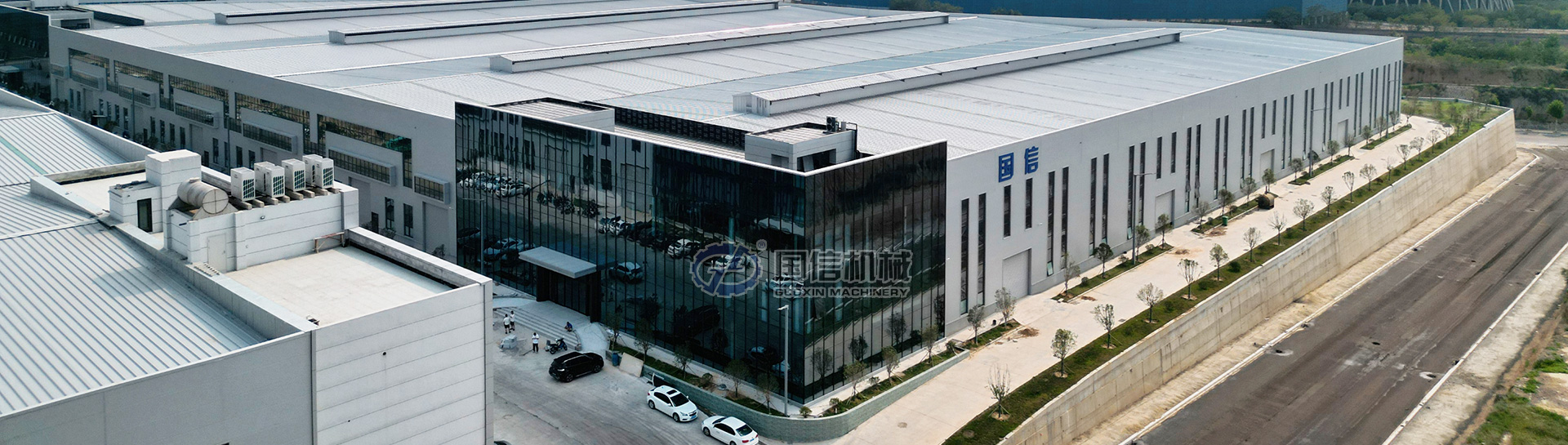
Mobile crushing and screening equipment manufactured in China has captured a significant share of the global market. Major manufacturers include Shanghai Shanmei Environmental Equipment, Henan Liming Heavy Industry Technology, and Fujian Nanfang Road Machinery. Meanwhile, the global market for robotic waste sorting systems is experiencing explosive growth, with the Asia-Pacific region being the fastest-growing area, projected to have a CAGR of 18.7%.
1. Industry Status: Dual Transformation of Sorting Equipment and the Market
The waste sorting machine industry is at a critical stage of transformation from traditional mechanical sorting to intelligent and automated systems. In 2024, the global market size for municipal solid waste sorting plants reached approximately US$456 million, and is projected to grow to US$656 million by 2031.
At the same time, China’s ongoing waste sorting policies are driving growth in demand for sorting equipment.
For example, the total procurement amount for the waste sorting machine upgrade and renovation project in Xianyou County exceeded 9.8 million yuan, covering the entire chain of equipment from sorting bins to wastewater treatment equipment.
With market changes, China has shifted from an importer of low-grade waste to a country building its own recycling capacity. This transformation has prompted Western material recycling facilities to upgrade their equipment to regain export eligibility and market competitiveness.
Globally, the application of robotic sorting systems is becoming increasingly widespread. These systems not only improve sorting efficiency but also meet increasingly stringent quality standards. For example, the market size for robotic sorting systems, particularly in the plastics sorting sector, is projected to exceed $2.6 billion by 2030.
2. Mainstream Manufacturers: A Technological Race from Traditional Machinery to Intelligent Sorting
China’s waste sorting machine manufacturers can be broadly categorized into traditional machinery manufacturers and intelligent sorting system providers.
In the traditional machinery manufacturing sector, companies in Henan Province are particularly concentrated. For instance, Henan Gongchuang Environmental Sanitation Equipment Co., Ltd. provided various equipment, including mobile waste compactors and split-type horizontal compressors, for a project in Xianyou County. Dalian Minyue Environmental Engineering Co., Ltd. provided a construction waste sorting machine for Dalate Banner.
In the intelligent sorting sector, the market exhibits a moderately fragmented competitive landscape, with the top companies collectively holding approximately 45% of the revenue share. Several internationally renowned companies, such as Beston Group, Bezner Anlagen, and TOMRA, also hold a place in China’s municipal solid waste sorting plant market.
Competition in robotic sorting systems is particularly fierce, with technology leaders including AMP Robotics, ZenRobotics (acquired by Terex), and TOMRA Systems. These companies differentiate themselves through proprietary AI algorithms and sensor combinations. Terex, after acquiring ZenRobotics, integrated heavy equipment capabilities with robotic intelligence, enabling cross-selling to the metal and demolition sub-markets.
Chinese domestic companies are also actively developing in the intelligent sorting field. Some companies are beginning to offer municipal solid waste sorting machines with processing capacities ranging from less than 50 tons/hour to over 100 tons/hour.
3. Price Factors: Equipment Costs and Return on Investment Considerations
The price of a waste sorting machine varies greatly, mainly depending on processing capacity, level of automation, and equipment type.
Government procurement projects can provide some reference prices. For example, in the Xianyou County project, the unit price of a split-type horizontal compressor was 350,000 yuan, and a mobile waste compression box was 110,000 yuan per set. In the procurement of a construction waste sorting machine in Dalate Banner, the price of a tracked mobile impact crusher was 1.982 million yuan per set.
For more advanced robotic sorting systems, investment costs increase significantly. The cost of a complete robotic production line is between US$2 million and US$5 million, equivalent to 8-12 months of revenue for a 100,000-ton material recycling facility.
Market prices also show a clear stratification. Taking an industrial solid waste sorting production line as an example, the unit price of 1-2 sets of equipment with a processing capacity of 200 tons/day is approximately HK$373,000, while the unit price for 3 or more sets drops to approximately HK$358,000.
In terms of return on investment, robotic sorting systems typically have a payback period of less than 24 months. Facilities deploying such systems report a 20 percentage point increase in recycling rate within 12 months of commissioning.
These benefits have enhanced market acceptance of the robotic waste sorting machine, especially in areas facing stringent recycling requirements and labor shortages.
4. Equipment Specifications: Diverse Options from Processing Capacity to Technology Type
Waste sorting machines can be categorized across multiple dimensions, including processing capacity, technology type, and application scenario.
Based on processing capacity, urban solid waste sorting machines can be divided into different levels, such as below 50 tons/hour, 50-100 tons/hour, and above 100 tons/hour. The application of these machines also varies depending on their processing capacity; smaller machines are more suitable for second- and third-tier cities, while larger machines are more commonly used in first-tier cities.
Regarding technology type, various sorting technologies coexist in the market:
Mechanical sorting equipment, such as tracked mobile grading machines, impact crushers, and mobile screening stations, is commonly used for construction waste processing.
Robotic sorting systems: employing AI vision or hyperspectral sensing technology, offering high sorting accuracy, suitable for high-purity material recycling.
Hybrid sorting systems: combining multiple sensing technologies, suitable for sorting complex waste flows.
For mobile equipment, tracked mobile crushing plants are a common choice, and can be categorized into different types, such as jaw crushers and impact crushers. These devices are typically used in mining, construction waste recycling, and other fields.
It’s worth noting that sorting technology itself is constantly evolving. Near-infrared/hyperspectral optics platforms currently hold a 44% market share, while AI-based pure vision systems are growing at the highest CAGR (20.1%). The advantage of pure vision systems is that they can retrofit traditional conveyors at half the cost of all-optical equipment.
5. The Intelligent Revolution: Advantages and Applications of Robotic Sorting
Compared to traditional mechanical sorting methods, robotic sorting systems have significant advantages in efficiency, accuracy, and adaptability.
Robotic systems can achieve a sorting speed of 80 items per minute with 99% uptime, while human sorters can only handle an average of 40 items per minute. This efficiency advantage is particularly evident in high-volume factories.
In terms of sorting accuracy, robots equipped with hyperspectral sensors can identify polymer types with up to 99% accuracy, enabling material recycling facilities to produce high-profit, high-quality recycled material streams.
The application scenarios for robotic sorting systems are also becoming increasingly widespread. In the plastics sorting sector, AI systems can now identify multilayer films and colored PET with near-laboratory precision. In glass sorting, AI color detection models have increased recycling rates from 70% to 85% in Scandinavian plants.
With technological advancements, the application scope of robotic sorting systems has expanded to specialized fields such as hazardous waste treatment. For example, the Danish Technology Institute, in collaboration with Refind Technologies, has automated the process of extracting batteries from electronic waste.
However, robotic sorting systems also face some challenges. High capital expenditure and uncertainty regarding the payback period are major limiting factors, especially in emerging markets. Simultaneously, cybersecurity issues for industrial IoT robots require attention, as network hardening costs can increase lifecycle costs by 3-5 percentage points.
6 Decision-Making Factors for Smart Sorting in the Chinese Market
Demand for waste sorting equipment in the Chinese market is influenced by a variety of factors, among which **policy environment, cost-effectiveness, and technological compatibility are key considerations.
On the policy front, China’s transformation from an importer of low-grade waste to a country building domestic recycling capacity has directly driven the demand for upgrading sorting equipment. Simultaneously, waste sorting policies implemented in major cities across the country have created stable market demand.
Cost-effectiveness analysis is crucial for equipment selection. The payback period for robotic sorting systems has shortened to less than 24 months, making it a viable option for many companies. For projects with limited budgets, traditional mechanical sorting equipment or hybrid systems may be more suitable.
Technological compatibility is also an important consideration. Different regions and types of waste require different sorting solutions. For example, construction waste sorting typically requires tracked mobile crushing stations and screening equipment, while municipal solid waste sorting may require more comprehensive sorting lines.
For companies considering smart sorting solutions, the “Robotics as a Service” model is worth considering. This model reduces initial financial pressure by shifting spending from capital expenditures to operating expenditures, making it particularly suitable for companies with limited funds but a desire to adopt advanced technologies.
It is worth noting that Chinese domestic manufacturers have an advantage in providing customized solutions. Many Chinese manufacturers offer OEM/ODM services, capable of customizing equipment specifications and functions according to specific customer needs.