
Waste Sorting Machine
Most of this waste was either landfilled or incinerated, which not only wasted valuable land resources but also led to secondary pollution.
Automated waste sorting lines play a vital role in supporting sustainable development goals, including low carbon emissions, environmental protection, and resource recycling.
I. How Does a Sorting Line Work?
Before entering the massive sorting workshop, the waste undergoes a bag-breaking process that tears open the packaged garbage bags.
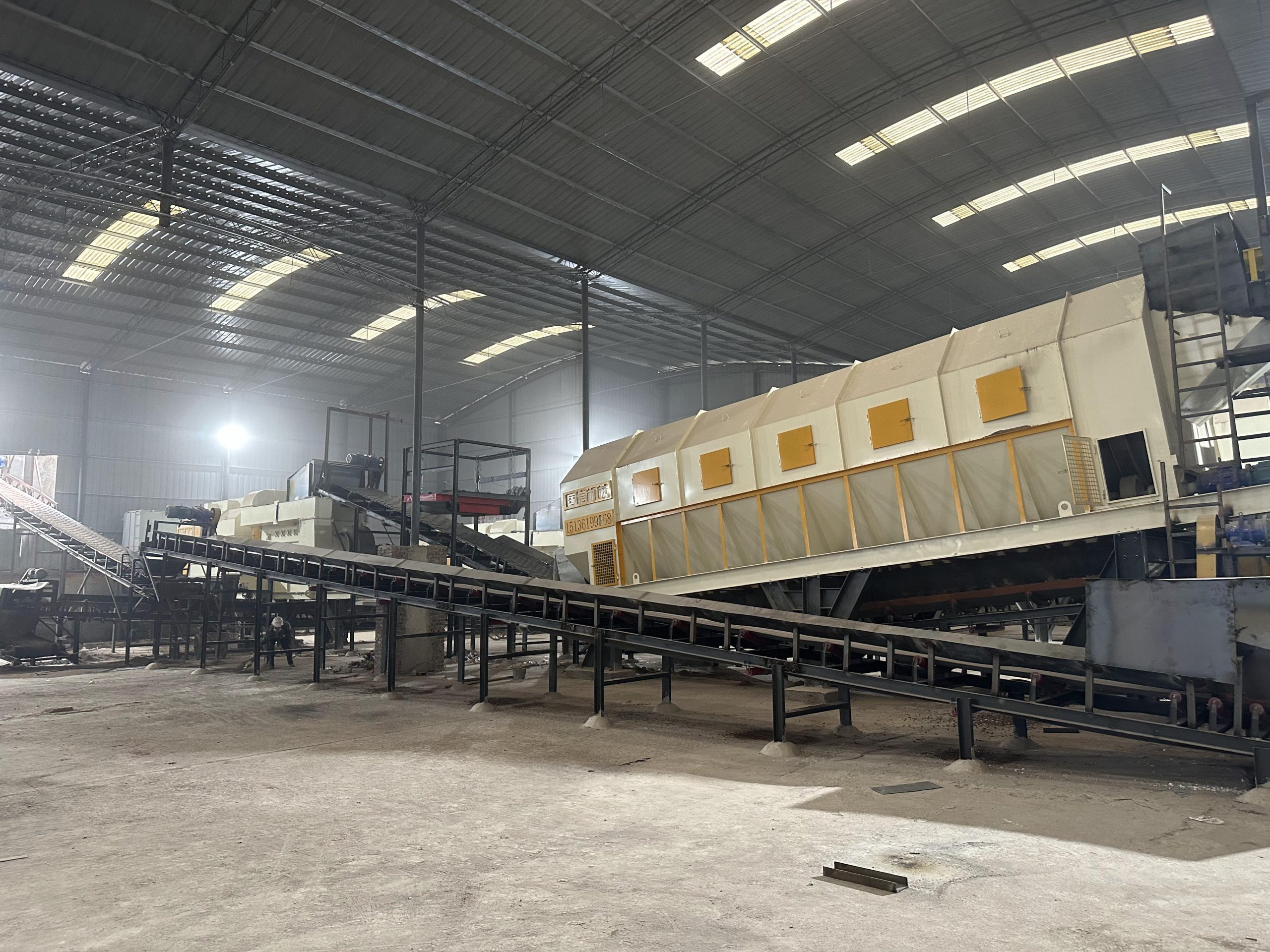
1. Large Item Screening: Large trommel screens separate bulky items, such as bottles and cardboard boxes.
2. Ferrous Metals: Powerful magnetic separators function like magnets, effectively extracting ferrous metals (such as aluminum cans and sheet metal) mixed in with the waste.
3. Aluminum: Eddy current separators are specifically designed for non-ferrous metals, including aluminum cans. They use a high-frequency alternating magnetic field to make aluminum products jump out.
4. Light and Heavy Materials: Air separator technology is employed to blow away lighter materials, such as plastic film and paper, using controlled airflow, thus separating them from heavier materials.
Through this series of precisely coordinated processes, the originally chaotic mixed waste is accurately sorted into pure recyclable materials, including metals, plastics, paper, and glass, along with other organic waste and residues that require further processing.
II. Waste Sorting Line — Low Carbon, Environmental Protection, and Recycling
Benefits of the Automated and Intelligent Sorting System
1. Reduction of Carbon Emissions
a. Decreased Primary Resource Extraction: Recycling one ton of scrap steel saves 1.6 tons of iron ore and 0.35 tons of standard coal. The sorting line effectively recovers various resources, significantly reducing the need for mining, forestry, and oil extraction, which are major sources of energy consumption and carbon emissions.
b. Lower Processing Energy Consumption: Using recycled raw materials saves a substantial amount of energy compared to producing new materials from scratch. For instance, recycling aluminum cans can save up to 95% of the energy required to produce aluminum from bauxite. The sorting line provides a clean “food source” for these recycled materials, thereby decreasing overall industrial energy consumption.
c. Reducing Fossil Fuel Dependency: Recycled plastic bottles can be transformed into polyester fibers for clothing production, leading to decreased reliance on petroleum and directly contributing to carbon emission reductions.
2. Environmental Protection
a. Source Reduction and Land Preservation: Efficient sorting significantly improves recycling rates, which reduces the overall amount of waste directed to landfills. This prolongs landfill lifespan and helps protect valuable land resources.
b. Pollution Control and Soil and Water Purification: Leachate from improperly disposed waste can severely contaminate groundwater and soil, especially if hazardous substances like used batteries and mercury-containing items are present. The sorting line effectively separates these harmful materials beforehand and ensures their safe disposal, serving as a robust safeguard for our water and soil environments.
c. Minimizing Plastic Pollution: Accurate sorting of plastics facilitates more efficient recycling, preventing them from being scattered in natural environments or generating toxic gases, like dioxins, through incineration.
3. Promoting a Circular Economy
The essence of a circular economy is a closed loop of “resources—products—recycled resources.” Waste sorting lines play a crucial role in enabling this loop.
a. Creating Urban Minerals: Once sorted, various recyclable materials are transformed from “garbage” into industrial raw materials with a purity exceeding 95%. These materials are then sent to downstream enterprises, where waste plastics become new bottles and benches, waste paper turns into recycled paper, and waste metals are reprocessed into new steel and aluminum.
b. Increasing Economic Feasibility: Large-scale, high-purity sorting is essential for making recycled resources competitive in the market. Automated sorting lines achieve this efficiently and at a low cost, transforming the circular economy from a mere concept into a profitable industry.
c.End-of-Life Treatment: Sorted organic waste (like kitchen waste) can be more effectively anaerobically fermented to produce biogas (a renewable energy source) or composted. Additionally, other sorted waste has a more stable calorific value, making it more suitable for clean incineration power generation.
Waste is a resource in the wrong place. Waste sorting lines act as resource reallocators, returning misplaced resources to their proper place and transforming burdens into wealth. As manufacturers of waste sorting equipment, we are deeply proud because we are not merely building cold steel production lines, but also embodying the hope for a green future and sustainable development.
Investing in advanced waste sorting lines means investing in cleaner air, more fertile land, less energy consumption, and a sustainable, circular future. Let us join hands to ensure every resource is used to its fullest potential and build our beautiful home together.