
I. Solid Waste Sorting Machine –Differences in Physical Properties Determine Sorting Paths
The foundation of all sorting technologies lies in identifying and utilizing the differences in physical or chemical properties between different components in mixed waste. The main sorting criteria include:
1. Size Differences: Separating coarse and fine materials through sieves, grids, etc.
2. Density and Aerodynamic Differences: Separating lightweight materials (e.g., plastic film, paper) from heavy materials (e.g., metals, glass) using airflow, vibration, or flotation media.
3. Magnetic Differences: Efficiently removing ferrous metals using permanent magnets or electromagnetic devices.
4. Conductivity Differences: Separating non-ferrous metals (e.g., aluminum, copper) using eddy current separators.
5. Optical Differences: Identifying different types of plastics and paper based on near-infrared (NIR), visible light (VIS), or hyperspectral sensors.
II. Sorting Technology and Equipment
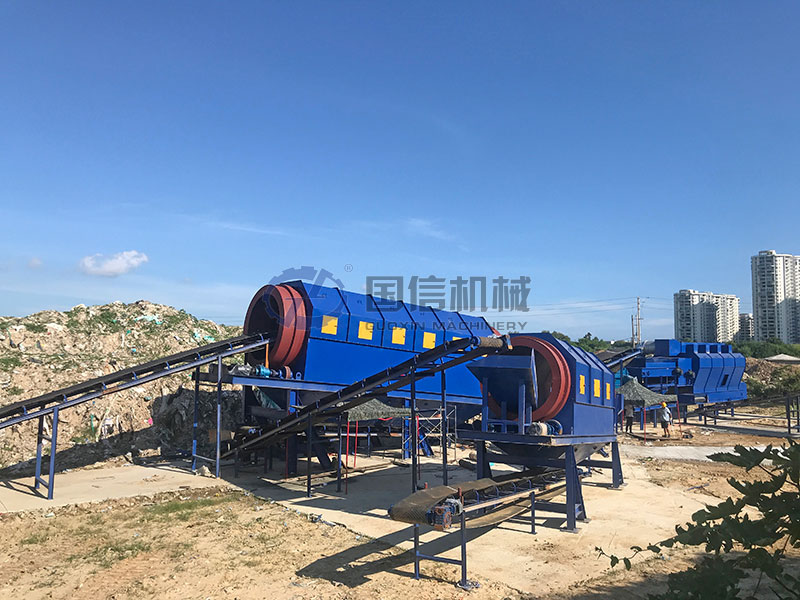
solid waste sorting machine
1. Pre-treatment and Coarse Solid Waste Sorting Machine
Bag Opener and Plate Feeder: Breaks open garbage bags and spreads materials evenly, creating conditions for subsequent fine sorting.
Trommel Screen: Primarily grades materials based on size, separating organic matter, fine fragments, and large interfering items.
2. Core Equipment for Precision Sorting
Magnetic Separator: Usually located at the front end of the production line, used to recover ferromagnetic metals; simple in structure and highly efficient.
Air Separator (Wind Classifier): Utilizes controlled airflow to separate lightweight plastics, paper, and heavy materials; commonly used for sorting household waste or crushed plastic materials.
3. Robotic Sorting System
Integrating advanced vision systems and dexterous robotic arms, it can mimic manual sorting, used to grasp irregular, easily tangled, or optically difficult-to-sort objects. Highly flexible, it is an important alternative and supplement to manual sorting.
Under the grand theme of building waste-free cities and a circular economy, efficient and intelligent sorting technology will continue to play its irreplaceable core value.