

Products Description
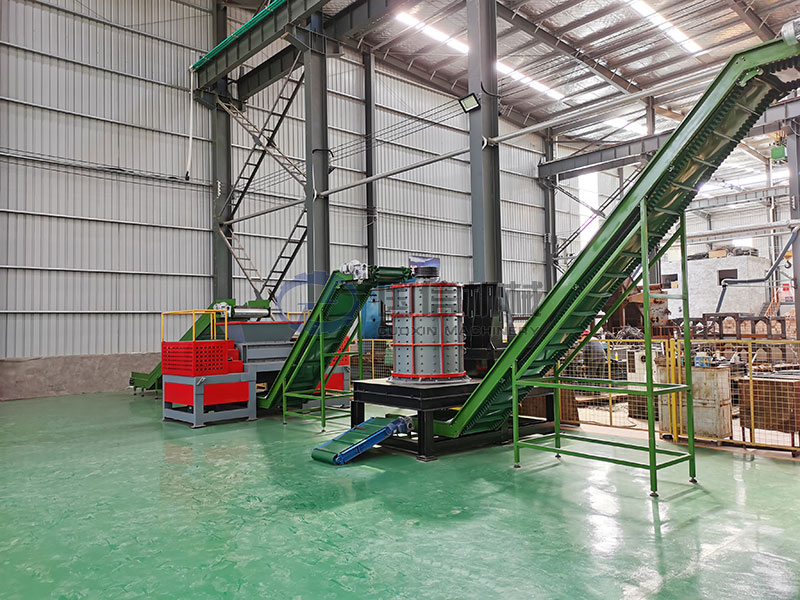
An end-to-end RDF production line covering shredding, screening, drying, and fuel preparation, designed for industrial-scale alternative fuel and energy recovery projects.
RDF production is not a single machine process, but a system-level project that requires coordinated equipment selection, process design, and stable fuel output. This RDF Production Line Solution is developed for project owners and EPC contractors who require a complete, turnkey RDF system rather than individual machines.
Introduction
Refuse-Derived Fuel (RDF) production is a key technology for converting municipal solid waste and construction waste into a valuable alternative fuel.
A well-designed RDF production line ensures stable fuel quality, controlled particle size, and efficient energy recovery for waste-to-energy and industrial applications.
As an experienced RDF production line solution provider, we deliver turnkey RDF systems covering process design, equipment supply, and system integration — tailored to different waste sources and fuel quality requirements.
What Is an RDF Production Line?
An RDF production line is an integrated system that processes mixed waste into a combustible fuel with controlled size, calorific value, and moisture content.
Typical RDF feedstock includes:
-
Municipal solid waste (MSW)
-
Construction and demolition waste (C&D)
-
Light combustible waste fractions
-
Industrial and commercial waste
The produced RDF can be used in cement kilns, power plants, and waste-to-energy facilities.
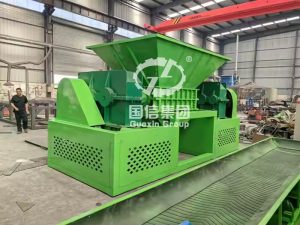
waste shredder
In a typical RDF Production Line for a waste-to-energy and alternative fuel project, waste streams are highly mixed and fluctuate daily. A standalone machine is rarely sufficient to ensure stable operation and recovery efficiency.
A Turnkey RDF Production Line for Waste-to-Energy & Alternative Fuel Projects integrates bag opening, screening, sorting, shredding, and RDF preparation into a coordinated system, allowing operators to control material flow, reduce contamination,n and maximize recyclable and combustible output under real operating conditions.
Typical RDF Production Process in a Turnkey Project
In a complete RDF project, each processing stage is engineered as part of an integrated system to ensure fuel consistency, calorific value, and long-term operational stability.
1. Waste Pre-sorting & Preparation
Incoming waste is pre-sorted to remove large inert materials and recover recyclables.
This stage is often handled by MSW sorting plants or construction waste sorting systems.
2. Size Reduction & Shredding
Shredders process waste to achieve the required particle size for RDF fuel.
Particle size control is critical for downstream combustion and feeding systems.
3. Light Combustible Waste Processing
Light combustible fractions such as plastics, paper, textiles, and wood are separated and concentrated as RDF feedstock.
4. Secondary Shredding & Refining
Secondary shredding ensures consistent RDF size and improves fuel homogeneity.
5. RDF Storage & Feeding
Processed RDF is conveyed, stored, and fed into waste-to-energy plants or industrial furnaces.
The exact configuration is defined based on waste composition, target RDF specifications, and the role of RDF in the downstream utilization process.
Looking for a turnkey waste sorting solution?
Our engineering team provides system design based on your waste composition, capacity, and local requirements.
*The latest iteration of our RDF production line was showcased during our January 2026 event. The system is designed to meet the rigorous demands of large-scale municipal solid waste treatment and RDF production across diverse global markets, as highlighted by our recent successful project deliveries in El Salvador and other international regions.
When Is a Turnkey RDF Production Line Required?
A turnkey RDF production line is typically required when:
– RDF is produced as a primary alternative fuel for cement kilns, boilers, or power plants
– Stable fuel quality and output capacity are critical to downstream operations
– Multiple processing stages must be coordinated under a single EPC responsibility
– Project owners prefer a single supplier for engineering, supply, installation, and commissioning
Commingled Combustible Shredder for RDF Fuel Preparation
In RDF fuel preparation projects, a commingled combustible shredder is commonly used to process mixed combustible waste streams containing plastics, paper, textiles, and light fractions.
Unlike single-material shredding, commingled combustible shredding requires stable throughput, controlled particle size, and high resistance to impurities. The shredder is therefore designed as an integrated part of a complete RDF production line rather than a standalone machine.
In turnkey RDF systems, the commingled combustible shredder works together with screening, air separation, and downstream refining equipment to ensure consistent RDF quality for waste-to-energy and alternative fuel applications.
This shredder is typically integrated into a complete RDF production line.
For projects focusing on combustible fraction preparation, please refer to our Combustible Waste Shredding Production Line. If RDF is part of a thermal treatment project, our Waste-to-Energy Pre-treatment Solution provides an overview of the upstream system.
Typical Project Applications
This RDF Production Line is widely applied in Waste-to-Energy & Alternative Fuel Projects serving cement plants, waste-to-energy facilities, and alternative fuel supply chains.
Typical applications include municipal solid waste pre-treatment, construction waste residue processing, and industrial combustible waste preparation, where stable particle size and consistent calorific value are required.
Discuss Your Waste Processing Project
Share your waste type, daily capacity and target output.
Our team will evaluate system configuration and project feasibility – Eve@guoxinmachinery.com
Key Applications of RDF Production Lines
Our RDF production line solutions are widely applied in:
-
Waste-to-energy power plants
-
Cement kiln alternative fuel projects
-
Industrial boiler fuel systems
-
Integrated MSW and construction waste recycling facilities
Turnkey RDF Production Line Solution – Our Scope
We provide complete RDF production line solutions, including:
-
Waste analysis and fuel specification assessment
-
Process flow and layout design
-
Equipment manufacturing and system supply
-
Installation and commissioning support
-
Electrical and control system integration
-
Operator training and technical documentation
Each RDF system is designed for stable operation, high fuel quality, and long service life.
RDF Production Line Capacity & Customization
RDF production lines are customized based on:
-
Type and composition of input waste
-
Required RDF particle size and calorific value
-
Target processing capacity
-
Integration with WtE or industrial fuel systems
-
Local regulations and site conditions
Typical RDF production capacity ranges from 5 TPH to over 50 TPH, depending on project requirements.
RDF Production Line Cost – Key Factors
The cost of an RDF production line depends on:
-
System capacity and configuration
-
Number of shredding stages
-
Automation level
-
Integration with upstream sorting plants
-
Local installation and commissioning requirements
We offer project-specific cost estimation after understanding your fuel requirements and operational goals.
Integration with MSW Sorting & Construction Waste Sorting
RDF production lines are typically integrated with:
This upstream integration ensures:
-
Stable RDF feedstock quality
-
Higher combustible recovery rate
-
Reduced operational risk
Integration with Shredding & Energy Recovery Systems
Our RDF production lines are designed to seamlessly integrate with:
-
Waste-to-Energy Shredder Systems
This integrated design supports long-term, stable energy recovery projects.
Why Choose Our RDF Production Line Solution?
-
Strong experience in RDF system design and integration
-
Turnkey project delivery capability
-
Flexible configuration for different waste streams
-
Focus on fuel quality and operational stability
-
Reliable equipment and professional technical support
Start Your RDF Production Project
If you are planning an RDF production line for waste-to-energy or alternative fuel projects, we are ready to support you with a customized solution.
Contact us now to receive:
-
RDF production line process flow
-
Equipment configuration proposal
-
RDF system cost estimation
Planning a waste recycling or RDF project?
We support turnkey plant design, equipment integration, and international project delivery.