
The global explosion of organic waste—including municipal food waste, market produce, and agricultural residues—presents a major challenge for modern recycling plants. Unlike dry solid waste, organic streams are defined by extreme moisture, high starch content, and long fibrous structures.
For plant operators and EPC engineers, using a standard municipal solid waste (MSW) crusher often leads to severe operational downtime caused by material adhesion, blade wrapping, and chamber clogging.
This technical guide explores how specialized high-speed, high-capacity organic waste shredders overcome these challenges and what engineering parameters matter when specifying an OEM organic waste shredder machine solution.
1. The Physics of Clogging: Why Generic Shredders Fail on Organics
Standard industrial shredders rely on basic shear forces. However, organic fractions behave differently under mechanical stress:
- Starch Paste Creation: Friction from dull blades heats rich food starches, turning mixed organic waste into a sticky paste that coats the cutting chamber.
- Fibrous Wrapping: Celery, garden waste, and packaging fibers easily wrap around conventional rotating shafts, stalling the motor.
- Corrosive Leachate: High-moisture organic waste releases acidic organic acids (pH 4.0–5.5), rapidly corroding standard carbon steel blades and bearings.
To maintain continuous high-capacity operations (from 5 to 50+ TPH), a dedicated **organic waste shredder** must incorporate physical self-cleaning mechanisms and specialized alloy Metallurgy.
2. Key Technical Innovations in High-Capacity Organic Waste Shredders
To eliminate processing bottlenecks in biogas plants and composting facilities, heavy-duty organic shredders require specific mechanical configurations:
- Self-Cleaning & Anti-Adhesion Blade Geometry
Engineered anti-adhesion shredder units utilize hard-faced alloy steel knives (such as Cr12MoV or Hardox) with calculated tooth profiles. By integrating continuous mechanical scraping plates between the blades, the machine strips away sticky material on every rotation, maintaining an open cutting chamber. - Smart Torque & Automated PLC Reverse
Continuous high-speed, high-capacity organic waste shredder operation requires intelligent load monitoring. Integrated PLC systems continuously track motor amperage and chamber pressure. When an unshreddable object or massive fiber cluster enters, the shafts automatically reverse in milliseconds to clear the bite area, preventing motor burnouts. - Acid-Resistant Sealing & Fluid Isolation
To prevent corrosive leachate from contaminating drive bearings and gearboxes, top-tier machinery utilizes multi-stage mechanical seals and SUS304/SUS316 stainless steel liner plates inside the cutting box.
3. OEM Customization: Adapting the Shredder to Your Plant Footprint
Because organic waste composition varies wildly by region (e.g., high-moisture market waste in Southeast Asia vs. packaged supermarket waste in Europe), off-the-shelf machinery rarely achieves optimal efficiency.
Working with a direct high-capacity organic waste shredder factory allows for targeted OEM engineering:
- Custom Hopper Configurations: Wide-flare hoppers with hydraulic pushing rams for light, bulky organic materials.
- Variable Blade Thickness & Tooth Count: Calibrated specifically to produce exact output particle sizes (10mm to 80mm).
- Downstream Integration: Custom discharge transition chutes that connect seamlessly with screw conveyors, slurry pumps, or air density separators.
4. Downstream Process Matching: Sizing the Output for Value Recovery
A shredder’s job is to prepare the organic material for biological or thermal transformation. The required output specification depends entirely on your downstream technology:
- Anaerobic Digestion (Biogas):Requires fine particle sizes (<30mm) in slurry form to maximize cell disruption, releasing easily degradable sugars and accelerating fermentation.
- Aerobic Composting:Requires uniform 20–50mm fragments with sufficient porosity to allow oxygen circulation throughout the compost pile.
- Black Soldier Fly (BSF) Farming: Demands clean, consistently shredded food waste free from sharp metal or plastic contaminations.
- RDF (Refuse-Derived Fuel) Pre-Treatment: Focuses on coarse shredding and moisture reduction prior to thermal drying and pelletizing.
5. Validate Your Material Throughput Before You Buy
Due to the unpredictable sticky profiles of organic waste, static technical spec sheets are rarely enough. We strongly advise verifying your specific material behavior under real operational torque.
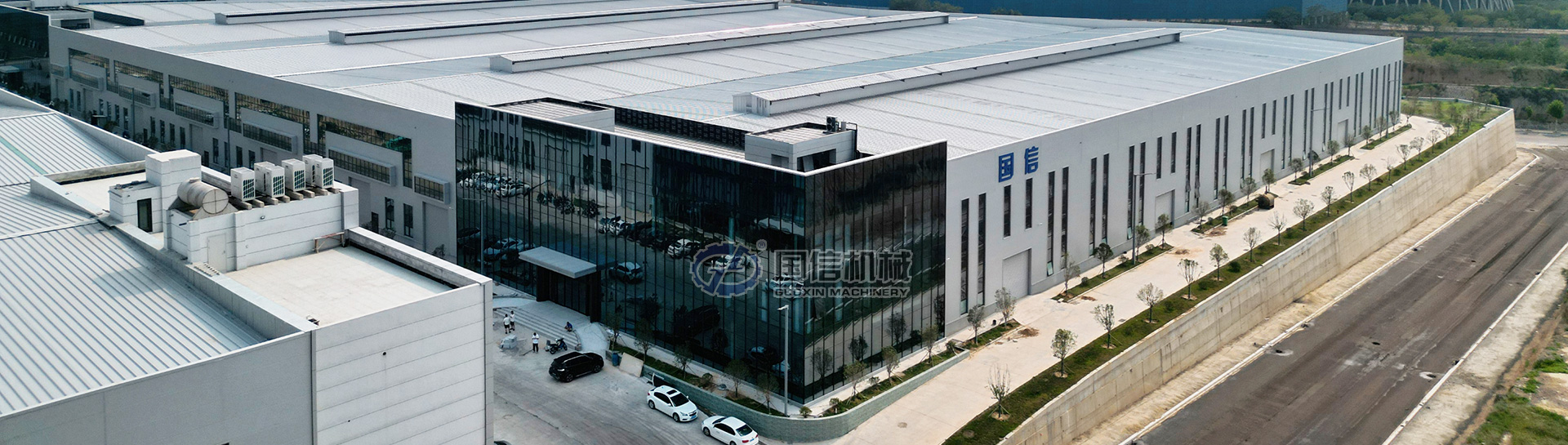
As a dedicated machinery manufacturer, Henan Guoxin Group offers factory-direct Workshop Trial Runs using your target material stream. Our engineering team customizes shaft speeds, torque curves, and blade configurations to deliver a fully optimized OEM organic waste shredding solution.
Planning an Organic Processing Facility?
Explore our complete [Turnkey Food & Kitchen Waste Recycling Solutions] or contact our engineers to [Request a Material Trial Run & Custom OEM Layout]