
Processing biomedical waste presents extreme operational hazards: highly infectious pathogens, volatile bodily fluids, and unpredictable material mixtures ranging from soft gauze and plastic IV bags to ultra-hard stainless steel scalpels, titanium implants, and thick glass vials.
Standard industrial shredders frequently fail in medical waste applications due to fluid leakage, blade chipping from hard metals, and infectious aerosol emissions. A high-performance **medical waste shredding system** must combine high-torque shearing capability with strict biosecurity and contamination prevention protocols.
1. Contamination Prevention & Biosecurity Engineering
When processing infectious healthcare waste, preventing pathogen escape during the size-reduction phase is paramount. Guoxin engineers its **contamination prevention shredder machines** with multi-layer biosecurity safeguards:
- Hermetically Sealed Shredding Chamber: The upper feeding hopper and lower discharge chutes feature fluid-tight silicone gasket sealing to eliminate leachate dripping during the cutting process.
- Negative-Pressure Air Filtration & HEPA Scrubbing: An integrated negative-pressure exhaust fan continuously draws air from the cutting chamber through a multi-stage HEPA filter (99.97% efficiency at 0.3 microns) and UV-C sterilization duct, preventing infectious aerosols from entering the plant environment.
- Synchronized Disinfection Spray Array: Internal hydraulic nozzles evenly mist specialized chemical disinfectants directly into the active shearing zone, neutralizing surface pathogens as materials are shredded.
- Corrosive Fluid Collection Sump:The base frame incorporates an incline SS304 leachate sump equipped with an automated drain valve to safely channel fluids to onsite wastewater treatment facilities.
2. Technical Specifications & Equipment Matrix
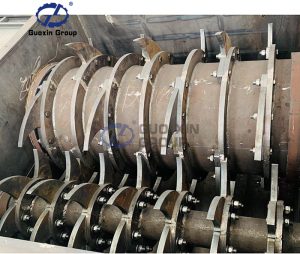
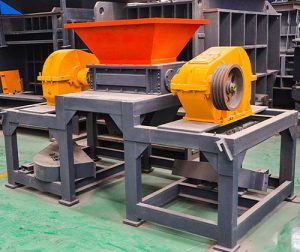
Our dual-shaft medical waste shredder utilizes low-speed, high-torque shearing technology. Independent drive shafts rotating at differential speeds tear flexible polymers while fracturing rigid metals and ceramics without generating fine dust explosions.
| System Model | Capacity (kg/h) | Drive Power (kW) | Cutting Chamber Size (mm) | Blade Metallurgy Options | Discharge Particle Size |
| G-MWS 100 | 100 – 200 kg/h | 11 – 15 kW | 400 × 500 | Cr12MoV / D2 Alloy Steel | < 40 mm |
| G-MWS 500 | 400 – 600 kg/h | 30 – 45 kW | 600 × 800 | High-Nickel 55CrSi forged | < 30 mm |
| G-MWS 1000 | 800 – 1,200 kg/h | 55 – 75 kW | 800 × 1,000 | Custom Hardened Alloy | < 30 mm |
| G-MWS 2000+ | 1,500 – 2,500 kg/h | 90 – 132 kW | 1,000 × 1,400 | Reinforced Abrasion-Resistant | < 25 mm |
3. Downstream System Integration Configurations
To achieve complete regulatory compliance and volume reduction (up to 70–80%), the medical shredder acts as the core mechanical component in four distinct disposal matrices:
A. Shredder-First Autoclave System (Pre-Vacuum Steam Sterilization)
Shredding biomedical waste *prior* to high-temperature steam autoclaving breaks down sealed plastic containers and compact bales. Creating a uniform particle size (<30mm) eliminates air pockets, allowing saturated steam (134°C / 0.22 MPa) to penetrate deep into the material bed for 100% pathogen inactivation.
B. Pretreatment for High-Temperature Incineration
In regional hazardous waste complexes, shredding acts as a homogenization step before rotary kiln incineration. Uniform particle sizing ensures steady combustion efficiency, reduces fuel consumption, and prevents toxic fly-ash spikes caused by sudden surges of dense plastics.
C. Integrated Shredding & Dry Chemical Disinfection
Designed for decentralized hospital installations, this space-saving configuration combines mechanical shredding with continuous dry chemical dosing in a single enclosed housing, producing safe, non-recognizable inert waste ready for municipal landfilling.
D. Mobile Emergency Response Units
Containerized, vehicle-mounted medical waste shredding and sterilization plants can be deployed instantly to outbreak zones or disaster relief sites for immediate on-site hazardous waste destruction.
4. Blade Metallurgy & Anti-Chipping Engineering
The most critical wear component in any **biomedical waste shredder machine** is the cutter blade matrix. Unsorted surgical instruments and stainless steel clamps can cause catastrophic blade chipping in standard steel shredders.
- High-Strength Alloy Forging: Guoxin blades are precision-machined from forged Cr12MoV or D2 tool steel, undergoing multi-stage vacuum heat treatment to achieve a surface hardness of HRC 58–62.
- Hook Geometry & Tooth Profiles:Specialized multi-tooth hook profiles grab slippery plastic bags while applying concentrated point-load shearing forces to snap thick surgical steel without stalling.
- Hexagonal Shaft Design: Dual alloy steel shafts utilize a hexagonal cross-section to distribute rotational torque evenly across all cutters, preventing keyway shear under shock loading.
FAQ
Q1: What is the ideal discharge particle size for medical waste undergoing steam sterilization?
A For optimal steam penetration in autoclaves, a particle size under 30 mm is recommended. Shredding unsegregated waste to <30 mm ensures that steam reaches the core of thick plastic tubing, rubber stoppers, and packed gauze within standard 30-minute sterilization cycles.
Q2: How does the system handle high-hardness metal items like stainless steel scalpels and orthopedic bone screws?
A: Guoxin dual-shaft shredders feature low-speed (12–25 RPM), high-torque drive systems equipped with automated PLC anti-jam protection. When the blades encounter oversized or unbreakable metal objects, the PLC detects an electrical current surge and automatically reverses shaft rotation for 2–3 seconds to clear the obstruction before resuming normal operation.
Q3: How frequently do the shredder blades require sharpening or replacement?
A: Under continuous operation processing mixed healthcare waste (plastics, textiles, soft metals), high-manganese D2 alloy blades typically maintain peak cutting edges for 1,500 to 2,500 operational hours. Modular blade assemblies allow individual cutter replacement without dismantling the entire drive shaft.
Request a Medical Waste Processing Flow Layout
- Direct Inquiry: Eve@guoxinmachinery.com