
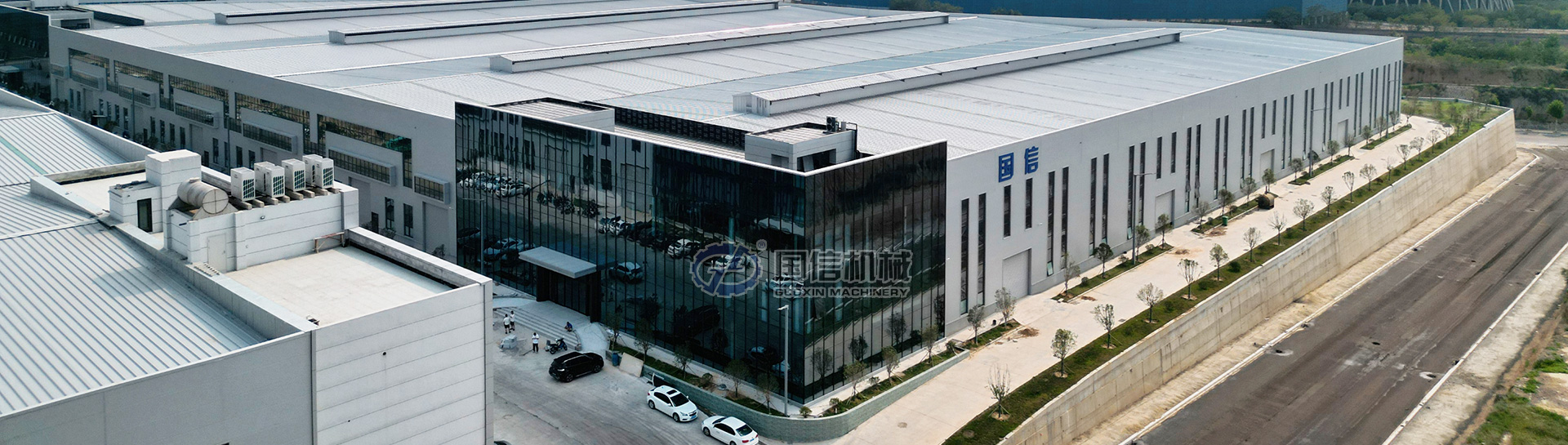
Project Overview
-
Location: Binhai New Area, Tianjin, China
-
Feedstock: Mixed Construction & Demolition (C&D) Waste and Municipal Solid Waste (MSW)
-
Capacity: 500 Tons Per Day (TPD)
-
Primary Outputs: Recycled Aggregates, Baled RDF, Ferrous Metals, and Stabilized Soil.
Project Background: The Challenge of Mixed Urban Debris
The Binhai New Area, a rapidly developing industrial and urban hub, faced a common modern challenge: “Mixed Waste.” Construction debris is frequently intermingled with domestic waste, making traditional single-stream recycling impossible. Under China’s “Zero-Waste City” initiative, the local government required a high-capacity solution to divert mixed urban debris from landfills while recovering secondary raw materials for the construction and energy sectors.
Process Engineering and Core Equipment
To process this complex feedstock, the facility employs a multi-stage mechanical separation line engineered for high-impact durability and precise density classification.
-
Heavy-Duty Pre-sorting: A vibrating feeder with a finger-screen design removes oversized concrete chunks and boulders.
-
Mechanical Size Classification: High-capacity trommel screens separate the material into three fractions: soil-rich fines, mid-sized recyclables, and oversized combustibles.
-
Advanced Density Separation: Two-stage air classifiers (Wind Sifters) remove light plastics, paper, and textiles from heavy stones and bricks.
-
Metal Reclamation: Over-band magnetic separators extract rebar and scrap metal from the aggregate stream.
-
RDF Processing: The light fraction is processed by secondary shredders to produce high-calorific Refuse Derived Fuel (RDF).
Operational Performance and Benefit Data
-
Processing Efficiency: Consistent throughput of 500 tons per 10-hour shift.
-
Recovery Purity: Recycled aggregates achieve >90% purity, suitable for sub-base road construction and non-structural brick making.
-
Landfill Savings: Reduces landfill volume by approximately 88%, significantly extending local landfill life.
-
Environmental Impact: Fully enclosed conveyors and negative-pressure dust extraction systems ensure the facility meets strict urban emission standards.
Investment and ROI Analysis
| Financial Indicator | Estimate (USD) |
| Initial Capital Expenditure (CAPEX) | $800,000 – $1,200,000 (System Dependent) |
| Projected Annual Revenue | $450,000 – $600,000 (Sales of Aggregates & RDF) |
| Operational Savings | $150,000 (Avoided Disposal Fees) |
| ROI Period | 2.0 – 2.8 Years |
Note: In regions with high aggregate demand and active Waste-to-Energy (WTE) subsidies, the payback period is often accelerated.
Client Feedback
“The mixed waste in Binhai required a system that could withstand heavy concrete while delicately capturing light plastics. Guoxin’s integrated sorting line provided the versatility we needed to handle both C&D and MSW in a single facility, maximizing our site’s profitability.” —— Project Lead, Tianjin Urban Environment Group.
Partnership and Execution Workflow
-
Site & Waste Audit: Analysis of mixed waste ratios and moisture levels.
-
System Customization: Engineering the sorting sequence for mixed-density materials.
-
Production & QC: In-house manufacturing of heavy-duty screens and air separators.
-
Full-scale Installation: Turnkey commissioning and performance testing on-site.