
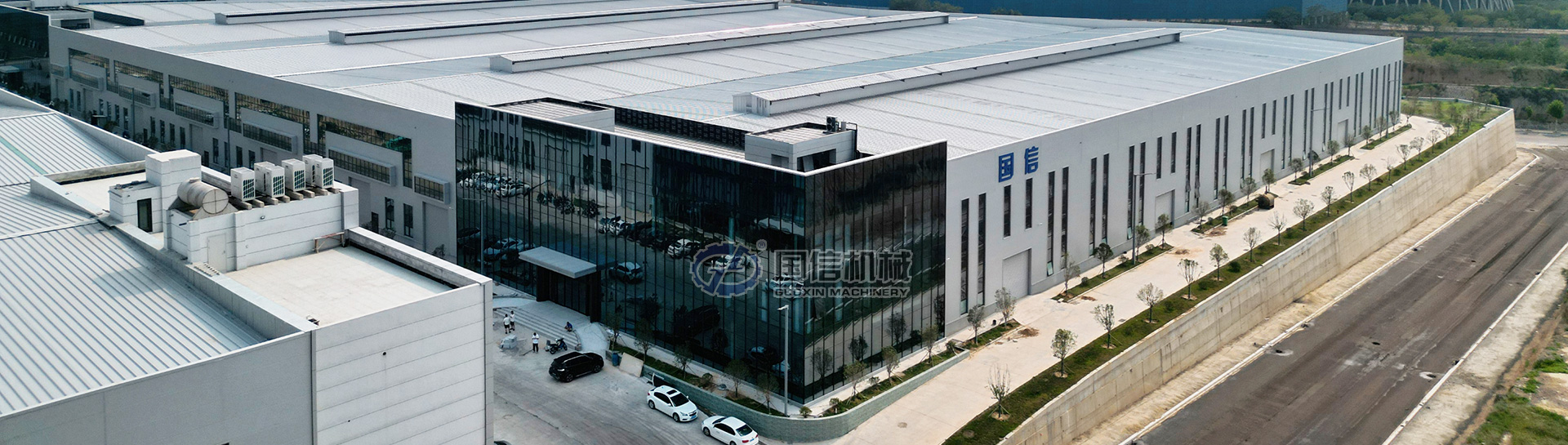
As a professional equipment and integrated solutions provider in the solid waste treatment field, Guoxin Machinery understands that every waste treatment project faces unique challenges. Applying standardized equipment flexibly to diverse scenarios is key to creating value for our clients. Below are five typical case studies from our global projects, demonstrating how we provide efficient and economical waste sorting solutions for specific needs.
Case 1 — Chilean 700-ton/day Municipal Solid Waste Sorting Site
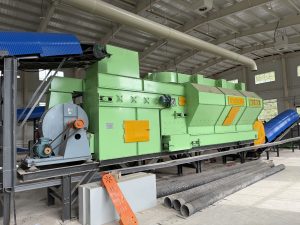
Waste Management Machine
Background: Processing mixed-collection municipal solid waste, aiming to achieve efficient sorting of recyclables (plastics, metals, paper) and RDF (waste-derived fuel) preparation, with a designed processing capacity of 700 tons/day.
Problems: Complex waste composition, high moisture content, easily tangling in equipment; high cost and poor sanitation of manual pre-sorting; requirement for stable RDF calorific value at the end.
Solution: Employing a core process of “bag opener machine+ drum trommel screen + magnetic separation + air separation + photoelectric separation”. Equipped with a heavy-duty bag-breaking machine and an anti-tangling drum screen, with adjusted screen apertures for high-moisture materials, and featuring an AI intelligent photoelectric separator for precise separation of plastics and paper of different colors.
Results:
Sorting Purity: Plastic bottle sorting purity reached 92%, with metal recovery exceeding 95%.
RDF Quality: The prepared RDF has a stable calorific value above 4000 kcal/kg, meeting customer requirements.
Labor Replacement: Replaced over 60% of the original manual sorting positions, improving the working environment.
Configuration: Heavy-duty plate feeder, bag-breaking machine, anti-tangling drum screen, suspended magnetic separator, air separator, AI photoelectric separator, RDF fine crusher.
Case 2 — Uzbekistan Household Waste Sorting Customer Site, 800 tons/day
Background: After the city implemented waste sorting, a sorting center for “other waste” needed to be established for further recycling of recyclable materials, with a designed capacity of 800 tons/day.
Problem: Despite source separation, “Other Waste” still contains a large amount of recyclables and organic matter; limited site space necessitates a compact production line layout; local operators have weak professional training.
Solution: Design a modular, streamlined sorting line. Focus on improving the efficiency of magnetic separation (for metal recovery) and eddy current separation (for non-ferrous metal recovery); configure biomass separation equipment to separate the high-organic-matter portion for composting; provide comprehensive illustrated operation manuals and on-site multilingual training.
Results:
Resource Recovery Rate: Approximately 15% additional recyclable resources were recovered from household waste.
Land Utilization: The compact design increased site utilization by approximately 30%.
Operation Start-up: Operational team training was completed within 2 weeks, achieving stable production.
Configuration: Uniform feeder, drum screen, high-intensity magnetic separator, eddy current separator, bouncing screen (for biomass separation), baler.
Case 3 — Indian Landfill Aged Waste Sorting Machine Waste Sorting Project, 300 tons/day
Background: Processing Landfill aged waste from informal landfills through screening and resource utilization, aiming to free up land and improve the environment, with a processing capacity of 300 tons/day.
Problems: Complex material composition (soil, stones, plastics, textiles, etc.), large density differences, and high corrosiveness; severe dust pollution, harsh working environment; rapid equipment wear.
Solution: Employing a core process of “multi-stage drum screening + air separation”. The drum screen uses wear-resistant steel plates and replaceable screen plates; the entire line is equipped with a sealed hood and centralized dust collection system; key components undergo anti-corrosion treatment.
Results:
Screening Efficiency: Increased the screening purity of humus (<40mm) to over 85%, suitable for direct use in landscaping.
Environmental Protection: Effectively controlled on-site dust, meeting local environmental standards.
Equipment Durability: The lifespan of key screening components is extended by 50% compared to standard equipment.
Configuration: Tracked excavator feeding, multi-stage drum screen (with wear-resistant liners), air separator, dust collection system, fabric baler.
Case 4 — South African Solid Waste Sorting Site, 300 tons/day
Background: A solid waste sorting center was built to support a large industrial park, processing mixed industrial waste from various factories, aiming for resource recovery and volume reduction, with a designed processing capacity of 300 tons/day.
Problems: High material hardness and irregular shape (containing waste wood, plastics, packaging materials, and a small amount of metal); high impact resistance requirements for equipment; need to adapt to fluctuations in incoming materials from different factories.
Solution: A heavy-duty shredder was installed at the front end for homogenization and volume reduction before entering the sorting line. A combination of a stepped manual sorting platform and mechanical sorting was used to ensure sorting flexibility. The equipment structure was reinforced.
Results:
Volume Reduction Effect: The total volume was reduced by approximately 40% after shredding, facilitating subsequent processing.
Sorting Adaptability: The production line can smoothly handle feed fluctuations within 15%.
Recycling Value: Successfully separates high-value engineering plastics and wood.
Configuration: Heavy-duty chain feeder, twin-shaft shredder, manual sorting platform, magnetic separator, air separator.
Case 5 — Kyrgyzstan Landfill Waste Sorting Site, 800 tons/day
Background: The existing landfill waste needs to be extracted and sorted to recover resources and reduce landfill volume, preparing for site ecological restoration. The designed processing capacity is 800 tons/day.
Problems: Waste degradation varies greatly, with significant differences in moisture content; it contains a large amount of silt; the work surface moves as extraction progresses, requiring a certain degree of equipment mobility.
Solution: Adopting a combined model of “mobile pre-screening + fixed fine sorting”. First, a mobile trommel screen is used for coarse screening on-site, separating most of the humus and stones, reducing the burden of transportation. The material remaining on the screen is then transported to a fixed sorting workshop for fine sorting.
Results:
Transportation Costs: Transportation costs were reduced by approximately 35% through on-site pre-screening.
Processing Efficiency: The fixed sorting line achieved a 25% increase in efficiency due to more uniform feeding.
Land Restoration: Significantly accelerated the landfill remediation and restoration process.
Configuration: Mobile feeding and screening integrated machine, fixed chain conveyor system, magnetic separator, air separator, and photoelectric separator.
Common Points of These Tasks
1. Bringing the sorting line to the waste accumulation site: Whether it’s landfill remediation or urban sorting centers, the core of our solution is on-site processing, significantly reducing unnecessary transportation.
2. Tailored to the “mixture”: There is no “one-size-fits-all” waste sorting solution. We combine and adjust equipment units based on the specific composition, moisture content, and processing objectives of the waste.
3. Balancing Automation and Practicality: While ensuring high-efficiency automation in key processes, necessary manual intervention or intelligent identification is retained in complex sorting stages to ensure the optimal solution for both economy and effectiveness.
4. Environmental and Operational Considerations: Environmental issues such as dust, odor, and noise are addressed simultaneously in the design of the solution, ensuring the equipment is durable, easy to maintain, and guarantees long-term stable operation.
Next Step: Please tell us the type of waste you need to process, its composition characteristics, daily processing volume, and final product requirements. We will design a solution that balances processing efficiency, resource recovery value, and long-term operating costs for you.
👉 [Contact Guoxin Machinery engineers for customized waste sorting solutions]