

Products Description
Quick Facts & System Specs
- Equipment Category: Industrial Waste-to-Fuel (RDF/SRF) Production Line & Waste Shredding System
- Processing Capacity: 100 – 500 TPD (Tons Per Day)
- Output Fuel Grade: ASTM Standard RDF-1 to RDF-5 (Perron/Pellets/Briquettes)
- Key Parameters: Moisture reduction from 60% down to <15%; Calorific Value (CV) up to 15,000 – 20,000kJ/kg.
- Core Technologies: Hydraulic Bag Opening, Air Classification (Wind Sifting), Optical PVC Sorting, Heavy Duty Fine Shredding, Rotary/Mesh Belt Thermal Drying.
1. Technical Specifications of Guoxin RDF Production Line
To build a high-ROI alternative fuel project, engineering and procurement teams require robust, highly customized refuse-derived fuel equipment capable of managing unpredictable municipal and industrial waste streams.
Guoxin’s heavy-duty RDF waste sorting line is built with heavy steel reinforcement and smart automated controls to ensure maximum combustible recovery while withstanding severe material impacts.
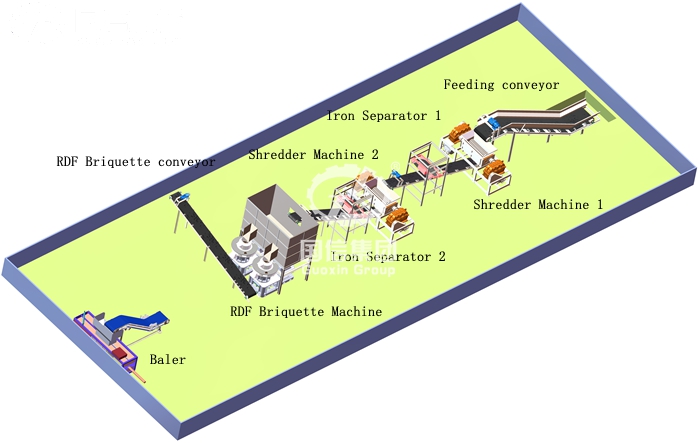
System Components & Equipment Breakdown
| Production Phase | Process Function | Key Equipment Integrated |
| 1. Pre-Treatment | Bag breaking, size reduction, and organic separation | Hydraulic Bag Opener / Heavy Duty Trommel Screen |
| 2. Density Sorting | Separating light combustibles from heavy inerts | Guoxin Recirculating Air Classifier (Wind Sifter) |
| 3. Metal Recovery | Extracting ferrous and non-ferrous metals for protection & scrap value | Overhead Magnetic Separator & Eddy Current Separator |
| 4. Thermal Drying | Reducing moisture content from up to 60% down to <15% | Industrial Rotary Drum Dryer / Multi-Layer Mesh Belt Dryer |
| 5. Fuel Preparation | Precision fine shredding, densification, and pelletizing | RDF Fine Shredder / Hydraulic Briquetting & Pellet Machine |
2. Refuse-Derived Fuel (RDF) Process & Output Quality
Refuse-Derived Fuel (RDF) converts municipal solid waste (MSW) and commercial/industrial (C&I) waste into high-calorific, clean-burning alternative fuel streams for cement kilns, power plants, and industrial boilers.
Input vs. Output Quality Transformation
Our automated processing line dramatically improves the physical and chemical properties of incoming raw waste:
| Parameter | Raw Input (Mixed Wet MSW) | Output (Premium RDF Fuel) |
| Moisture Content | 40% – 60% | < 10% – 15% |
| Calorific Value (CV) | 4,000 – 6,000kJ/kg | 15,000 – 20,000 kJ/kg |
| Ash Content | High (Inert dirt/glass) | < 15% |
| Purity of Combustibles | Unsorted / Mixed | > 95% High-Purity Plastics/Fibers |
3. Step-by-Step Integrated RDF Production Technology
To convert mixed MSW into high-quality RDF-5 pellets meeting ASTM standards, Guoxin’s turnkey plant integrates five heavy-duty modules:
-
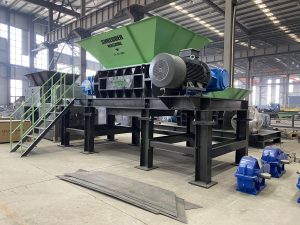
Primary Shredding: High-torque dual-shaft shredders liberate wrapped combustibles while preventing wire and textile wrapping around rotor shafts.
-
Trommel Screening: Separates moisture-rich organic fines (<80 mm soil/glass) early in the process to prevent calorific value degradation.
-
Precision Air Separation: Achieves 95%+ purity recovery of light plastics, paper, and film using high-velocity wind sifters to minimize ash content.
-
Magnetic & Optical Separation: Extracts 99% of ferrous metals to protect downstream fine shredder blades, with optional optical sorting for chlorine (PVC) control.
-
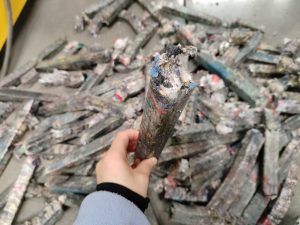
Fine Shredding & Densification: Reduces combustibles to uniform particle sizes (<30mm) before compressing them into stable RDF-5 briquettes or fuel pellets.
4. Advanced Thermal Drying Integration: Why Choose Integrated RDF Drying Manufacturers?
Achieving a final moisture content of less than 10%–15% from raw, wet municipal solid waste (40%–60% initial moisture) is impossible through mechanical sorting alone. As a specialized manufacturer of both sorting lines and industrial dryers, Guoxin seamlessly integrates thermal drying directly into the RDF workflow.
-
Heavy-Duty Industrial Rotary Drum Dryers: Designed for continuous 24/7 high-throughput processing, utilizing internal cascading flights for uniform heat transfer without degrading thermal plastics.
-
Continuous Multi-Layer Mesh Belt Dryers: Ideal for pre-sorted alternative fuel fractions, using low-temperature recirculating hot air to gently reduce moisture while controlling emissions and odors.
- Engineering Advantage: By utilizing waste heat from adjacent cement kilns or boiler exhaust, our synchronized drying systems eliminate processing bottlenecks, prevent blade rusting in fine shredders, and guarantee stable pellet formation.
5. Technical Advantages & Application Areas of Guoxin RDF
Key Engineering Benefits:
- Chlorine & Corrosion Control: Integrated optical sorting removes PVC plastics; lime-injection modules reduce chloride gas during combustion.
- Extended Equipment Lifetime: Reversible alloy shredder blades reduce long-term maintenance overhead by up to 40%.
- High CV & Long Shelf Life: Fuel with <10% moisture can be stored safely indoors for up to 12 months without biological degradation.
Primary Application Sectors:
-
Cement Industry: High-spec alternative fuel for rotary kilns (ash residue integrates into cement clinker).
-
Power Generation: Stable co-firing fuel for waste-to-energy (WTE) biomass and coal power plants.
-
District & Industrial Heating: Cost-effective, eco-friendly heat source for district heating and industrial drying facilities.
6.FAQ
Q1: What is the capacity range for a Guoxin turnkey RDF production line?
Our standard turnkey RDF sorting and processing lines range from 100 to 500 TPD (Tons Per Day), with custom modular configurations available for larger municipal installations.
Q2: What is the difference between RDF and SRF equipment configurations?
RDF (Refuse-Derived Fuel) involves standard mechanical sorting and coarse shredding. SRF (Solid Recovered Fuel) requires higher purity, stricter particle size control (<10-30mm), optical chlorine removal, and thermal drying to meet strict industrial standards (such as EN 15359). Guoxin lines can be configured for both.
Q3: How does your system control chlorine content in final RDF pellets?
We combine multi-stage air classification to remove heavy contaminants, optional NIR optical sorters to eject PVC plastics (the primary chlorine source), and optional calcium/lime-dosing modules during briquetting for in-furnace dechlorination.
Q4: Why buy an integrated sorting AND drying line from a single manufacturer?
Feeding high-moisture organic waste directly into fine shredders or pelletizers causes severe clogging, rapid blade corrosion, and pellet structural failure. Guoxin matches feeding speeds, air velocity, and thermal dryer capacity precisely to your input moisture curves, ensuring uninterrupted continuous output.
Calculate Your RDF Plant ROI
Need a custom 3D layout, mass balance calculation, or equipment quote for your municipality or recycling project?
- Email Engineering: Eve@guoxinmachinery.com