
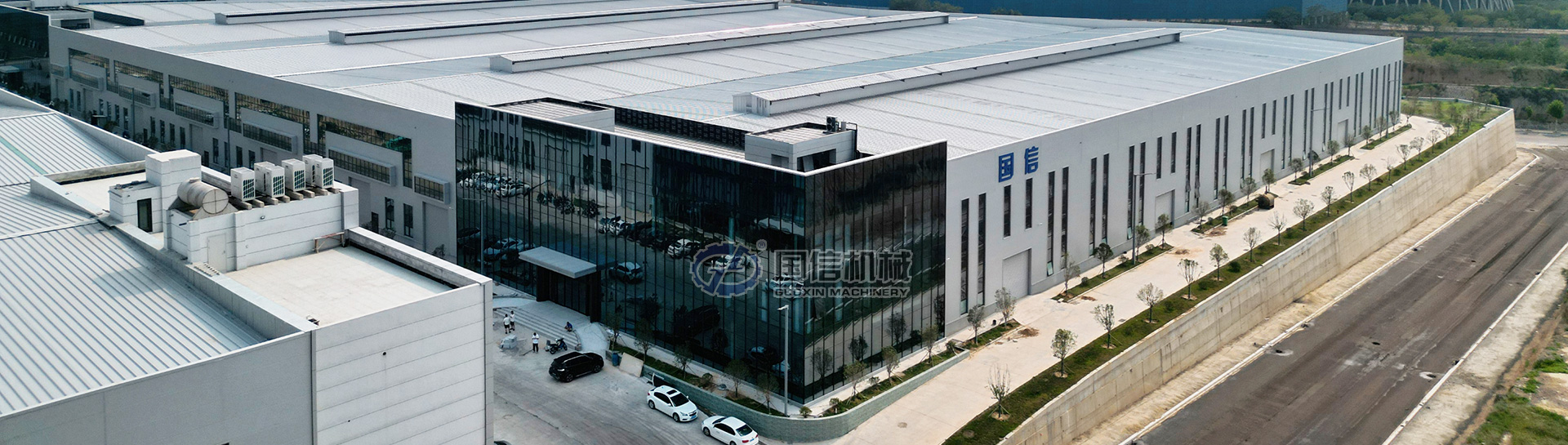
Project Brief & Engineering Overview:
- Date of Inspection: September 23, 2026
- Location: Guoxin Machinery Heavy Assembly & Testing Bay, Henan, China
- Client Delegation: International EPC & Solid Waste Asset Management Team
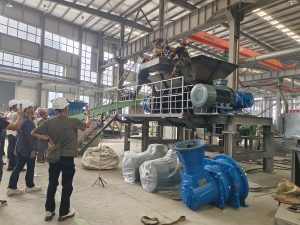
- Equipment Tested: Heavy-Duty Hydraulic/Gear-Driven Double-Shaft Shear Shredder
- Feedstock Profile: Complex Mixed Waste (Wooden Pallets, Scrap Sheet Metal, Waste Textiles/Clothes, and Mixed Bulky MSW)
- Primary Objective: Verify shaft torque, anti-wrapping performance on textiles, cutter durability against metallic inclusions, and output sizing for RDF/SRF pre-treatment.
1. Project Background
When processing unsegregated municipal solid waste (MSW) or bulky commercial fractions, shredding systems face extreme operational hazards:
-
High Textile Wrapping Risk: Flexible fabrics and discarded clothes tend to stretch and wrap around conventional shredder rotors, causing heat buildup and motor overload.
-
Metallic Inclusions & Shock Loads: Scrap sheet metal and structural iron embedded in furniture or pallets can cause catastrophic blade chipping or drive jam if the shear torque and hard-facing alloys (e.g., Hardox/NM500) are inadequate.
-
Inconsistent Sizing: Downstream air separators and Near-Infrared (NIR) optical sorters require a stable particle size distribution (<= 50–80mm) to achieve high purity separation.
To validate equipment capability before shipment, the client’s engineering division requested a full-load Factory Acceptance Test (FAT) using a high-density, mixed material batch simulating their toughest local waste conditions.
2. Testing Setup & Equipment Configuration
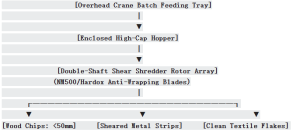
The testing line centered on Guoxin’s Heavy-Duty Double-Shaft Shear Shredder, configured with:
-
High-Torque Drive System: Dual planetary gear reducers synchronized with PLC automatic reverse logic for jam protection.
-
Specialized Cutter Geometry: Multi-hook shear blades manufactured from high-alloy wear-resistant steel, engineered for simultaneous ripping (textiles) and shearing (wood/metals).
-
Top-Loading Hopper & Crane Feed: Overhead crane-slung loading tray designed for high-capacity batch feeding of bulky items.
3. FAT Empirical Test Results & Material Analysis
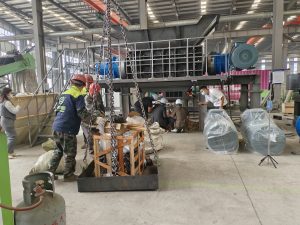
During the live trial on September 23, 2026, the shredder was subjected to a continuous mixed-feed load consisting of heavy wooden shipping pallets, sheet iron frames, bundled textile bags, and commercial trash.
Performance Summary Table
| Test Parameter | Target Baseline | Measured FAT Metric | Compliance Status |
| Material Throughput | >= 15 Tons/Hour | 18.5 Tons/Hour | Passed (123% of baseline) |
| Wood Pallet Reduction | <80 mm flakes | 30–50 mm uniform chips | Passed |
| Scrap Sheet Metal Shearing | Clean shear without jam | Deformed & sheared clean | Passed (Zero blade damage) |
| Textile Anti-Wrapping | Zero rotor stoppage | 100% continuous shredding | Passed |
| Rotor Reversals Under Load | <3auto-reversals/ton | 0 reversals during normal feed | Passed |
Material-Specific Output Quality Verification
Wooden Shipping Pallets & Crates: The high-torque cutters pulverized heavy wooden pallets and timber frames in a single pass. Inspection of the discharge pile showed clean fracture along the wood grain without creating fine dust hazard.
Scrap Sheet Metal & Steel Strips: Thin-gauge steel sheets and frame fasteners embedded in the feed were cleanly sheared and folded without causing rotor stalling. Post-trial cutter blade inspection confirmed zero surface chipping on contact edges.
Waste Textiles & Old Clothes: The specialized blade hook geometry cut through bundled clothes and heavy fabrics without shaft wrapping or material entanglement, maintaining full volumetric discharge beneath the shredding chamber.
4. Client Acceptance & Engineering Sign-Off
Following the successful execution of the batch trial, the client’s engineering delegation conducted an on-site physical review of the output piles, cutter shaft clearances, and PLC control system logs.
- Shaft & Hydraulics: No oil temperature spikes or abnormal vibration levels detected.
- Output Sizing: Meets downstream RDF processing input requirements for cement kiln co-processing lines.
- Final Approval: The delegation officially signed off on the Factory Acceptance Test (FAT) protocol, approving the equipment for final painting, anti-corrosion packaging, and containerized dispatch.
Request a Custom Material Trial or Factory Visit
Are you processing complex municipal waste, bulky furniture, or high-textile waste streams? Guoxin Group offers localized material mass-balance calculations, custom blade geometry matching, and live/remote factory trial testing.
- Send Your Material Samples: Test your local waste fractions in our dedicated pilot testing bay.
- Engineering Blueprints: Get full 3D spatial layout design and motor torque sizing proposals.