
- Testing Date: September 15, 2026
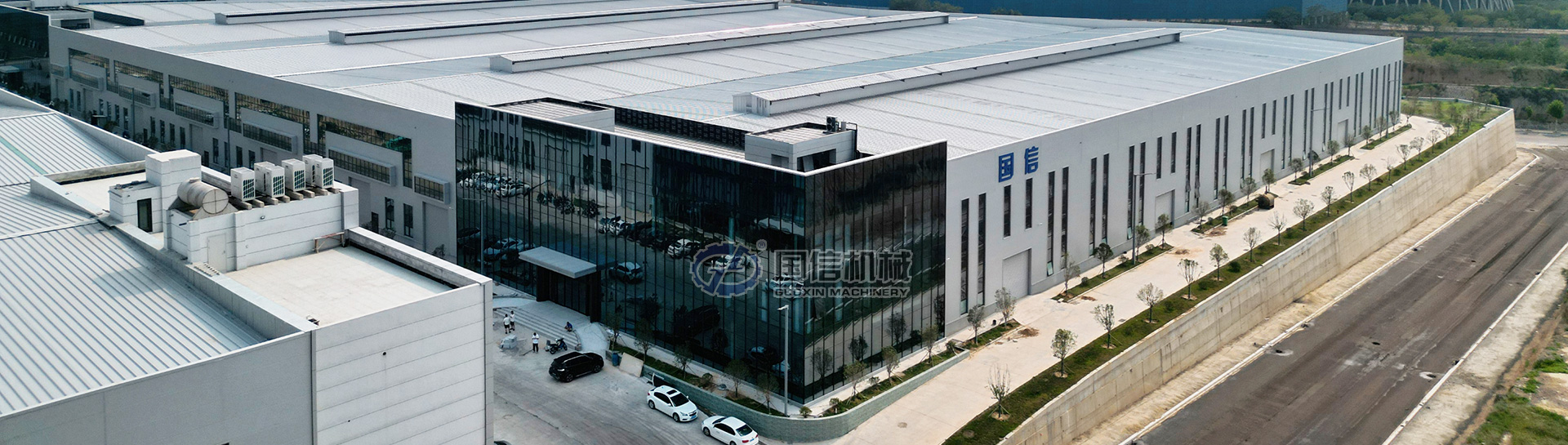
- Testing Location: Guoxin Heavy Machinery Assembly & Testing Bay
- Material Processed: Metallized PET/PE film ribbons, flexible packaging trim, and lightweight foil scrap
- Equipment Tested: Heavy-Duty Light Material Plastic Film Granulator / Shredder Series
1. Trial Background & Operational Challenge
Lightweight plastic films, metallized foil ribbons, and flexible packaging offcuts present a unique challenge in recycling pre-treatment. Due to their high tensile strength and minimal thickness (<0.05 mm), these materials tend to stretch rather than cut when fed into conventional shredders with wide blade gaps.
Furthermore, loose film bundles exhibit extremely low bulk density and high elasticity. In standard rotor configurations, this often results in material wrapping around the main shaft, causing friction heat buildup, material melting, and frequent motor overload shutdowns.
On September 15, 2026, our engineering team conducted a live workshop trial to test the intake capacity, shear cutting efficiency, and discharge consistency of our heavy-duty film granulator operating on dense, bundled metallized plastic film scrap.
2. Equipment Setup & Cutting Kinematics
The test rig was assembled with a wide-inlet feeding hopper and a dynamic rotor configuration specifically configured for soft, flexible plastic fractions:
-
Staggered High-Shear Blades: Dynamic blades mounted at optimized cutting angles to deliver a continuous scissor-action shear against counter static knives, preventing film tearing or stretching.
-
Anti-Wrapping Rotor Shaft: Closed-end rotor design with integrated side scrapers to prevent thin film strands from entering shaft seal bearings.
-
Controlled Blade Clearance: Dynamic gap set between 0.15 mm and 0.20 mm to ensure immediate cutting upon initial rotor contact.
-
Inclined Belt Discharge: Outfeed conveyor configured to transport lightweight flakes continuously to prevent material backing up under the discharge screen.
3. Trial Execution & Performance Breakdown
A. Material Loading & Intake Behavior
The operator manually fed large, tangled bundles of metallized film ribbons directly into the receiving hopper. Despite the high volume of loose material fed in a single pass, the intake hopper pulled the charge into the rotor zone smoothly without material bridging or rotor stalling.
B. Thermal & Blade Response
Because thin film scrap generates high friction during shearing, blade temperature was monitored throughout the test run. The shear-cutting geometry minimized friction resistance, keeping operating temperatures low enough to prevent thermal deformation or film agglomeration (melting into hard lumps).
C. Particle Size & Flake Quality Analysis
Post-discharge hand inspection confirmed high flake uniformity across the processed output batch:
-
Flake Dimensions: Consistently sized within 15 mm – 25 mm range.
-
Cut Cleanliness: Straight, sharp edge cuts with zero frayed or stretched ends.
-
Preserved Material Integrity: Metallic layer remained intact on plastic substrate without severe friction stripping or dust generation.
4. Technical Performance
| Parameter | Observed Trial Result |
| Input Density | Low bulk density bundled film & ribbons (<30 kg/m³) |
| Shaft Entanglement Rate | 0% (Anti-wrapping geometry active) |
| Cut Consistency | >92% uniform flake distribution |
| Discharge Velocity | Continuous outfeed via inclined belt conveyor |
| Downstream Compatibility | Ready for immediate baling, washing, or extrusion pelletizing |
5. Engineering Recommendations for Full-Scale Production Lines
Based on the data collected during the September 15 test run, our technical team recommends the following configuration standards for commercial processing plants handling film and light fractions:
- Automated Mechanical Infeed: For continuous TPH operations, pair the unit with a metering belt conveyor or hydraulic pusher hopper to ensure uniform feed rates and prevent manual labor bottlenecks.
- Blade Maintenance Interval: Maintain dynamic blade clearance checks every 150–200 operational hours when running thin abrasive films (e.g., printed or metallized layers) to retain sharp cutting edges.
- Optional Air Extraction System: For ultra-light films (<0.02 mm), integrate a pneumatic cyclone collection system at the discharge head to automate material collection into super-sacks.
Request a Material Test Run for Your Processing Facility
Guoxin Machinery offers full-scale material trial testing in our factory workshop. Equipment buyers and plant operators can send sample waste streams—including PE/PP film, agricultural mulch, woven sacks, or MSW light fractions—for live throughput and cutting validation.
To schedule a factory trial or request custom machine dimensions, contact our engineering team at Eve@guoxinmachinery.com or explore our complete series of waste bag opener machine and plastic pre-treatment systems.