
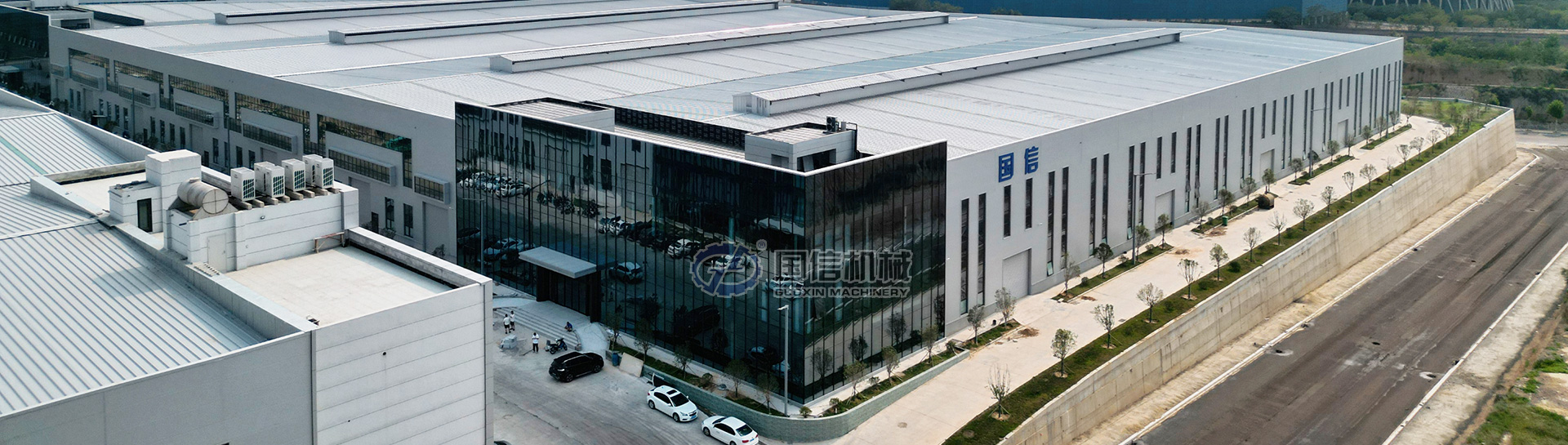
Elektronik Schrott Shredder – Electronic Waste Resource Recovery
Risks and Values of Electronic Products
Discarded circuit boards, plastic casings, and metal components contain abundant high-value resources such as gold, silver, copper, and rare metals, but also harbor environmental risks such as lead, mercury, and flame retardants.
I. Why Does Elektronik Schrott Require Specialized Shredding Equipment?
1. Material Diversity: A single discarded computer may contain over 60 chemical elements, with metals, plastics, fiberglass, ceramics, etc., tightly integrated.
2. Structural Precision: Circuit boards are multi-layered, and components are firmly soldered, requiring efficient separation without destroying material value.
3. Safety and Environmental Requirements: Secondary pollution such as dust explosions, heavy metal diffusion, and the release of harmful gases must be prevented.
4. Resource Recycling Orientation: Shredding is not the endpoint, but rather creates optimal conditions for subsequent sorting (magnetic separation, eddy current separation, electrostatic separation, etc.).
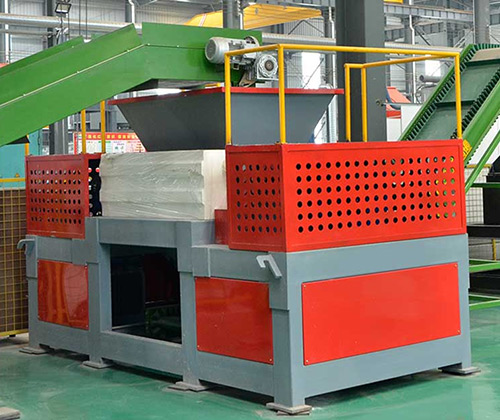
Electronic Waste Shredder
II. Working Principle and Technology of Elektronik Schrott Shredder
Multi-stage shredding + Intelligent Sorting Pre-configuration
1. Coarse Shredding Stage: Pre-Shredding and Volume Reduction
– Employs a twin-shaft shear crusher, utilizing low-speed, high-torque shearing force to shred whole electronic products (such as TV and computer casings) into 50-100mm fragments;
– Advantages: Avoids dust and explosion risks associated with impact Shredding, and smoothly handles irregular materials.
2. Medium and Fine Shredding Stage: Precision Dissociation and Resource Release
– Core Equipment: Hammer Shredder or high-speed rotating blade system;
– Through high-speed impact, shearing, and collision, circuit boards and components are further shredded to 10-20mm, achieving thorough dissociation of metals and non-metals;
3. Dust and Hazardous Substance Control System
– Enclosed Shredding chamber + negative pressure ventilation system to prevent dust overflow;
– Activated carbon adsorption + catalytic oxidation device to treat potentially volatile organic waste gases during Shredding;
– Pulse dust removal system to collect micron-sized particles, achieving a purification rate of over 99.5%. 4. Intelligent Monitoring and Adaptive Adjustment
– Equipped with load sensors, thermal imagers, and vibration monitoring systems, it adjusts rotation speed and feed rate in real time;
– AI visual recognition can preliminarily determine the material type (e.g., containing batteries, containing LCD screens) and automatically switch Shredding modes.
III. Technical Challenges of Elektronik Schrott Shredder
1. Degree of dissociation and over-grinding
2. Material selection based on wear resistance and impact toughness
3. Safety, explosion-proof, and heat recovery
IV. Supporting Sorting Production Line
The shredded electronic waste will enter a refined sorting production line:
1. Magnetic separator: Extracts magnetic metals such as iron and nickel;
2. Eddy current separator: Separates non-ferrous metals such as aluminum and copper;
3. Electrostatic separator: Separates metals and plastics based on differences in conductivity;
4. Air separator: Separates different types of plastics (ABS, PC, PP, etc.) according to density.
Elektronik schrott shredders are not only an innovation in mechanical equipment but also carry the strategic mission of the circular economy and sustainable development.
As an equipment manufacturer deeply rooted in this field, Guoxin Machinery continuously invests in research and development, committed to providing more efficient, safer, and smarter overall solutions for the recycling of electronic waste, so that every gram of waste resources can find a way to be reborn and jointly build a green and low-carbon future.