
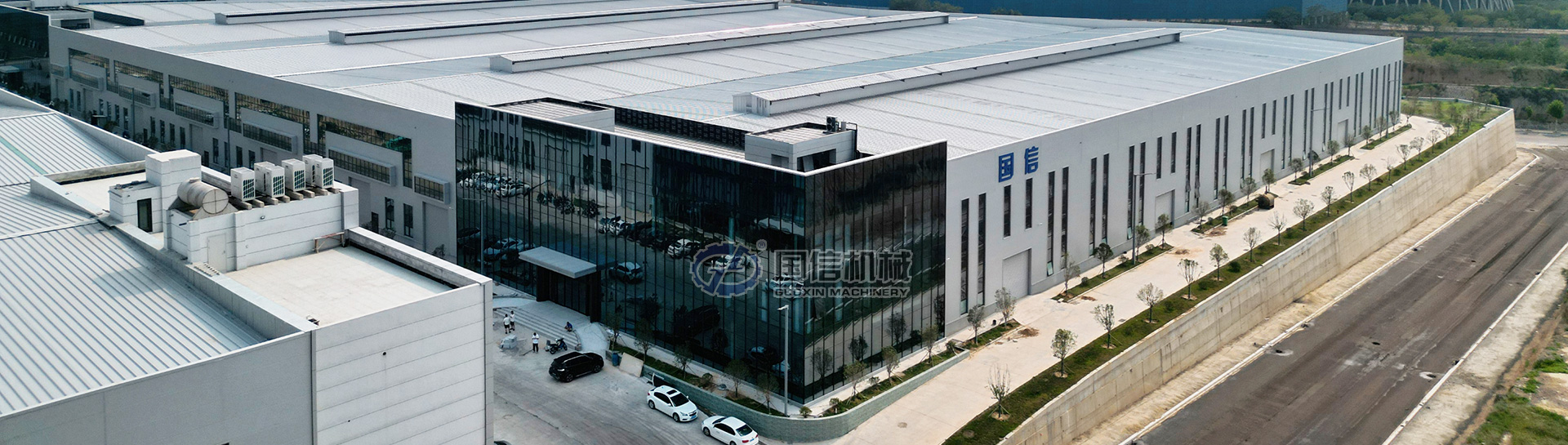
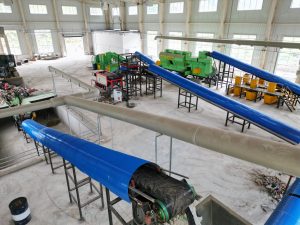
In construction and demolition (C&D) waste recycling projects, the initial capital expenditure (CapEx) and long-term operating expenses (OPEX) directly determine the project’s Net Present Value (NPV) and payback period. Given that C&D waste is highly abrasive and heterogeneous—consisting of concrete, bricks, rebar, wood, plastics, and insulation materials—a superficial combination of individual machines often leads to frequent downtime and excessive wear-part consumption.
Guoxin provides complete engineering, procurement, and construction (EPC) solutions for C&D waste resource recovery.
By optimizing the mass-balance design across primary crushing, multi-stage screening, high-gradient magnetic separation, and air density isolation, we ensure a 95%+ resource recovery rate while minimizing the total cost per ton processed.
Capital Expenditure (CapEx) Structure: Modular System Integration
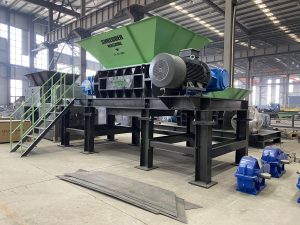
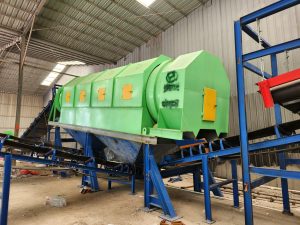
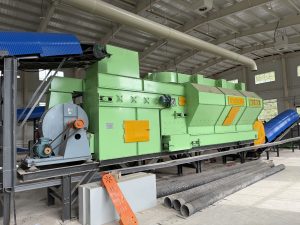
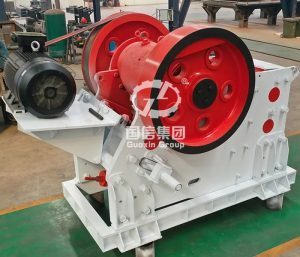
A single machine does not determine the budget of a C&D recycling plant, but by the level of automation and the purity requirements of the final recycled aggregates.
A standard EPC installation consists of four core technical modules:
- Material Liberation & Primary Pre-screening: Utilizing heavy-duty vibrating feeders and VFD-driven trommel or finger screens to isolate the fine soil and fractions (<10mm or <20mm) at the front end. This phase is critical for preventing sand from entering downstream crushers, thereby reducing mechanical wear by up to 25%.
- Multi-Stage Crushing Circuits: Heavy jaw crushers handle primary size reduction for large concrete blocks and slabs. Subsequently, impact crushers or cone crushers shape the aggregates to ensure the output meets structural engineering specifications for road base and concrete blending.
- High-Gradient Ferrous Extraction: Positioning 2000+ Gauss overbelt magnets directly after primary crushing to recover rebar and scrap steel at 98% efficiency. This creates a high-value secondary revenue stream while protecting downstream conveyor belts from puncture damage.
- Air Density Separation (Light Fraction Removal): Deploying high-velocity recirculating air knives to isolate low-density impurities (wood chips, plastic films, foam) from heavy fractions (concrete, brick). This drops the impurity rate of the final recycled aggregate to under 1%.
Technical Performance & Investment Matrix (50 – 300 TPH)
Our systems feature a modular architecture, calibrated to fit specific regional waste compositions and processing targets.
| Project Metric | CDW-100 (Standard) | CDW-200 (Industrial) | CDW-300+ (Large EPC Plant) |
| Processing Capacity | 80 – 100 Tons/Hour | 180 – 220 Tons/Hour | 300 – 450+ Tons/Hour |
| Max Feeding Size | ≤ 600 mm | ≤ 800 mm | ≤ 1,000+ mm |
| Estimated Power Draw | 160 – 220 kW | 315 – 450 kW | 600+ kW |
| Primary Output Vectors | Aggregates, Rebar, RDF | Graded Aggregates, Metals, RDF, Wood | High-Purity Aggregates, Ferrous/Non-Ferrous, Premium SRF |
| Automation Architecture | Centralized PLC Panel | Intelligent Siemens PLC + HMI | Full SCADA Network + VFD Load Coupling |
| Estimated Budget Range | $150,000 – $350,000+ | $450,000 – $800,000+ | $1,200,000+ (Custom EPC) |
Managing Operational Expenses (OPEX): Wear Resistance & Downtime Control
During the first 6 to 18 months of plant operation, the replacement frequency of wear parts represents the single largest variable in profitability. Our engineering mitigates these recurring costs through targeted metallurgy and defensive structural design:
- High-Manganese & Composite Alloy Liners: Jaw crusher plates and impact blow bars are manufactured from Mn13Cr2 or premium alloy steel. When processing high-strength reinforced concrete, the operational lifespan is extended by 40% to 60% compared to standard castings.
- Replaceable NM450 Wear Plates: All high-impact drop zones, chutes, and hopper interiors are lined with exchangeable NM450 or NM500 steel liners, extending the structural maintenance interval beyond 3,000 operating hours.
- PLC-Synchronized Load Regulation: The plant’s central PLC monitors drive currents across all crushing shafts. If a sudden amperage spike is detected (indicating an un-shreddable tramp metal insert or heavy concrete mass), the feeding conveyor automatically slows or reverses within 0.2 seconds to prevent motor burnout or shaft deformation.
Triple Revenue Stream Optimization & Payback Period
A professionally engineered C&D recycling line mitigates tipping fees and generates profit through three distinct commercial channels:
- High-Purity Recycled Aggregates: Clean aggregates (>95% purity) can be sold directly to ready-mix concrete plants or road construction contractors, avoiding the price penalties associated with contaminated material.
- Scrap Steel & Non-Ferrous Recoverables: Ferrous metals and aluminum profiles extracted by magnetic and eddy-current separators provide clean feedstock for local smelting operations.
- Alternative Fuels (RDF): The recovered wood and plastic fractions are processed into high-calorific alternative fuels for cement kiln co-processing, removing landfill liabilities and capitalizing on regional carbon-offset markets.
Request a Customized C&D Plant Layout & CapEx Estimation
Every demolition waste matrix features distinct ratios of reinforced concrete, abrasive silica sand, and light organics. Utilizing a generic layout leads to localized bottlenecking and rapid crusher plate wear.
Provide your target hourly tonnage metrics and regional material characteristics to Guoxin Group’s environmental engineering department for a complimentary mass-balance simulation and customized ROI projection.
-
- 3D Engineering Design: Customized spatial optimization for existing quarries, landfills, or industrial zones.
- Granular Cost Breakdown:Transparent CapEx amortization schedules based on local wear-part variables (Mn13Cr2 vs. NM450 options).
- Direct Line to Project Desk: Eve@guoxinmachinery.com
FAQ
Q1: Which component represents the largest share of CapEx, and how should it be selected?
A: The primary crushing and pre-screening module represents the largest share of the equipment investment (approximately 45%-55%). Selection must depend on the maximum input dimension of the incoming material (e.g., whether the site receives large structural pillars or broken road slabs). Choosing an undersized jaw crusher forces operators to use hydraulic breakers for manual secondary downsizing on site, significantly increasing labor costs and lowering the hourly throughput.
Q2: How can we calculate the actual wear rate of blow bars and liners before the plant is built?
A: Abrasiveness is determined by the percentage of silica and hard igneous rock (granite/quartz) within the local demolition waste matrix. We recommend providing a representative material composition analysis during the design phase. For high-silica waste streams, we substitute standard impact crushers with heavy-duty cone crushers. This utilizes inter-particle compression rather than direct high-speed impact, reducing the wear-part cost per ton by over 30%.
Q3: What is the footprint requirement for a complete 200 TPH stationary C&D sorting plant?
A: A standard 200 TPH fully automated stationary facility—including feed hoppers, primary/secondary crushing circuits, screening systems, and discharge stockpiles—typically requires a footprint of 4,500 to 7,000 square meters (excluding raw material reception and bulk product storage). Our compact modular layouts can reduce this requirement by 15% to integrate seamlessly into existing municipal landfills or industrial parks.
Q4: Why do low-cost recycling lines fail to sell their processed aggregates to commercial concrete plants?
A: Low-cost lines usually omit high-velocity density separation and micro-fines removal stages, providing only basic crushing and screening. This leaves the final aggregates contaminated with pulverized wood chips, gypsum dust, and plastic fragments. When mixed into new concrete, these impurities severely compromise structural strength. Our integrated air separators remove over 90% of light organic impurities, delivering clean aggregates that meet structural construction standards.