
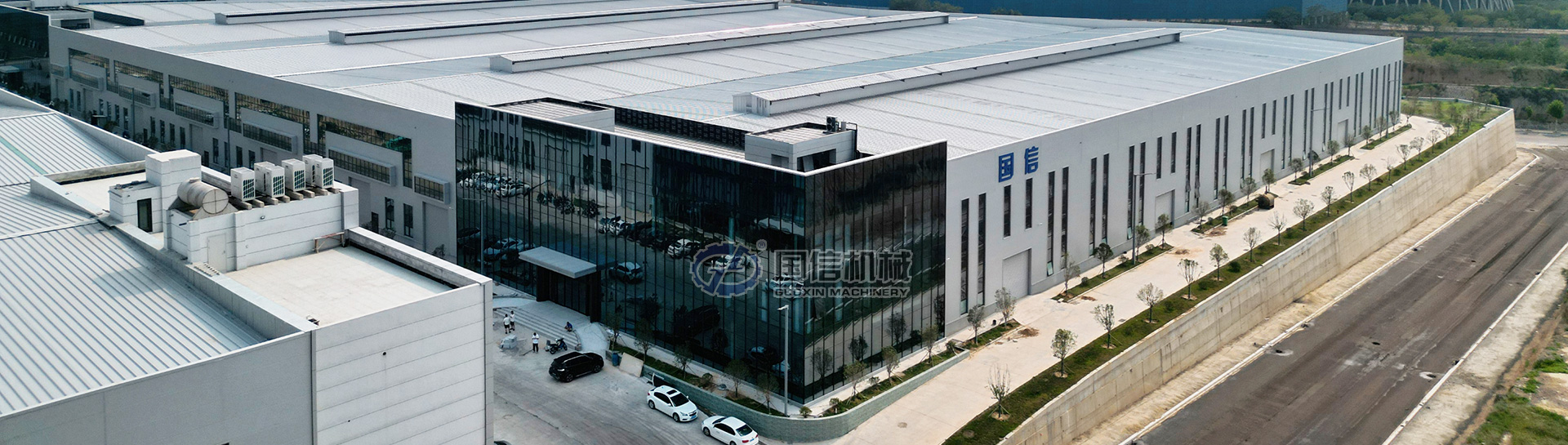
Project Overview
-
Location: Malaysia
-
Timeline: April 2, 2025 – August 11, 2025
-
Material: Waste Palm Leaves & Fronds
-
Final Output: High-Calorific RDF Pellets (Refuse-Derived Fuel)
-
Core Solution: Integrated Shredding, High-Efficiency Drying, and Briquetting System.
The Challenge: Turning “High-Moisture” Waste into Energy
Malaysia generates vast amounts of palm oil waste. However, raw palm leaves are notoriously difficult to process due to:
-
High Moisture Content: Often exceeding 50%, making direct combustion impossible.
-
Tough Fibers: Palm leaves are extremely fibrous, which can easily wrap around and damage standard shredders.
-
Size Inconsistency: For high-quality RDF production, the material must be shredded to a uniform size (30-50mm) before drying.
Our Solution: The Guoxin Integrated RDF Production Line
Guoxin Group designed a customized pre-treatment module specifically for this Malaysian project, integrating our proven shredding and drying technologies.
1. Primary Shredding (High-Torque Performance)
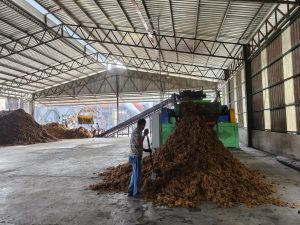
Industrial Palm Leaf Shredder for RDF Production Malaysia
We utilized our [Commingled Combustible Shredder] technology. Unlike standard grinders, this heavy-duty shredder uses a low-speed, high-torque dual-rotor design. It shears through the tough palm fibers without clogging, reducing the leaves to a consistent fraction suitable for the next stage.
-
Key Feature: Anti-wrapping blades designed for long-fiber biomass.
2. Advanced Drying Stage
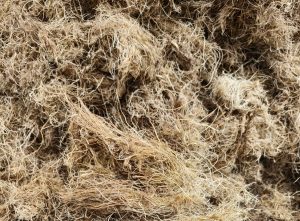
Dried Palm Fiber for Waste-to-Energy Pellets
The shredded palm leaves were then fed into our industrial drying system. Given the tropical climate and high moisture of the material, we optimized the airflow to ensure the moisture content was reduced to under 15% in a single pass. This is critical for the calorific value of the final RDF.
3. RDF Briquetting & Pelletizing
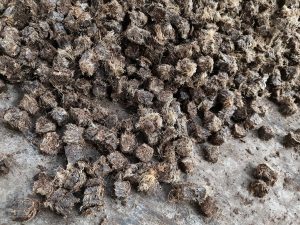
High-Calorific RDF Pellets from Palm Waste
The dried, uniform material was finally processed into RDF combustion rods. These pellets serve as an eco-friendly alternative fuel for industrial boilers and cement kilns, offering a stable and high-energy output.
Project Timeline & Execution
-
Phase 1 (April 2025): Site evaluation in Malaysia and waste composition analysis.
-
Phase 2 (May – June 2025): Equipment manufacturing and customization at Guoxin Factory.
-
Phase 3 (July 2025): On-site installation and system integration.
-
Phase 4 (August 11, 2025): Successful commissioning and operator training. The line reached its design capacity of [X] Tons Per Day.
Why This Project Succeeded
-
Customized Engineering: Not a “one-size-fits-all” solution. We adjusted the shredder’s blade geometry specifically for palm fiber.
-
Energy Efficiency: The drying system was integrated to use waste heat where possible, significantly lowering the OPEX for the client.
-
Turnkey Service: From the first conveyor to the final RDF output, Guoxin managed the entire [Turnkey MSW Sorting Plant] logic.
Planning a biomass-to-energy project in Southeast Asia? Our engineers can provide a free capacity calculation and ROI analysis based on your local material moisture.