
In alternative fuel processing plants, the RDF shredder is the ultimate destination for high-calorific municipal or industrial waste. It is also the single largest source of maintenance overhead. Plant managers globally share a common, costly frustration: rotor blades and counter-knives dulling, chipping, or fracturing long before their rated operational lifespan is reached.
When shredder knives lose their sharp shearing edge, the machine transitions from cutting to tearing. This structural failure increases energy consumption, spikes rotor bearing temperatures, and drops hourly throughput. Worst of all, it forces frequent maintenance shutdowns to flip or replace the cutters, devastating your operational expenditure (OPEX).
Accelerated blade wear is not an unavoidable cost of doing business. It is a direct symptom of mismatched metallurgy or uncontrolled operational parameters.
What is Killing Your Cutting Edges?
An industrial RDF shredder does not fail because it is processing plastics and paper; it fails because of the hidden abrasive and rigid contaminants embedded within the heterogeneous waste stream.
Abrasive Micro-Contaminants (Silica and Glass)
While large stones are often caught during preprocessing, fine silica sand, glass fragments, and ceramic dust pass right through trommel screens. When these micro-abrasives hit the high-speed rotating knives, they cause extreme scouring wear. The particles act like sandpaper under immense hydraulic force, grinding down the relief angles of the blades and widening the cutting gap between the rotor and counter-knife.
Tramp Metal and Rebar Ingress
Unrecovered structural steel, high-tensile wire, bolts, and aluminum profiles cause immediate impact fatigue. When a blade running at high torque collides with unshreddable tramp metal, the localized stress exceeds the yield strength of the steel. The result is catastrophic chipping or complete blade breakage.
Over-Aggressive Hydraulic Feeding
To chase higher hourly tonnage metrics, operators often crank up the pressure on the horizontal hydraulic pusher ram. Forcing a dense, compacted mat of waste against a single-shaft rotor causes excessive heat buildup. This friction can elevate blade-tip temperatures past the tempering threshold of standard tool steels, permanently softening the metal.
The Metallurgy Matrix: Hardness (Wear Resistance) and Toughness (Impact Resistance)
Selecting the correct steel composition for your RDF shredders requires balancing two competing mechanical properties: Hardness (Wear Resistance) and Toughness (Impact Resistance). Increasing one inherently diminishes the other.
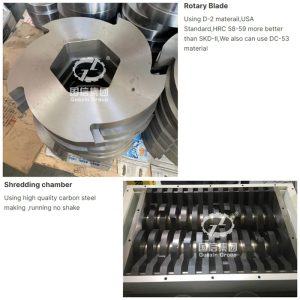
- HIGH HARDNESS (e.g., D2 Steel)
Resists pure abrasive sand. Brittle
chips easily on metal
- HIGH TOUGHNESS (e.g., Hardox / Manganese)
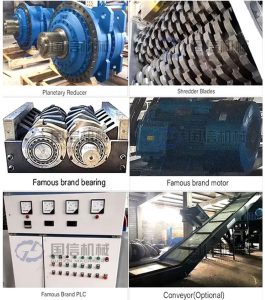
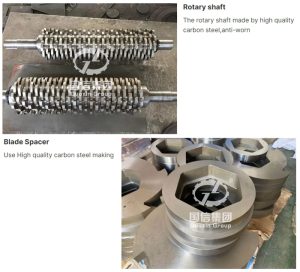
Industrial shredder knives are typically manufactured from three primary material classes:
-
D2 / Cr12MoV (High-Carbon, High-Chromium Tool Steel): Hardened to 58–60 HRC (Rockwell Hardness). D2 offers excellent resistance against pure abrasive wear (such as plastics and dry paper). However, its high carbon content makes it brittle. If your pre-sorting line lets metal slip through, D2 blades will chip rapidly.
-
DC53 (Advanced Cold-Work Die Steel): An upgrade to D2 that strikes a superior balance. Hardened to 60–62 HRC, it retains exceptional wear resistance but possesses double the toughness of D2, drastically reducing localized chipping under unexpected shock loads.
-
Hardfaced / Composite Alloys: For high-volume, highly contaminated municipal solid waste (MSW), premium rotors utilize a tough structural steel base clad with an ultra-hard tungsten carbide or chromium carbide welding overlay (hardfacing). This allows the blade to absorb impact shocks while the outer shell resists severe scouring.
Engineering Fixes to Maximize Blade Lifespan
Optimizing tool lifespan requires a combined approach that integrates upstream material control with rigid mechanical maintenance.
| Action Item | Technical Implementation Baseline | Target Operational Objective |
| Upstream Magnetic Upgrade | Deploy a 2400+ Gauss overbelt magnet and a rare-earth neodymium drum pulse post-trommel. | Eliminate 98%+ of ferrous tramp metals before they enter the shredder chamber. |
| Precision Clearance Gaps | Maintain a strict 0.5mm to 1.0mm tolerance between the rotor blade and counter-knife. | Ensure clean material shearing rather than high-friction tearing and heat generation. |
| VFD Load-Coupling | Program the PLC to auto-reverse the rotor within 0.3 seconds of an amperage spike. | Reject un-shreddable mass fractions automatically to prevent structural blade fractures. |
| Hardfacing Restoration | Execute precise manual rebuilding using chromium-carbide welding rods before wear exceeds 5mm. | Restore original blade profiles without replacing the entire expensive steel insert. |
The Financial Ripple Effect on Alternative Fuel Production
Extending the operational lifespan of your knives from 200 hours to 600 hours changes the economics of your alternative fuel production line:
- Calibrated RDF Particle Distribution: Sharp knives consistently deliver the exact fraction sizing required by cement kiln calciners (typically under 30mm or 50mm). Dull blades yield elongated, stringy plastics that clog pneumatic feeding pipelines.
- Minimized Specific Energy Consumption: Tearing material requires significantly more electrical energy than shearing it. Keeping blades sharp can lower the specific power consumption of the main motor drive by up to 20% per ton processed.
- Extended Bearing and Drive Lifespan: Chopping through waste with dull cutters creates continuous axial vibrations. These structural shocks travel up the rotor shaft, accelerating the failure of expensive spherical roller bearings and planetary gearboxes.
Optimize Your Shredder Configuration
If your operation is suffering from excessive blade replacement costs, poor sizing consistency, or frequent un-shreddable jams, your current cutting geometry or metallurgy may be misaligned with your feedstock matrix.
Reach out to our engineering team for a comprehensive material wear analysis or a customized rotor optimization proposal.
Alternative Fuel Division: Eve@guoxinmachinery.com