
Modern household waste treatment is a massive and complex system engineering project. Traditional landfill and incineration methods are gradually being replaced by advanced concepts of resource recovery, waste reduction, and harmless disposal. The key upstream link in achieving this goal is waste sorting.
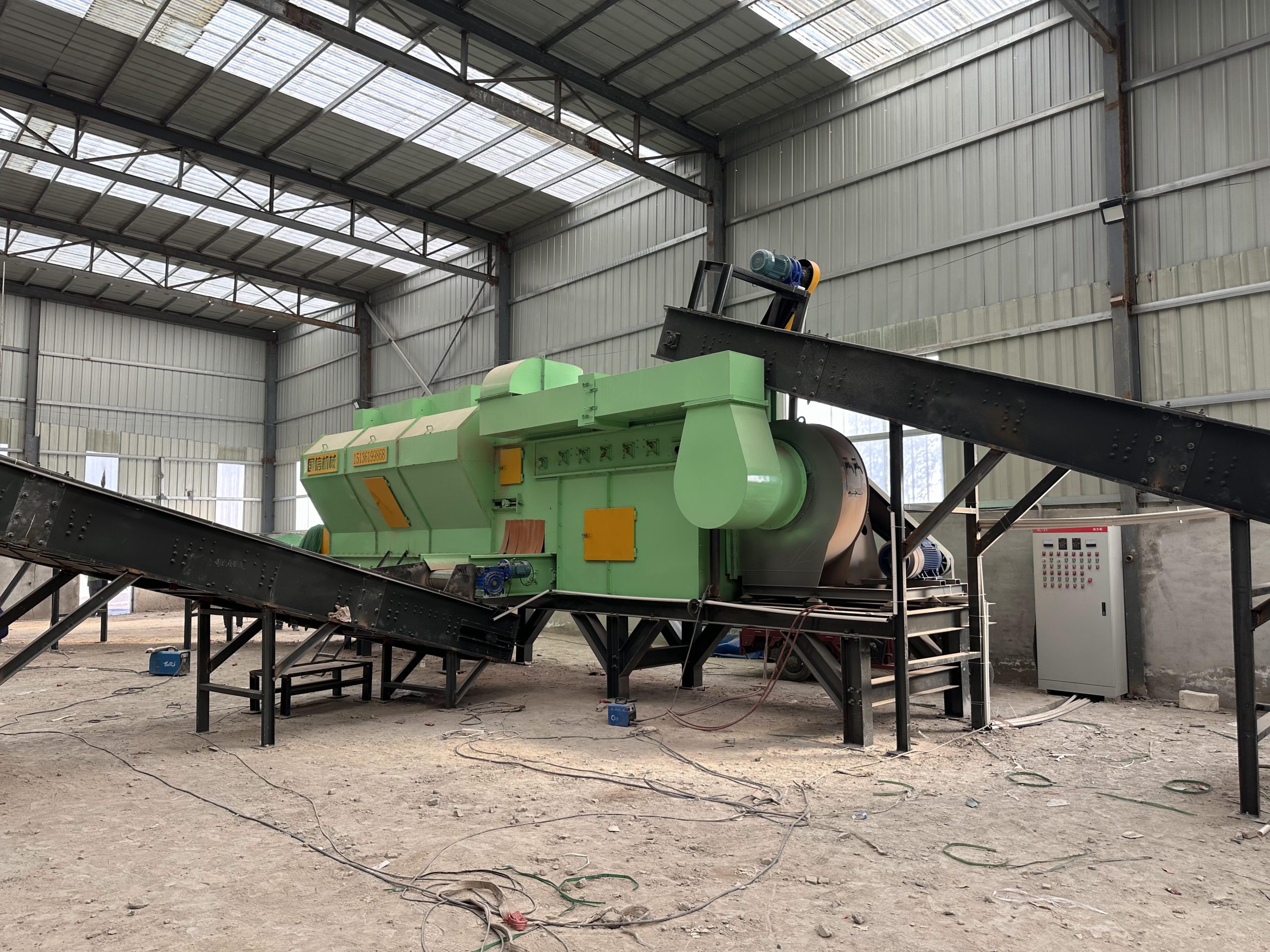
waste sorting production line
I. Core Tasks and Technical Principles of Sorting Equipment
Waste sorting equipment is not a single machine, but a waste sorting production line composed of multiple devices. Its core task is to achieve efficient and precise separation based on the physical or chemical properties of the various components of waste.
The main sorting technology principles include:
1. Size Sorting (Screening)
Principle: Using rotating, vibrating, or rolling screens, materials are separated according to size.
Equipment: Rotary trommel screens, vibrating screens, bouncing screens, etc.
2. Gravity and Pneumatic Sorting (Air Separation)
Principle: Using airflow to separate lightweight materials (such as plastic film and paper) from heavy materials (such as metal and brick).
Equipment: Air separators, air classifiers.
3. Magnetic and Electrical Separation
Magnetic Separation: Utilizing a strong magnetic field generated by a permanent magnet roller or electromagnet, ferrous metals (such as tin cans and screws) are automatically separated.
Eddy Current Separation: Applying a rapidly changing magnetic field to non-ferrous metals (such as aluminum and copper) induces eddy currents within them, generating a repulsive force that separates them from the non-metallic material.
4. Photoelectric Separation
Principle: This is currently the most technologically advanced sorting method. The equipment scans passing materials using high-speed cameras, near-infrared (NIR) sensors, X-rays, or laser sensors, instantly analyzing their color, shape, material, and even molecular structure. Subsequently, the system controls an array of high-pressure air guns to precisely blow the target material (such as specific types of plastics like PET and HDPE, or different colored glass) into different collection tanks.
II. Waste Sorting Production Line Flow
1. Feeding and Bag Breaking: Mixed waste is fed into the feeder by a grab bucket. The sealed waste bags are then broken open by a bag opener, allowing the material to disperse fully.
2. Coarse Screening: Material enters a large trommel screen, separating smaller organic matter and dust (for composting or treatment), leaving larger, dry materials.
3. Magnetic Separation: Ferrous metals are recovered using a magnetic separator.
4. Air Separation: Lightweight plastics and paper are separated from heavier items such as bottles, cans, and wood using an air separator.
5. Manual Sorting Platform: As an auxiliary and backup method, workers pick out large hazardous materials, interfering items, or valuable materials that are difficult for the equipment to identify.
6. Photoelectric Sorting: Material from the previous steps is fed into multiple parallel photoelectric sorters to separate PET bottles, HDPE bottles, mixed-color plastics, aluminum cans, etc.
7. Edge Current Separation: Non-ferrous metals such as aluminum and copper are separated from the remaining material.
8. Compression and Baling: The sorted recyclable materials are transported to compression and baling machines to form neat bundles for easy transportation and sale to downstream recycling companies.
III. Advantages of Guoxin Machinery as a Waste Sorting Equipment Supplier
1. Process Design Capability: Customizing the most suitable sorting process route based on local waste composition, processing scale, and output targets.
2. System Integration Capability: Seamlessly connecting various individual equipment units to ensure stable, efficient, and low-energy operation of the entire line.
3. Technology R&D and Iteration: Continuously investing in R&D to improve the accuracy of photoelectric recognition algorithms, the processing capacity of equipment, and its durability.
4. Intelligent and Data-Driven: Modern sorting lines are deeply integrated with the Internet of Things (IoT) and big data technologies to achieve real-time monitoring of equipment status, fault early warning, and sorting efficiency data analysis, providing decision support for operation management.