
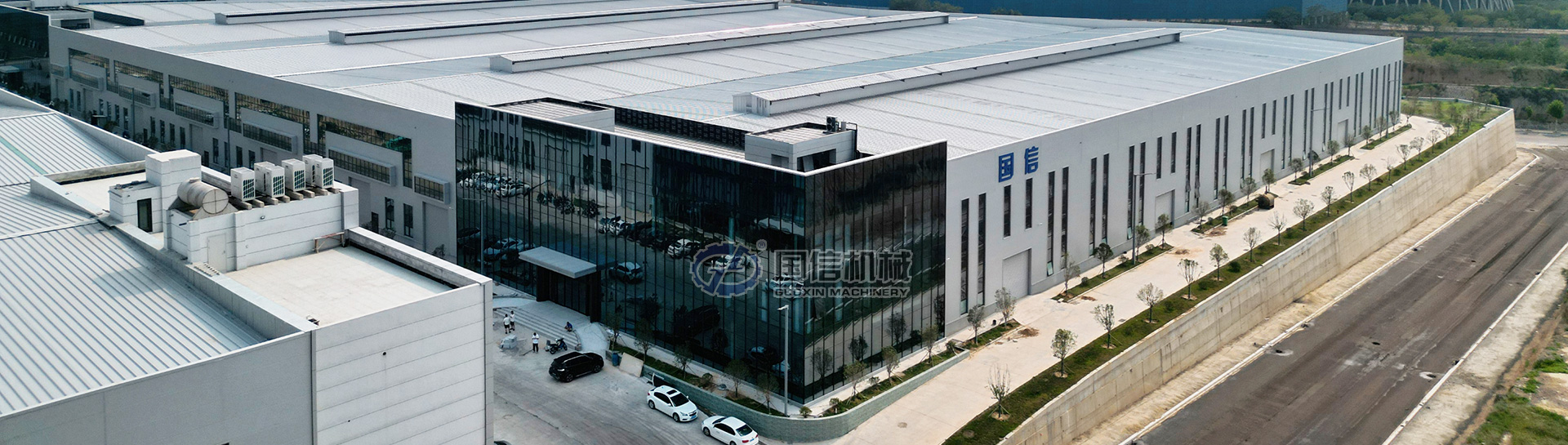
Waste management Sorters, as key technological equipment in modern waste treatment systems, are gradually becoming an important support for resource recycling and the circular economy.
I. Basic Principles and Technology Types of Waste Management Sorter
Waste management sorting machines achieve automatic separation based on differences in the physical properties of materials. The main technology types include.
1. Optical Sorting Systems
Near-infrared (NIR) sorting technology: Utilizing the differences in the reflectivity of different materials to near-infrared light, it can accurately identify plastic types (PET, PE, PP, etc.), paper, wood, and other organic materials.
Visible light sorting technology: Based on color recognition, used for further subdivision of glass, specific plastics, or paper.
Hyperspectral imaging technology: Provides richer material information, suitable for fine sorting of complex mixed waste.
2. Magnetic Sorting Equipment
Magnetic Separator: Efficiently extracts ferrous metals.
Electromagnetic separator: Used to separate weakly magnetic or non-ferrous metals.
3. Eddy Current Separator
This type of separator uses an alternating magnetic field to generate eddy currents in non-ferrous metals, and then uses the principle of magnetic repulsion to separate non-ferrous metals such as aluminum and copper.
4. Air Separator System
Based on the difference in material density and aerodynamic properties, this system separates lightweight materials (such as thin-film plastics and paper) from heavy materials.
5. Screening Equipment
Trommel screens and vibrating screens separate waste according to size, often used as a pretreatment step.
II. Intelligent Technologies of Modern Sorting Systems
1. Multi-level Sorting Process: Pretreatment (shredder, screening) → Primary Sorting (magnetic separation, air separation) → Fine Sorting (optical sorting, eddy current sorting) → Quality Control
2. Sensor Fusion Technology: Combining data from multiple sensors, such as near-infrared, visible light, laser, and X-rays, to improve material identification accuracy.
3. Artificial Intelligence and Machine Vision: Deep learning algorithms enable sorting systems to identify more complex material forms and adapt to real-world scenarios with varying impurities.
4. Robotic Sorting System: High-precision robotic arms combined with vision systems complete complex sorting tasks that are difficult for traditional equipment to handle.
5. IoT Monitoring: Real-time monitoring of equipment status, sorting efficiency, and material flow enables predictive maintenance and process optimization.
III. Key Role of Sorting Machines in Waste Management Sorter
1. Improved Recycling Efficiency and Purity: Automated sorting systems can operate continuously, handling dozens of times more than manual sorting, while maintaining a purity typically exceeding 90%, significantly increasing the market value of recycled materials.
2. Reduced Labor Costs and Risks: Replacing high-intensity, high-risk manual sorting processes reduces occupational disease risks and adapts to changes in the labor force structure.
3. Maximized Resource Recovery: Multi-layered sorting processes can extract various recyclables, improving overall resource recovery rates and reducing landfill volume.
4. Adaptability to Complex Waste Compositions: The material composition of modern consumer goods is becoming increasingly complex; intelligent sorting systems can identify and separate composite materials that are difficult to handle using traditional methods.
5. Data-Driven Decision Support: Data generated during the sorting process can provide empirical evidence for waste management policies, product eco-design, and recycling system optimization.
Selecting appropriate sorting technologies and configuration schemes requires careful consideration of factors such as waste composition characteristics, processing scale, recycled material quality standards, and long-term operating costs. GUOXIN Machinery can provide customized solutions, from single machines to complete sorting systems, to meet specific customer needs, helping various waste management facilities achieve technological upgrades and efficiency improvements.