
Among the massive amounts of solid waste generated daily in our cities, precious metals in discarded electrical appliances, petroleum resources in plastic bottles, plant fibers in waste paper… this seemingly useless trash is actually valuable resources that have been misplaced.
I. Sorting Waste for Recycling – The Necessity of Sorting
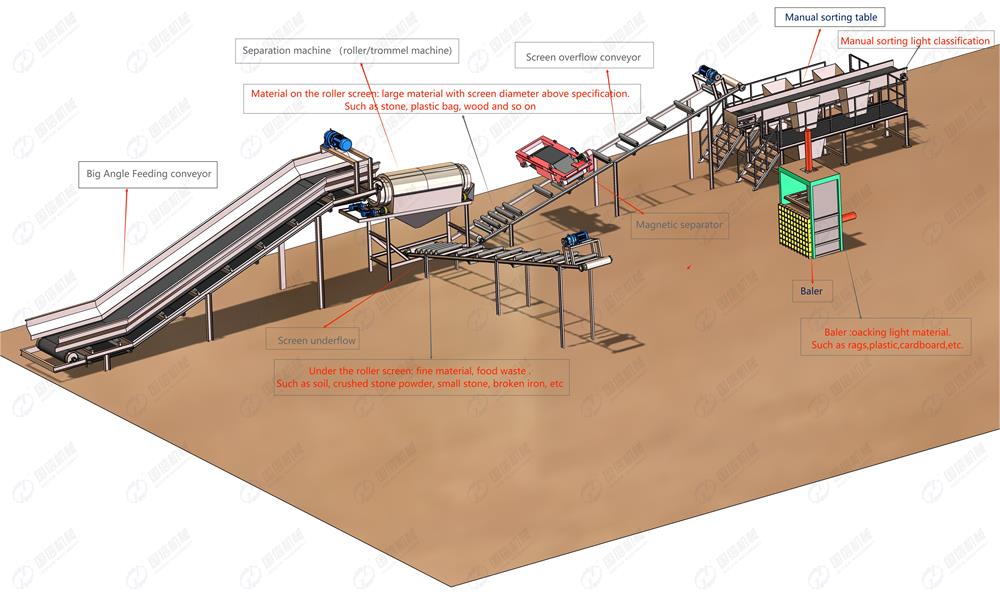
Sorting Waste For Recycling
Different types of waste can contaminate each other. If hazardous substances are mixed in, it will cause secondary pollution to the entire recycling chain and the environment.
1. Improving the Purity of Recyclables: High-purity recycled raw materials are the lifeline of downstream recycling companies, directly determining the quality and market value of recycled products.
2. Ensuring Production Safety: Effectively separating hazardous waste such as batteries and mercury-containing lamps can prevent fires, explosions, or environmental pollution during transportation, processing, and reproduction.
3. Reducing Processing Costs: Pure recyclables are easier to process, significantly reducing sorting costs and energy consumption for downstream recycling companies.
II. Modern Sorting Technology
Core Sorting Technology Principles:
1. Magnetic Separation and Eddy Current Separation: This is a powerful tool for separating metals. Magnetic separators can efficiently extract magnetic metals such as iron and steel. In contrast, eddy current separators use alternating magnetic fields to induce currents in non-magnetic metals (such as aluminum and copper), thus ejecting them from the mixture.
2. Near-infrared spectral sorting: This is currently the core technology for sorting polymer materials such as plastics and paper. Different materials have different absorption and reflection spectra for near-infrared light, much like having unique fingerprints. Sensors scan the spectrum of materials, instantly identifying plastic types such as PET, HDPE, and PP, and even distinguishing between paper and cardboard. The materials are then blown into the corresponding collection tanks through precise airflow nozzles.
3. Bounce sorting: Utilizing the difference in bounce characteristics between rigid and flexible materials, this method effectively separates heavy impurities such as bricks and glass from lightweight materials such as plastics and paper, making it a highly efficient pretreatment method.
4. X-ray and Visible Light Sorting: X-rays can identify and sort materials based on their varying degrees of absorption, such as separating PVC from crushed materials. Visible light sorting technology, based on color recognition, can further differentiate items of the same material (e.g., transparent PET bottles and green PET bottles) by color, greatly enhancing the commercial value of recycled materials.
III. Sorting Waste For Recycling: Resources—Products—Recycled Resources
Efficient sorting is the hub of the entire circular economy chain. It successfully transforms disordered waste into ordered recycled raw materials, thereby driving the vigorous development of downstream industries.
1. After being sorted, washed, crushed, and granulated, plastic bottles can be turned into polyester fibers to make clothing, blankets, or remolded into new packaging bottles.
2. Waste paper, after purification, is sent to paper mills to be reprocessed into pulp, producing recycled paper products.
3. The separated metals are sent to smelters, remelted, and cast into new metal ingots or products. Their properties are identical to the primary metals, but energy consumption and carbon emissions are significantly reduced during the production process.
Through precise sorting, we are essentially extending the life cycle of resources, reducing the extraction of primary minerals and fossil fuels, and shifting from a linear “mining-manufacturing-waste” model to a circular “resource-product-recycled resource” model. This not only conserves natural resources but also reduces land occupation and greenhouse gas emissions caused by landfilling or incineration at the source.