
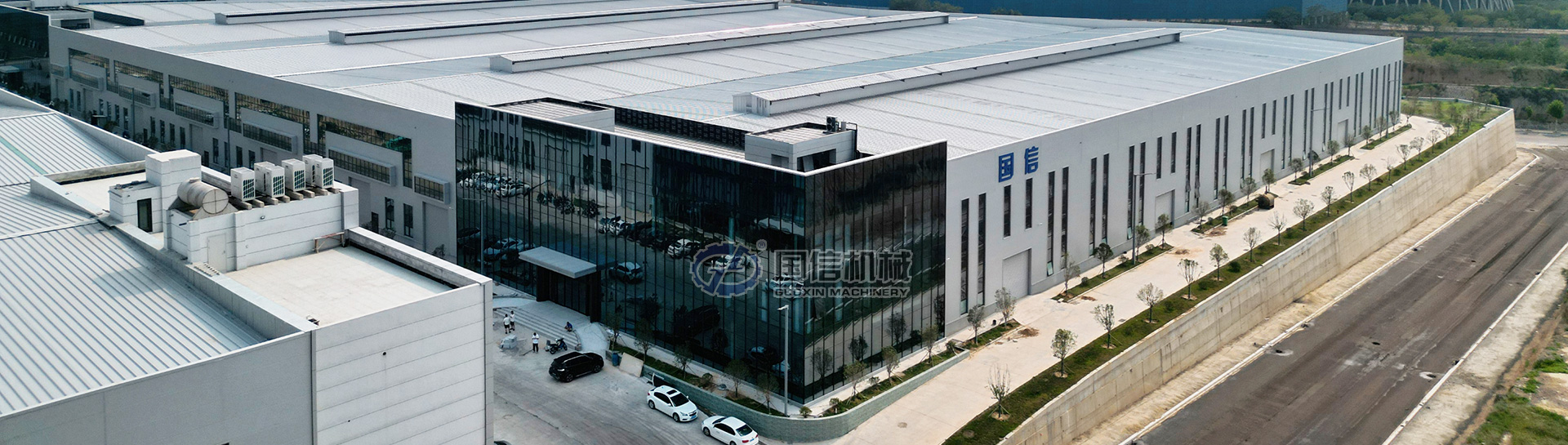
Your sorting line suddenly goes silent, not because of maintenance, but because of another unexpected downtime.
The awkward situation where organic matter that should be screened out is not being completely removed, while a large amount of recyclable material that should be retained is being lost, is often a systemic technical mismatch problem.
Material clumping, screen holes being clogged with sticky slurry, and the fluctuating accuracy of the air separator “wobbling” between light and heavy materials—these problems often cannot be solved by simply replacing a single component.
1. Shredding System Jams and Abnormal Wear
The shredder machine is the throat of the entire sorting line; its jamming can directly paralyze the entire production line. The most common manifestation is that when encountering entangled materials (such as steel wire, woven bags) or uncrushable objects (such as large pieces of metal), the equipment jams and stops due to overload.
The wear rate of core components such as the cutter shaft and blades often far exceeds expectations, disrupting the established maintenance budget.
The root causes can usually be traced back to two upstream stages.
First, there’s a fundamental mismatch between the selected equipment and the characteristics of the materials. For example, using a shear shredder designed for ordinary household waste to forcibly process large pieces of waste or complex, landfill-aged waste is beyond the machine’s capabilities and structural design.
Second, there’s a lack of effective pre-treatment barriers. Without a strong magnetic separator or manual sorting platform before the shredder, various “hard nuts” and “entangled materials” directly enter the core shredding chamber, causing continuous impact and damage.
To address this, a systematic solution must start with prevention and intelligent control. At the prevention level, Guoxin Machinery’s dual-shaft shear shredder features a customized D-type cutter head design, possessing stronger impact resistance and self-cleaning capabilities. It has also undergone special material and process reinforcement for the complex composition of Chinese waste, significantly extending its service life.
More importantly, the process design is proactive: we insist on configuring a plate feeder before the crusher to achieve uniform material distribution, and adding a strong magnetic self-unloading iron separator, acting like a robust filter for the crusher to prevent metal foreign objects from entering at the source.
In terms of intelligent response, the equipment integrates an intelligent obstruction detection and reversal system. When the sensor detects an abnormal load, the equipment can automatically and instantly reverse to discharge foreign objects, avoiding irreversible damage to the cutter shaft and motor caused by forced stopping, achieving proactive self-protection.
2. Low Screening System Efficiency
Screening efficiency directly determines the purity and value of the subsequently sorted materials. Common problems include material clumping and poor rolling within the trommel screen, and rapid clogging of the screen holes by wet and sticky materials.
As a result, “organic matter that should be screened out is not cleaned up, while a large amount of recyclable material that should be retained is lost.” This is not just a problem with a single piece of equipment, but also seriously drags down the output quality of the entire production line.
The core reason for screening failure lies in the dual challenges of material characteristics and equipment structure. For aged or highly moist household waste, the sticky slurry formed by the mixture of moisture and dust will adhere firmly to the screen like glue.
Meanwhile, in many cases, the screen’s rotation speed, inclination angle, and internal guide plate structure are fixed standard designs, not optimized for the specific moisture content, composition, and viscosity of the customer’s materials, leading to incompatibility.
Improving screening efficiency requires a customized design and proactive intervention tailored to specific needs. Guoxin Machinery’s “anti-sticking” drum screen employs a unique polygonal design and non-uniform motion trajectory.
This design generates continuous micro-vibrations during operation, combined with an elastic cleaning device, achieving dynamic self-cleaning and effectively preventing material adhesion and screen clogging.
For bagged waste that easily clumps, we have built a bag-bopener machine and a dispersing mechanism into the initial screening stage. The rotating blades actively break open and disperse the tightly wrapped garbage bags, fully exposing the internal material and creating the necessary conditions for subsequent efficient screening.
The most crucial step is to abandon the mindset of using a one-size-fits-all standard machine. Our engineers will analyze your material samples in the early stages of the project, precisely calculating and customizing the rotational speed, tilt angle, and internal guide plate angle of the screen cylinder** to ensure the equipment structure is optimally matched to the characteristics of your materials.
3. Unstable Air Separation Accuracy
Air separation is a crucial process for separating light materials (such as plastic film) from heavy materials (such as stones and glass). Unstable accuracy directly leads to substandard purity of the recycled products, significantly reducing economic value.
Typical problems include a large amount of heavy material mixed in with light materials, or vice versa, and the equipment’s condition is extremely sensitive to fluctuations in the feed rate, fluctuating between good and bad, making continuous and stable operation difficult.
The root cause of inconsistent accuracy lies in the crude and rigid airflow control. Traditional fixed wind speeds are completely unable to cope with real-time changes in the amount and composition of the incoming material.
Furthermore, rudimentary duct designs result in turbulent airflow, failing to form a stable and uniform “air curtain,” leading to chaotic and uncontrollable movement trajectories of light and heavy materials within the separation chamber.
Achieving high-precision air separation relies on intelligent airflow regulation and precise fluid design. Guoxin Machinery’s composite air separator employs a two-stage or multi-stage sorting concept.
The first stage uses a higher air velocity to peel away the lightest film-like materials, while the second stage uses an optimized air velocity to separate paper, rigid plastic sheets, etc., achieving refined, tiered separation of materials.
Its core lies in the intelligent variable frequency control system. This system can automatically adjust the fan speed based on real-time monitoring of material quantity and composition feedback, thereby adjusting the airflow and velocity in real time to ensure stable sorting accuracy under any operating conditions.
On the hardware side, we use computational fluid dynamics software to simulate and optimize the air duct, designing a smooth, curved air duct that conforms to the principles of aerospace aerodynamics. This air duct can form a stable, uniform horizontal air curtain, allowing light and heavy materials to achieve the most effective separation in a clear and controllable airflow.
4. Plastic Film Entanglement and Interference
Besides the aforementioned core equipment malfunctions, a common but often overlooked systemic source of interference is **plastic bags and plastic films.** The trouble they cause on the sorting line goes far beyond simply increasing manual sorting steps.
When plastic film gets tangled in rollers, shafts, or screens, it severely impacts the normal operation of the equipment. Worse still, fragments of the broken film may enter subsequent precision equipment such as magnetic separators and eddy current separators, interfering with the magnetic field or causing sensor misjudgments.
These films come from various sources, including garbage bags mixed in by residents and incompletely broken packaging bags. They significantly increase the frequency of manual inspections and cleaning, sometimes requiring multiple shutdowns per day for cleaning, severely eroding effective production time.
The most fundamental solution is to address this through public education and coordinated management at the source. As an equipment supplier, Guoxin Machinery also recommends that owners actively promote the concept of “loose-pile recycling,” encouraging residents to directly and loosely deposit recyclables into recycling bins, rather than packing them in plastic bags.
In terms of production line process design, consideration could be given to adding a dedicated bag-tearing machine before shredding or after screening, or setting up a dedicated air-separation section with adjustable wind speed to separate most of the lightweight film in advance, preventing it from entering the subsequent precision sorting stages.
For films already in the system, monitoring cameras and automatic entanglement alarms can be installed at key transfer points (such as conveyor belt heads and above drum trommel screens). Once entanglement is detected, an alarm will sound, allowing maintenance personnel to handle the issue promptly and prevent it from escalating.
When a sorting line stops several times a day due to plastic film entanglement, forcing workers to climb the equipment for dangerous cleanup, the costs far exceed electricity and labor expenses. However, when an intelligent variable frequency air separation system automatically adjusts the airflow based on the incoming material, stably producing high-purity plastic sheets, consistent output ensures the best profit.
Guoxin Machinery provides not only more durable individual machines, but also a complete system solution that eliminates malfunctions at the source. Choosing Guoxin means choosing to ensure your green money-printing machine operates continuously, stably, and efficiently.